
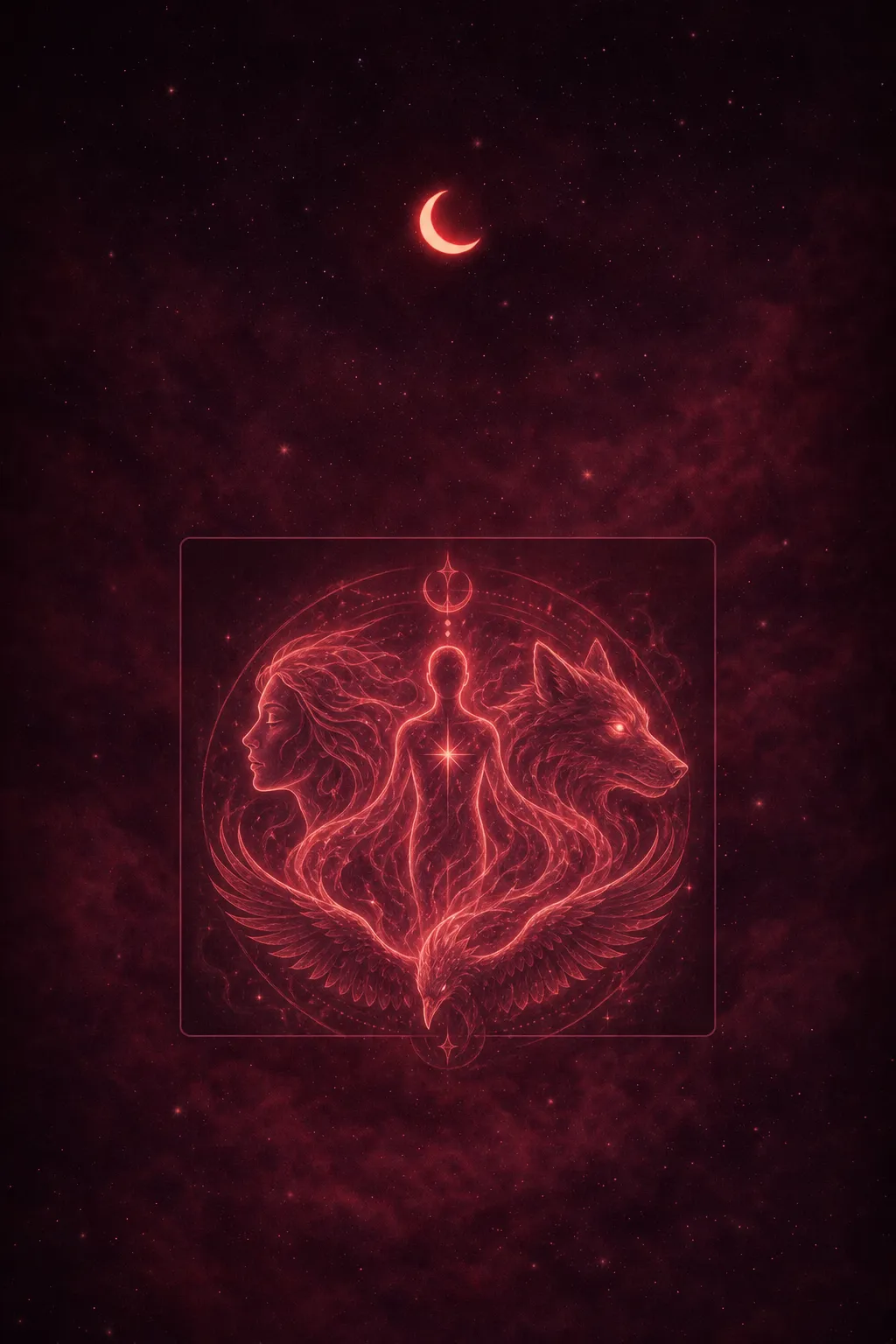

Dreaming about shapeshifting typically signals a deep inner transformation, reflecting your subconscious desire to adapt, reinvent your identity, or escape limitations — it may also reveal anxiety about instability, distrust of someone whose true nature feels hidden, or an exciting readiness to embrace personal growth and change in waking life.
In under a minute you could read what your exact dream means for you, and see a picture of it. Free.
A dream still on your mind? Get your personal reading.
Describe your dream in a line or two. In seconds you get a reading of your exact dream, a picture drawn from your own words, and every symbol explained.
Free. No sign-up. Takes 10 seconds. Your dream stays private.
0%
Analyzing your dream…
Something went wrong. Please try again in a moment.
Your dreams deserve more than a dictionary
Common Shapeshifting Dream Scenarios and What They Mean
The most frequent scenario — your own body or form changing — sits at the heart of identity anxiety. If the shift feels exhilarating, your mind is likely rehearsing a new role or coping style, a sign that growth is underway. If it feels threatening, the dream may be surfacing a fear that pressure from work, relationships, or life transitions is eroding who you actually are beneath all the performance.
- Someone else transforms before your eyes: A person close to you suddenly becomes a stranger or something unrecognizable. This typically reflects distrust — a quiet suspicion that someone in your life is inconsistent or two-faced, or simply your own uncertainty about how well you really know them.
- Human-to-animal transformation: Shifting into — or watching someone shift into — an animal points to instinctual drives bumping up against a civilized self-image. The specific animal matters: a werewolf-like transformation often signals suppressed aggression or a fear of losing control under pressure.
- Involuntary, unstoppable shifting: You try to hold your form but cannot. This is a classic modern-anxiety scenario — life circumstances are forcing reinvention faster than you can manage, and the dream mirrors that feeling of overwhelm. Dreams about falling carry a similar signature of lost control.
- Shifting into a monstrous form: Shadow material rising to the surface. Suppressed anger, guilt, or a fear of your own capacity for harm tends to produce this darker variant.
- Shapeshifting to hide or blend in: Evading detection by changing form suggests avoidance coping — masking your authentic self to earn safety or approval, at real cost to genuine self-expression. This mirrors the social-performance anxiety found in being-chased dreams, where escape replaces honest confrontation.
- An entire world of shifting figures: When nothing and no one holds a stable form, the dream is processing generalized uncertainty — a sense that the ground beneath your relationships or circumstances simply cannot be trusted.
A bad dream isn't a bad sign.
Across all these variants, pay close attention to the emotional register you wake with. Empowerment points toward healthy adaptation; dread or helplessness signals that your sense of a stable self needs active tending rather than further pressure to perform or conform.
What this dream could look like
Tap an image to open it full screen
Example images. Only you can see what you write in Dream Book.
Psychological Meaning of Shapeshifting Dreams
From a psychological standpoint, dreaming of shapeshifting is one of the clearest signals the subconscious can send about identity under pressure. Modern life demands constant role-switching — professional at work, caregiver at home, performer on social media — and the psyche can begin to feel fragmented under that load. When the dream stage dramatizes a body or face that won't hold still, it is often the mind's way of asking: which version of me is the real one? That question sits at the intersection of authenticity anxiety and the very modern dread of losing a coherent self amid competing demands. Dreams of teeth falling out carry a strikingly similar charge — both symbol types surface when the sense of a stable, presentable self feels suddenly precarious.
Jungian psychology frames the shapeshifter as a shadow figure — the repository of traits we suppress or deny. Encountering one in a dream, or becoming one, may signal that unacknowledged parts of the personality are surfacing and pressing for integration. Rather than resisting that discomfort, the healthier psychological move is curiosity: what quality is the shifting form embodying that waking life has not made room for? A werewolf transformation dream, for instance, often carries this same charge of raw, unowned impulse breaking through.
But what does your version mean?
- Empowerment vs. loss of control: Fluid shifting that feels chosen suggests adaptive resilience; involuntary shifting points to anxiety about external forces remaking you without consent.
- Authenticity vs. masking: Repeated shapeshifting may reflect chronic people-pleasing or code-switching that has begun to feel destabilizing.
- Growth vs. dissolution: Positively framed, the dream rehearses metamorphosis — the self expanding, not collapsing.
Every dream you log starts to connect.
Dream Book keeps your dreams in one place and reveals the threads between them over time — your private dream journal. Free to start.


Cultural and Traditional Readings of Shapeshifting Dreams
Across folklore and mythology, the shapeshifter has rarely been a neutral figure. From Norse legends of skin-walkers to Native American trickster spirits, the being who changes form sits at a crossroads between power and deception — admired for adaptability yet distrusted for lacking a fixed self. In Western Christian tradition, a creature that cannot hold its true shape carries an undertone of spiritual instability, echoing biblical warnings about false appearances and hidden motives. That moral weight lingers quietly in modern culture: people still describe a two-faced colleague or an inconsistent partner as someone who "keeps changing shape," and the unease in that phrase is unmistakably old.
Contemporary anxiety has given the archetype a fresh coat of paint. In an era defined by personal branding, social media personas, and constant reinvention, the werewolf and the shapeshifter have become folk metaphors for the pressure to be all things to all people. Folk wisdom in many English-speaking communities frames such dreams as a prompt for self-examination — a signal that you may be performing different versions of yourself so relentlessly that the core identity underneath has become hard to locate. That sense of a self slipping out of reach shares emotional ground with the classic anxiety of teeth falling out, another folk-recognized dream of losing something fundamental about who you are.
- Trickster tradition: shapeshifting signals cleverness and survival, but also warns that cunning used without integrity can erode trust.
- Christian folk reading: transformation dreams may prompt reflection on authenticity and moral consistency.
- Modern folk belief: dreaming of others shifting form is often read as a warning about someone in waking life being less straightforward than they appear.
Spiritual Meaning of Shapeshifting Dreams
From a spiritual standpoint, a shapeshifting dream often carries a quiet invitation toward self-examination — and, in Christian thought, toward the kind of inward renewal described in 2 Corinthians 5:17, where transformation signals becoming something genuinely new rather than simply performing a different role. The distinction matters: authentic spiritual change moves from the inside out, whereas anxious shapeshifting in a dream can mirror the exhausting modern pressure to reinvent yourself on demand. If the transformation in your dream feels forced or hollow, it may be prompting you to ask whether the changes you are making in waking life are rooted in genuine conviction or in the need to appease others.
Was yours a sign? Find out.
Scripture also raises the theme of discernment — the warning that appearances can deceive, that a wolf may wear sheep's clothing (Matthew 7:15). When another figure in your dream keeps shifting form, refusing to stay recognizable, your spirit may be processing a real-life situation where someone's motives feel unclear or inconsistent. Dreams of a figure that transforms against its will can intensify this unease, suggesting a fear of hidden nature breaking through a respectable surface. Similarly, dreaming of snakes shares this discernment thread — a creature whose appearance rarely matches its true intent.
- Renewal vs. performance: Is the change in the dream freeing or desperate? The feeling tone points toward growth or masking.
- Discernment prompt: A shifting other-figure may signal a real-world relationship where trust is being tested.
- Grounding practice: Many faith traditions recommend prayer or meditation as an anchor when identity feels fluid — returning to a stable inner core rather than adapting endlessly to outside pressure.
Related Dream Meanings
nightmares
What Does It Mean to Dream About a Werewolf
5 min read
common dreams
Falling Dream Meaning: Insecurity, Fear & Loss of Control
5 min read
nightmares
Being Chased Dream Meaning: Anxiety & Avoidance
5 min read
body health
Teeth Falling Out Dream: Anxiety, Loss & Vulnerability
5 min read
animals
Snakes Dream Meaning: Fear, Change & Hidden Threats
5 min read
nightmares
What Does It Mean to Dream About Home Invasion
5 min read
nightmares
What Does It Mean When Someone Is Following You in a Dream
6 min read
nightmares
Someone Breaking Into Your House: Meaning and Interpretation
5 min read
Practical Takeaways from a Shapeshifting Dream
When shapeshifting shows up in your dreams, the most useful first step is a brief identity audit — a plain, honest look at where you may be stretching yourself too thin across competing roles. Ask yourself which version of you feels most genuine right now, and which feels like a performance driven by external pressure. Journaling immediately after the dream, while details are still vivid, often surfaces the specific relationship or environment triggering that sense of unstable selfhood.
A bad dream isn't a bad sign.
- Name the pressure point. Identify the single context — a job, relationship, or social circle — where you feel most compelled to mask or adapt, and decide whether that adaptation is healthy flexibility or quiet self-erasure.
- Set one small boundary. Chameleon behavior intensifies when boundaries are absent. Choose one situation this week where you hold a position even if it feels uncomfortable.
- Track recurring shifts. If shapeshifting dreams cluster around a specific life event, treat the pattern as feedback — your mind flagging unresolved change. Dreams involving being chased alongside shapeshifting may signal that the pressure feels inescapable, which is worth discussing with a therapist. Similarly, teeth falling out in the same dream period often reinforces anxieties about losing control over how others perceive you.
- Reframe the transformation. Not every shift signals dissolution. Where the dream felt energizing rather than threatening, lean into that momentum — it may be pointing toward growth you are ready for but have not yet committed to consciously.
If it keeps coming back, the app helps you understand the pattern.
Log each recurring dream and the free app shows you what's underneath — calmly, over time. Free to start.
People Also Ask
Spiritually, shapeshifting in dreams signals transformation, adaptability, and the evolution of your soul. It suggests you are moving through different phases of growth, releasing old identities, and embracing new aspects of yourself. Many traditions view this symbol as a powerful sign of spiritual awakening and the fluid nature of the higher self.
Dreaming that you are shapeshifting often reflects inner change, identity exploration, or feeling pressure to adapt to different social situations. It can indicate anxiety about who you truly are, or excitement about personal reinvention. Pay attention to whether the transformation feels empowering or frightening — much like dreams about being chased, that emotional tone reveals your waking relationship with change.
The Bible does not directly address shapeshifting as a dream symbol, but it does warn against deception and false appearances. Passages about Satan disguising himself as an angel of light suggest spiritual discernment is key. If a shapeshifting figure in your dream feels threatening or deceptive, it may symbolize a misleading influence in your waking life.
Truly rare dreams include experiencing your own death, full sensory lucid dreaming, and shapeshifting into another being. Shapeshifting dreams are uncommon because they require the brain to construct a fluid, changing identity — a complex feat. Having one likely means your subconscious is working through profound questions about personal identity and transformation.
Curious what your dream would look like?