
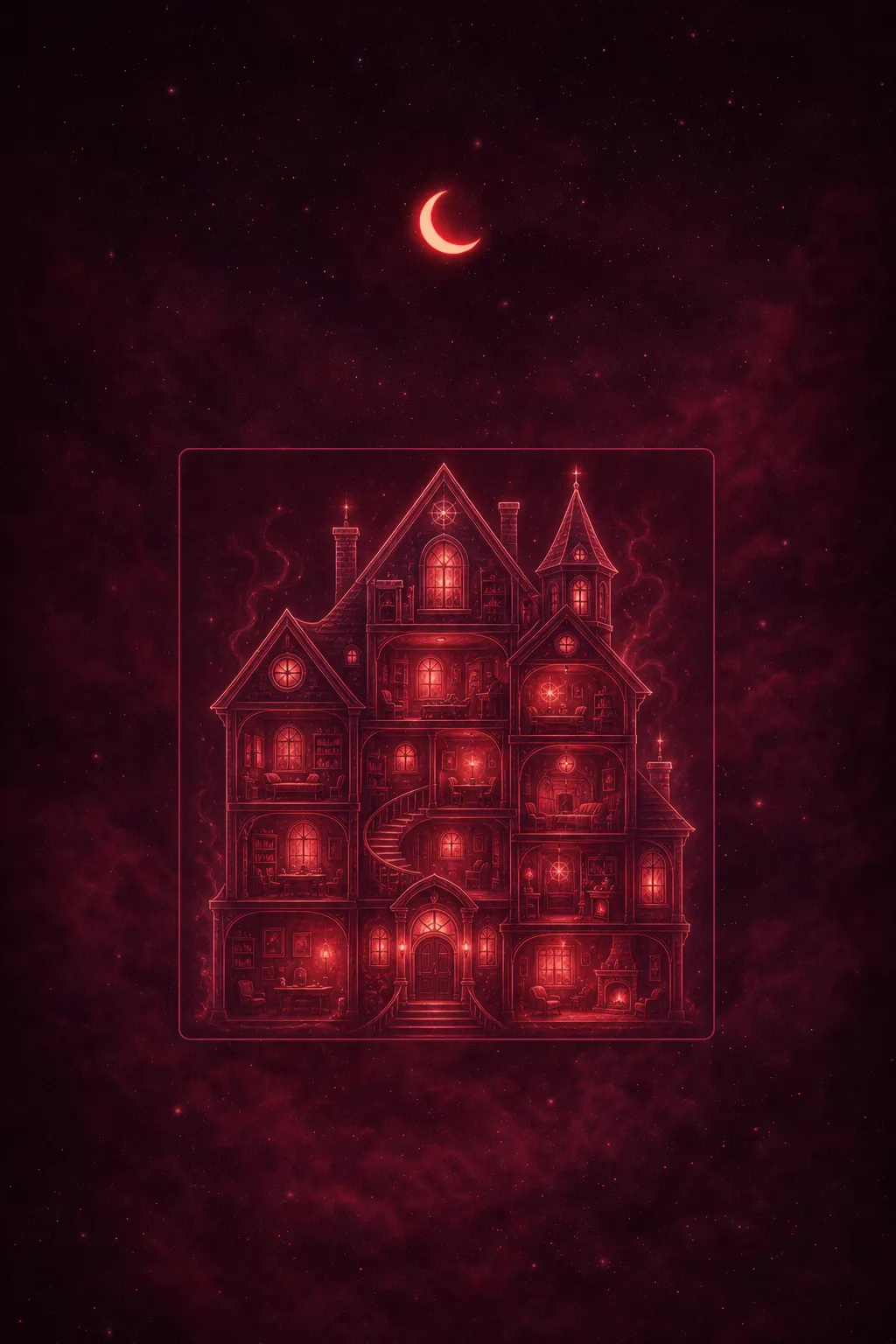

Dreaming of a house with many rooms meaning reflects the complexity of your inner self, where each room symbolizes a different aspect of your personality, hidden emotions, or unexplored potential waiting to be discovered and understood as you move through different stages of personal growth.
In under a minute you could read what your exact dream means for you, and see a picture of it. Free.
You read what it can mean. But what did yours mean?
General meanings stop here. In the free app, tell Dream Book your exact dream and get a reading that actually makes sense for you.


Common Dream Scenarios Involving a House with Many Rooms
The specific details of how you move through the house matter enormously. Discovering rooms you never knew existed is the most frequently reported variant, and it typically carries an uplifting charge — a sudden sense that you are more than you thought. Psychologically, this maps onto encountering untapped talents or overlooked strengths, and many people wake from this scenario feeling quietly energized. By contrast, wandering through endless rooms and losing your bearings flips that wonder into modern-anxiety territory: the house becomes a sprawling to-do list you can never finish, mirroring a waking life pulled in too many directions. If this scenario recurs, it often signals a genuine need to consolidate priorities and reclaim a sense of control. At Dream Book we explore this symbol in depth.
- Locked or forbidden rooms: repressed memories or feelings you are not yet ready to face; curiosity warring with dread is itself the message — readiness is still forming.
- Empty, unfurnished rooms: potential waiting to be claimed, or a hollow sense of purposelessness; context and emotion on waking distinguish opportunity from emptiness.
- Rooms in decay or disrepair: neglected corners of identity — relationships, health, or values that have gone without attention; notably, a basement in ruin often deepens this theme, pointing to long-buried material.
- Grand or expanding rooms: growing self-worth and ambition, though an over-the-top opulence can hint at ego-inflation worth examining.
- Rooms occupied by strangers: relational boundaries being tested, or aspects of yourself you have projected outward and not yet owned.
But what does your version mean?
Across all variants, pay attention to whether you feel invited or intruded upon, in charge or adrift — that emotional undercurrent is usually the clearest guide to what the dream is asking you to address in waking life.
What this dream could look like
Tap an image to open it full screen
Example images. Only you can see what you write in Dream Book.
Psychological Meaning of a House with Many Rooms
In mainstream psychological terms, a house with many rooms is one of the mind's most precise self-portraits. Each room represents a compartmentalized aspect of identity — the roles you perform, the memories you store, the emotions you keep behind closed doors. When the dream reveals an unfamiliar wing or a locked chamber, the subconscious is signaling that part of your inner life has been sectioned off, either to protect you or because you simply haven't had the courage — or the time — to look inside. Venturing into an unlit basement level of that same house deepens the reading: the further down you go, the older and more buried the psychological material tends to be.
Modern life adds a distinct layer of anxiety to this symbol. Managing a career, relationships, finances, health, and personal values can feel like trying to keep track of an enormous, sprawling property — rooms multiplying faster than you can furnish them. Dreams of getting lost in corridors or finding more rooms than you can possibly attend to often reflect the very real stress of an overstretched life, a psyche asking whether you are in control of your own complexity or merely wandering through it.
- Wonder at new rooms: signals untapped capacity or a growing sense of self — psychologically healthy expansion.
- Anxiety about hidden rooms: suggests repressed emotions or aspects of identity that feel threatening to integrate.
- Inability to leave a room: may point to a fixation, unresolved grief, or a role you feel trapped within.
- Restoring a neglected room: reflects active inner work — a conscious effort toward wholeness and self-reclamation.
General meanings end here. Read your own dream.
Describe your dream in a line or two. In seconds you get a reading of your exact dream, a picture drawn from your own words, and every symbol explained.
Free. No sign-up. Takes 10 seconds. Your dream stays private.
0%
Analyzing your dream…
Something went wrong. Please try again in a moment.
Your dreams deserve more than a dictionary
Cultural and Traditional Readings of a House with Many Rooms
Across Western folk tradition, the home has long served as a symbol of the soul's dwelling place — a belief embedded in English idioms like "a house divided" and in the long literary history of haunted or labyrinthine mansions that mirror their owner's inner state. Gothic fiction from Bleak House to The Turn of the Screw exploited this instinct deliberately: a house whose rooms multiply beyond counting signals a self that has grown too complex, too secretive, or too unexamined to be comfortably inhabited. That cultural inheritance quietly shapes how modern dreamers feel when they wake from such a dream — the sprawling house carries a faint charge of both wonder and unease before any analysis begins.
Was yours a sign? Find out.
Within US Christian folk spirituality, the many-roomed house resonates with John 14:2 — "In my Father's house are many mansions" — lending the image an occasional connotation of divine abundance or spiritual preparation. In this reading, discovering an unknown room can feel less like anxiety and more like grace: a reminder that capacity and calling exceed what is currently visible. That hopeful undercurrent sits alongside the more cautionary folk wisdom that a cluttered or locked room signals something left unconfessed or unresolved, themes that surface in American pastoral counseling traditions around self-examination and accountability.
Modern cultural anxiety adds its own layer. In an era defined by relentless role-switching — employee, parent, partner, public persona — the many-roomed house speaks directly to the cognitive load of managing a segmented life. Finding a locked door in such a dream may reflect a felt loss of control over one's own complexity rather than a supernatural warning, a thoroughly contemporary fear dressed in an ancient architectural image.
Spiritual Meaning of a House with Many Rooms
From a Christian perspective, the image carries a quiet but reassuring resonance with John 14:2 — "In my Father's house are many mansions" — a verse that has comforted believers for centuries with the promise of a place already prepared. When this imagery surfaces in a dream, some readers find it less a psychological puzzle and more a spiritual reminder: that the soul has depth, that its many chambers are known and held by something larger than the anxious self. Rather than feeling overwhelmed by all those unlocked doors you have yet to open, the biblical frame reframes that vastness as divine provision rather than personal deficit.
A bad dream isn't a bad sign.
Broader spiritual traditions reinforce this reading without claiming it. Many contemplative paths — from Christian mysticism to general Western spirituality — have long used the interior castle or many-roomed house as a metaphor for the soul's journey inward toward its own center. The undiscovered room, in this light, is not a threat but an invitation: a space prepared for growth that has not yet been entered.
- Rooms in good condition may suggest areas of the self that feel spiritually aligned or at peace.
- Locked or neglected rooms can point to spiritual avoidance — aspects of conscience, calling, or grief that have been walled off.
- Discovering an unexpected room may feel, in waking life, like a nudge toward unexplored purpose or faith that has quietly expanded beyond old boundaries.
Related Dream Meanings
common dreams
Dreaming of Basement Meaning: What Your Subconscious Reveals
5 min read
common dreams
Door Dream Meaning: Opportunities, Transitions & Choices
5 min read

common dreams
Alcohol Dream Meaning: Escapism, Inhibitions & Control
5 min read

common dreams
Colors Dream Meaning: Emotions & Subconscious Messages
5 min read

common dreams
Blue Dream Meaning: Calm, Healing & Deeper Feelings
5 min read

common dreams
Green Color Dream Meaning: Growth, Healing & Renewal
5 min read

common dreams
Purple Dream Meaning: Spirituality, Creativity & Change
5 min read

common dreams
Forest Dream Meaning: Growth, Fear & Hidden Desires
5 min read
Practical Takeaways: What to Do After This Dream
Rather than letting the image fade by morning, treat it as a low-pressure audit of your current life. A house with many rooms is essentially your mind handing you a floor plan — and the practical question is which rooms deserve more of your time and which have been locked for too long. If the dream left you feeling overwhelmed, that reaction often mirrors real-world overcommitment: too many roles, too many obligations running in parallel with no clear priority. Start by listing the main "rooms" of your waking life — work, relationships, creative pursuits, health — and honestly assess which feel neglected or shut off.
If the dream featured an unknown room that sparked curiosity rather than dread, take that as a nudge toward something you have been postponing. A new skill, an old interest, a conversation you have been avoiding — any of these could be the unlocked door your subconscious is pointing toward. Journaling immediately after the dream, even in rough notes, tends to preserve the specific emotional tone of each room, which is often more informative than the room's contents alone. You might also find it useful to revisit a door that appeared in the dream — what it looked like and whether you opened it can clarify what threshold you are hesitating to cross in real life.
But what does your version mean?
- Map your roles: Write down the major areas of your life and note which feel energizing versus draining or ignored.
- Act on the curiosity signal: If a new room felt exciting, schedule one small concrete step toward whatever waking-life pursuit it suggests.
- Check your load: Persistent anxiety in the dream may indicate you are managing more than is sustainable — consider where you can simplify or delegate.
- Journal the emotional texture: Note the condition of each room (bright, dusty, locked) as a quick shorthand for how you actually feel about that life area.
One dream is never the whole picture.
The free app remembers your dreams, draws them, and connects the threads over time — so the next one means even more. Free to start.
People Also Ask
In Christian interpretation, a new house with many rooms often echoes John 14:2 — 'In my Father's house are many mansions.' It can symbolize spiritual abundance, divine preparation, and God's provision for your future. The dream may be an encouraging sign of blessings, growth, and a deepening relationship with your faith.
A house in a dream spiritually represents the self — your mind, soul, and inner world. Each part of the house reflects a different aspect of your being. Its condition, size, and atmosphere reveal your current emotional and spiritual state, pointing to areas of strength, neglect, hidden potential, or need for inner healing.
Rooms typically represent different aspects of your personality, life, or consciousness. A bedroom may relate to intimacy or rest, while a kitchen suggests nourishment and creativity. Locked or hidden rooms often symbolize repressed memories or unexplored potential. Each room invites you to examine a specific part of yourself more closely.
Discovering extra rooms in your house is a powerful dream symbol suggesting untapped potential, hidden talents, or unexplored opportunities in your waking life. It often signals personal growth and self-discovery. These rooms may also represent aspects of yourself you have overlooked or suppressed, and the dream encourages you to explore them with curiosity and openness.
Curious what your dream would look like?