
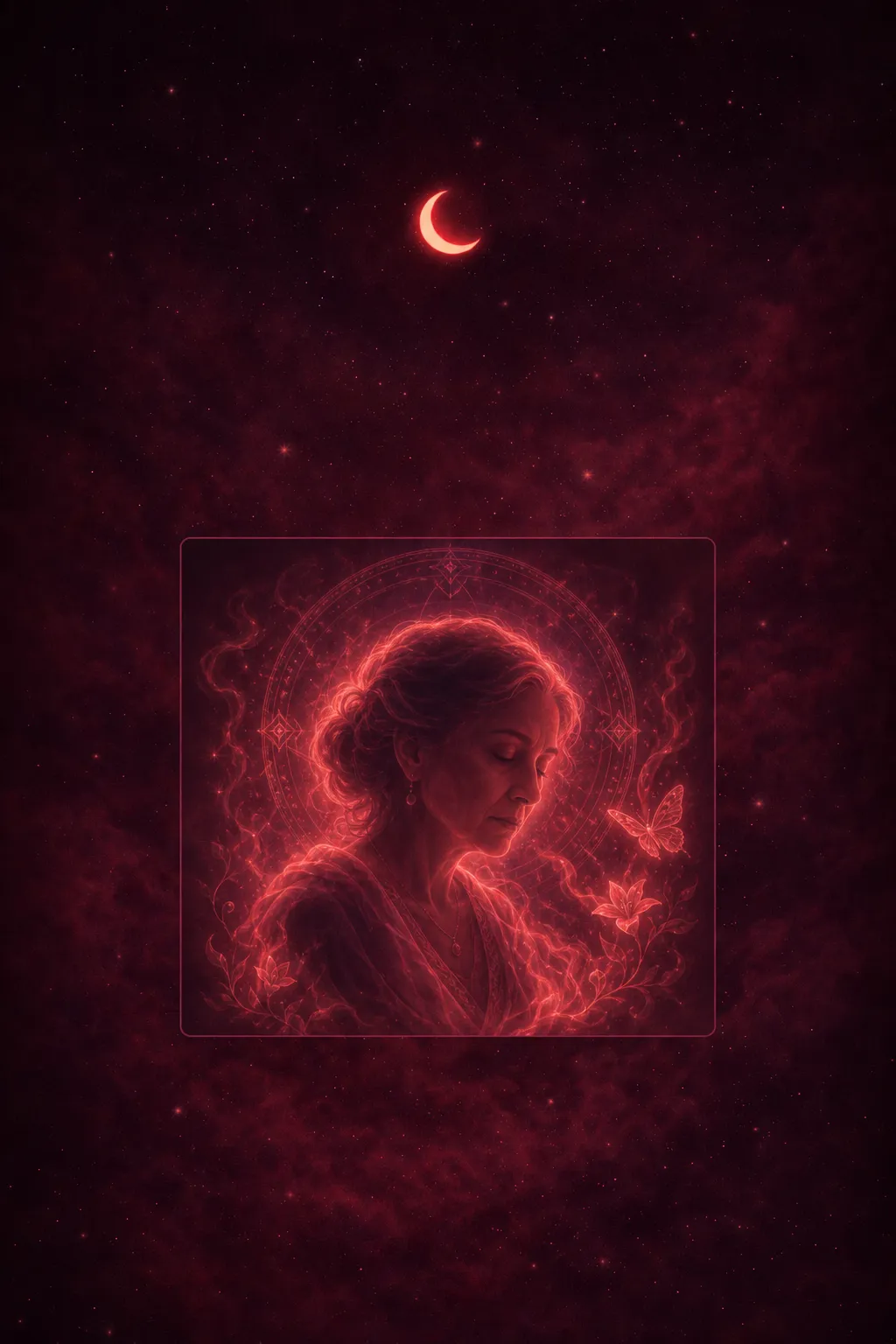

Dreaming of a dead aunt usually reflects unresolved grief, a longing for her wisdom, or your mind processing loss and family bonds. It can also signal that you are seeking guidance during a difficult time. In many cases, these dreams are a comforting visit from memory rather than a cause for concern.
In under a minute you could read what your exact dream means for you, and see a picture of it. Free.
If they came to you in that dream, you already know it felt like more than a dream.
This page can't tell you what the visit meant for you. The free app gives you the warm, spiritual reading of your own dream — gently, in plain words.


Common Dead Aunt Dream Scenarios
Your Dead Aunt Visits and Speaks to You
This is the dream that stays with you all day. Your aunt appears — sometimes younger than you remember, sometimes exactly as she was — and she says something. It might be comforting. It might be cryptic. Either way, you wake up feeling like it mattered.
These deceased visiting dreams carry a particular emotional weight that ordinary dreams don't. The message your aunt delivers often reflects something your own mind already knows but hasn't let yourself think clearly. She becomes the messenger for your own buried insight. Pay attention to the exact words, even if they seem strange — your dreaming mind chose them deliberately.
Was yours a sign? Find out.
Your Aunt Appears Distressed or Warning You
When your dead aunt looks frightened, sad, or tries urgently to tell you something you can't quite hear, the dream leans into nightmare territory. This version tends to surface during periods of real-life stress — when you're about to make a decision she would have had opinions about, or when something in your life is quietly going wrong.
Dreams about talking to the dead that end in frustration — where you can't hear them, or they fade before finishing — often represent your own unresolved grief. The inability to hear her is the dream's way of showing you that the conversation you needed never fully happened.
Your Aunt Dies Again in the Dream
Watching someone die twice is one of the more disorienting dream experiences. If your aunt has already passed and you dream of her dying again, your mind isn't being cruel — it's re-processing. Grief doesn't move in a straight line, and sometimes the psyche needs to rehearse loss again to absorb it more fully.
This scenario overlaps with broader dreams about someone dying and often spikes around anniversaries, birthdays, or family milestones your aunt would have attended. The dream isn't a bad omen. It's emotional housekeeping.
Your Aunt Gives You Something
She hands you an object — a ring, a letter, something from her house. This is one of the most symbolically rich variations. What she gives you tends to represent what she embodied in your life: her practicality, her warmth, her particular kind of strength. Dreams about receiving gifts from the dead are almost universally understood across cultures as a positive sign — a transmission of something the deceased wanted you to carry forward.
Notice what the object is. A key suggests access to something locked inside you. Food suggests nourishment you've been denying yourself. Her personal belongings suggest inheritance — not material, but emotional or spiritual.
What this dream could look like
Tap an image to open it full screen
Example images. Only you can see what you write in Dream Book.
Psychological Interpretation
Freud would have been interested in which aunt this is and what she represented in your family system. For Freud, the figures who populate our dreams are rarely just themselves — they stand in for dynamics, desires, and repressions. An aunt occupies a specific psychological position: close enough to feel familial, but slightly outside the immediate parent-child axis. That distance made her either a refuge or a complication, and Freud would argue that what she symbolizes in the dream reflects exactly which one she was for you.
Jung's reading goes deeper into the archetypal layer. He saw deceased figures in dreams as aspects of the Self — parts of your own psyche that have been integrated, lost, or are waiting to be claimed. If your aunt carried qualities you admired — courage, creativity, a particular way of seeing the world — her appearance in your dream may signal that those qualities are asking to be activated in your own life now. Jung called this individuation: the slow process of becoming more wholly yourself. Your dead aunt, in this framework, isn't a ghost. She's a mirror. This connects to how dead grandmother dreams and dead mother dreams function similarly — each deceased female relative tends to carry a distinct archetypal charge.
But what does your version mean?
Calvin Hall spent decades analyzing tens of thousands of dream reports and found that dreams about deceased relatives were among the most emotionally intense in his entire dataset. His cognitive theory frames these dreams not as supernatural events but as the mind's way of continuing relationships that mattered. We keep talking to the people we loved, even after they're gone — just in a different medium. Ernest Hartmann, whose work on emotional memory processing reshaped how we think about nightmares, would add that these dreams serve a therapeutic function: they let you feel the grief in a contained space, processing the loss in ways waking life doesn't always allow.
Hobson and McCarley's activation-synthesis model offers the neurological counterpoint. Their research suggests that during REM sleep, the brain fires semi-randomly and then constructs a narrative to make sense of those signals. From this view, your aunt appears because her memory traces are emotionally charged enough to activate during sleep — and your dreaming brain builds a story around her. That doesn't make the dream meaningless. It makes it a map of what your brain still holds most tightly.
General meanings end here. Read your own dream.
0%
Analyzing your dream…
Something went wrong. Please try again in a moment.
Your dreams deserve more than a dictionary
Cultural & Spiritual Meaning
In many Western traditions, dreaming of a deceased relative — especially one who visits calmly and with apparent purpose — is understood as a form of contact rather than mere memory. Grief counselors have documented this phenomenon extensively: the "visitation dream" tends to feel qualitatively different from ordinary dreaming, more vivid, more emotionally coherent, and more memorable years later. Whether you interpret that as spiritual contact or as the brain's most sophisticated form of grief processing depends on your worldview — but the experience itself is remarkably consistent across cultures.
Ibn Sirin, the 8th-century Islamic scholar whose dream interpretations remain influential across the Muslim world, held that seeing a deceased relative in a dream was generally auspicious. Specifically, he taught that if the dead person appears healthy and at peace, the dream carries blessings — sometimes interpreted as the deceased's soul being in a good state, and sometimes as a sign of protection extended to the dreamer. If the deceased appears troubled or ill, Ibn Sirin advised the dreamer to give charity and pray on their behalf. His framework treats the dream as a genuine channel between the living and the dead, not a psychological artifact.
In many Indigenous traditions across the Americas, Africa, and Southeast Asia, ancestors — including aunts and extended family — are understood to remain active participants in the lives of the living. Dreaming of them isn't unusual; it's expected. The dream is often seen as the ancestor fulfilling their ongoing role as guide and protector. Chinese cultural tradition similarly honors deceased relatives through dream visitation, and a dream of a dead aunt around the time of the Qingming Festival or another ancestral observance would be seen as deeply significant — a sign that the bonds of family extend beyond death.
Related Dream Meanings
nightmares
Deceased Visiting Dream: Closure, Guidance & Grief
5 min read
nightmares
Talking to Dead: Meaning and Interpretation
6 min read
nightmares
Someone Dying Dream Meaning: Change & Fear of Loss
5 min read
nightmares
Dreaming of a Dead Person Giving Me a Gift — What It Means
5 min read
nightmares
Dead Grandmother Dream: Guidance, Grief & Hidden Feelings
5 min read

nightmares
Dead Mother: Meaning and Interpretation
5 min read
nightmares
Dead Relative: Meaning and Interpretation
5 min read
nightmares
Speaking With Dead Dream Meaning: Grief & Guidance
6 min read
What to Do After This Dream
First: don't dismiss it. Whatever your belief system, a dream this emotionally charged is telling you something worth hearing. Sit with it for a few minutes before the day rushes in.
A bad dream isn't a bad sign.
Write down everything you remember — not just what happened, but how it felt. The emotional texture of the dream is often more revealing than the narrative. Was there warmth? Fear? Longing? That feeling is the message.
Ask yourself what your aunt represented in your life. Was she the one who told you the truth when others wouldn't? The one who made you feel unconditionally accepted? The one whose approval you never quite got? Whatever role she played, the dream is likely pointing to that same theme in your current life. You might also find it useful to explore how dead relative dreams function more broadly — the patterns often illuminate what's specific to your aunt's appearance.
If grief is present, let it be present. Hartmann's research is clear: suppressing the emotional content of these dreams delays processing rather than preventing it. If you find yourself crying after this dream, that's not weakness — that's the dream doing exactly what it's supposed to do.
If this dream keeps returning, it's worth exploring with a personalized interpretation. Dream Book lets you describe your dream in detail and ask follow-up questions to understand what your subconscious is actually working through — going further than any general dictionary can.
Was yours a sign? Find out.
Understanding your dead aunt dream is the first step. The next is asking what it means for your life right now — that's where a personalized interpretation goes deeper than any dictionary.
Keep the ones that matter close.
The free app saves your most meaningful dreams and reads the signs across them — so a visit or a sign is never lost. Free to start.
People Also Ask
Dreaming of a deceased aunt typically reflects ongoing grief, a need for the guidance or comfort she provided in life, or unresolved feelings connected to your relationship with her. It can also signal that qualities she embodied — her strength, warmth, or wisdom — are qualities your subconscious is asking you to access in yourself right now.
Many people describe these dreams as feeling qualitatively different from ordinary dreams — more vivid, emotionally coherent, and memorable. Whether you interpret that as a genuine visitation or as the brain's most emotionally charged form of memory processing is a personal and cultural question. Both frameworks take the dream seriously as meaningful.
Recurring dreams about a deceased aunt often point to unresolved grief, an unfinished emotional conversation, or a pattern in your current life that echoes your relationship with her. They can also intensify around anniversaries, family events, or major decisions she would have had a role in.
Receiving an object from a deceased aunt in a dream is widely seen across cultures as a positive symbol — a transmission of something she wanted you to carry forward. The specific object matters: pay attention to what it is and what it meant to her or to your relationship with her.
Curious what your dream would look like?