
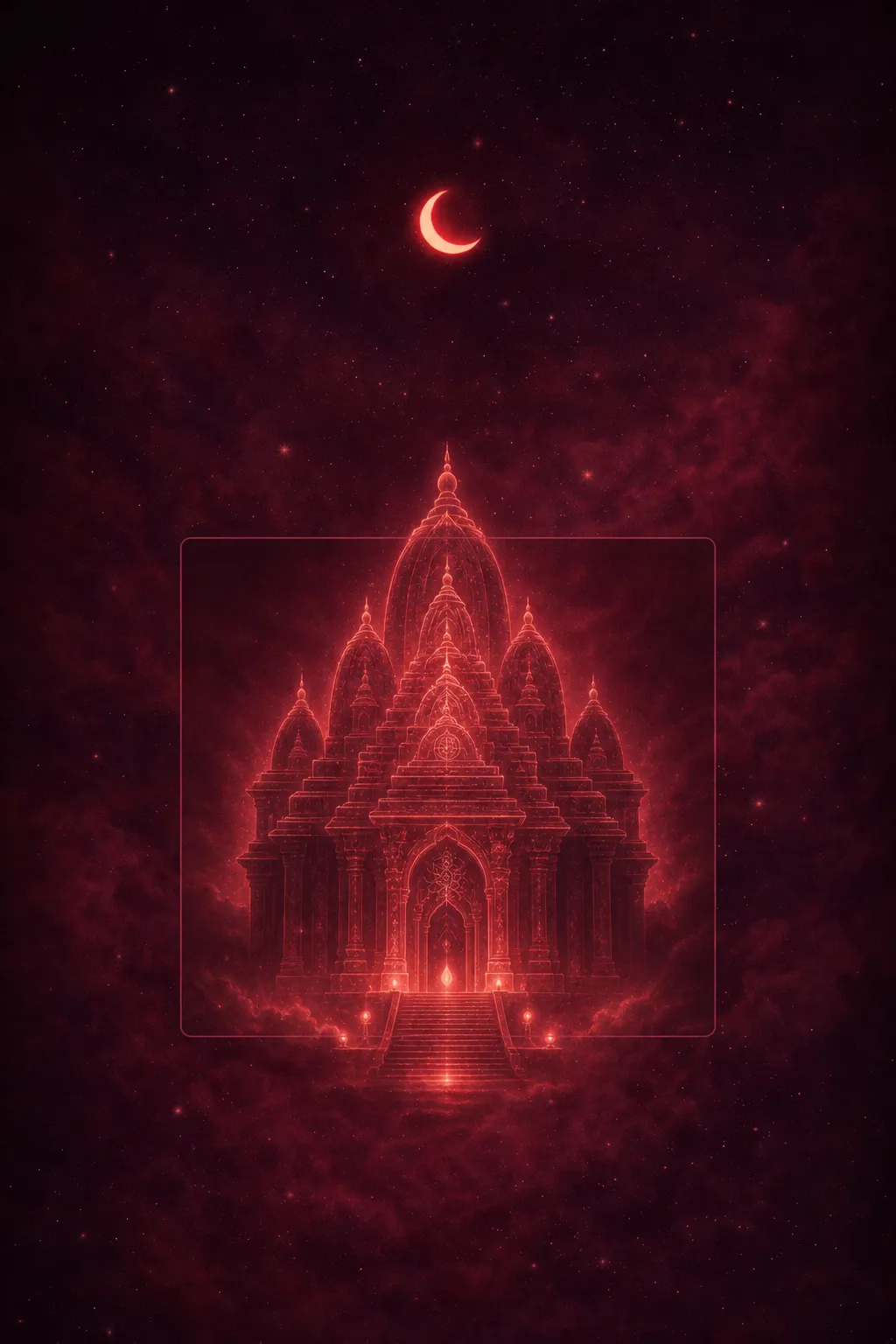

Dreaming of a temple often reflects a deep need for spiritual connection, inner peace, or moral guidance. It can signal that you are seeking answers to life's bigger questions or craving a sense of sanctuary. The temple's condition and your feelings inside it usually point to how aligned you feel with your own values and inner truth.
In under a minute you could read what your exact dream means for you, and see a picture of it. Free.
A dream still on your mind? Get your personal reading.
Describe your dream in a line or two. In seconds you get a reading of your exact dream, a picture drawn from your own words, and every symbol explained.
Free. No sign-up. Takes 10 seconds. Your dream stays private.
0%
Analyzing your dream…
Something went wrong. Please try again in a moment.
Your dreams deserve more than a dictionary
Common Temple Dream Scenarios
Entering a Temple
Walking through the doors of a temple in a dream is one of the most charged threshold moments your subconscious can stage. You're crossing from the ordinary world into something set apart — and that crossing matters. This dream often surfaces when you're standing at a real crossroads in your waking life, about to make a decision that feels bigger than the practical details suggest.
Pay attention to how it feels to walk in. Awe, peace, dread — each emotion is a different message. If you feel relief the moment you step inside, your mind is telling you that you've been running on empty and it's time to stop. If you feel unworthy, that's worth sitting with too.
But what does your version mean?
A Ruined or Abandoned Temple
Crumbling stone, overgrown courtyards, silence where there should be ceremony. A ruined temple dream often reflects a spiritual life that's been neglected — not necessarily religion, but whatever gives your life meaning. It's the inner sanctuary you built years ago and stopped visiting.
This dream can also connect to grief. If you've recently lost someone or something central to your identity, the ruined temple is the mind's way of showing you what that loss looks like from the inside. It's related to the same emotional territory you enter when you dream about an old house — a place that once held something precious, now hollow.
Praying or Meditating Inside a Temple
When you're actively engaged inside the temple — kneeling, chanting, sitting in stillness — the dream is pointing toward integration. Something in you is trying to reconcile opposing forces: ambition and rest, logic and intuition, the self you show the world and the one you keep private. This is deep inner work happening while you sleep.
Sometimes this dream follows a period of intense stress. Your nervous system is essentially creating its own therapy session. If the prayer feels urgent or desperate rather than peaceful, look at what you've been asking for in your waking life — and whether you've actually been honest with yourself about it. Dreams of churches carry a similar energy, though temples tend to feel more universal, less bound to a single tradition.
Being Forbidden or Unable to Enter a Temple
You reach the doors and they won't open. A guard turns you away. You're standing outside looking in through a gate. This scenario cuts deep because it's about exclusion from something you sense you need. It often reflects shame — the feeling that you're not good enough, not spiritual enough, not healed enough to access your own inner wisdom.
It can also signal self-imposed barriers. The locked door isn't always someone else's judgment — often it's yours. If this dream keeps repeating, ask yourself what condition you've secretly decided you need to meet before you're allowed to feel at peace. The gates of heaven carry a similar symbolic weight in dreams — the threshold you believe you haven't yet earned.
What this dream could look like
Tap an image to open it full screen
Example images. Only you can see what you write in Dream Book.
Psychological Interpretation
Freud would have read the temple as a wish-fulfillment structure — a place the dreaming mind constructs to satisfy a longing that conscious life has suppressed. For Freud, sacred spaces in dreams often mask desires we've dressed up in spiritual clothing to make them acceptable. The temple might be less about God and more about the self you secretly want permission to be. He was fascinated by the way the mind uses architecture to contain what it can't otherwise hold.
Jung took a different angle entirely. For him, the temple is an archetypal image from the collective unconscious — a symbol that appears across every culture and era because it represents the Self, the organizing center of the psyche. Dreaming of a temple, in Jungian terms, is often a sign that individuation is underway: the slow, difficult process of becoming whole. It can also summon the Shadow — that part of yourself you've refused to acknowledge — especially in dreams where the temple feels threatening or forbidden. Jung would say the temple that frightens you is the one most worth entering. This connects to why dreams of heaven and sacred architecture appear so frequently during major life transitions.
Was yours a sign? Find out.
Calvin Hall's content analysis of more than 50,000 dream reports found that settings in dreams are rarely random — they consistently reflect the dreamer's emotional preoccupations. Sacred buildings appeared most often during periods of identity questioning and life transition. Hall would point out that what you do inside the temple matters as much as the temple itself: passive observation versus active participation signals very different psychological states.
Ernest Hartmann's research on dreams as emotional memory processing offers another lens. For Hartmann, the dreaming brain takes your most pressing emotional concerns and finds images that give them shape. A temple dream, in his framework, is the mind finding a container large enough to hold something that feels overwhelming — grief, longing, spiritual hunger. The dream isn't just representing the feeling; it's actively processing it, the way water dreams often process emotions that feel too fluid to name.
Every dream you log starts to connect.
Dream Book keeps your dreams in one place and reveals the threads between them over time — your private dream journal. Free to start.


Cultural & Spiritual Meaning
Across Western traditions, the temple has always stood for the point where the human and the divine meet. In Christian symbolism, the body itself is called a temple — which means dreaming of one can be a message about how you're treating yourself, your health, your inner life. The cross and the Bible appear in dreams as instruments of guidance; the temple is the space that holds them. It's the sacred container, and what happens inside it is the message.
In Eastern traditions — Hindu, Buddhist, Shinto — temples are places of active relationship between the earthly and the transcendent, not merely houses of worship. Dreaming of a Hindu temple often signals that a karmic cycle is completing or beginning. A Buddhist temple in dreams frequently points toward the need for stillness, for stepping off the wheel of constant doing. These traditions would read the ruined temple not as failure but as impermanence — a reminder that all forms eventually dissolve, and that's not a tragedy.
A bad dream isn't a bad sign.
Ibn Sirin, the 8th-century Islamic scholar whose dream interpretations remain foundational to this day, wrote that dreaming of a place of worship signals divine favor and a call to return to one's spiritual obligations. Specifically, he interpreted entering a mosque or sacred space as a sign of protection and guidance — but warned that dreaming of being expelled from such a place could indicate moral drift or unresolved wrongdoing. His framework is less psychological than prophetic, but the emotional logic is the same: the sacred space in your dream is a mirror of your spiritual standing.
Related Dream Meanings

common dreams
Old House Dream Meaning: Past, Nostalgia & Unresolved Issues
5 min read

people
Church Dream Meaning: Spirituality, Guidance & Belief
5 min read
common dreams
Gates of Heaven Dream Meaning: Transition & Peace
5 min read
common dreams
What Does It Mean to Dream About Heaven
5 min read

common dreams
Water Dream Meaning: Emotions, Intuition & Growth
5 min read

people
Cross Dream Meaning: Faith, Sacrifice & Crossroads
5 min read

people
Bible Dream Meaning: Spiritual Guidance & Inner Truth
5 min read
common dreams
Mansion: Meaning and Interpretation
5 min read
What to Do After This Dream
Start by writing down every detail you can remember — the architecture, the light, who else was there, how your body felt. Temple dreams are dense with information, and the details you almost forget are often the most important ones.
Ask yourself one honest question: what in my life right now feels like it needs to be treated as sacred — and am I treating it that way? This dream almost always surfaces when there's a gap between your values and how you're actually living. It's not an accusation. It's an invitation.
If this dream keeps returning or feels particularly charged, it's worth exploring with a personalized interpretation. Dream Book lets you describe the full context of your dream and ask follow-up questions, so you can move past the general meaning and understand what your subconscious is actually working through.
Consider whether anything in your waking life has been calling for more reverence — a relationship, a creative pursuit, your own body. Sometimes the temple dream isn't about spirituality in the traditional sense at all. It's about the places and people you've stopped treating as precious.
But what does your version mean?
Understanding your temple dream is the first step. The next is asking what it means for your life right now — that's where a personalized interpretation goes deeper than any dictionary.
One dream is never the whole picture.
The free app remembers your dreams, draws them, and connects the threads over time — so the next one means even more. Free to start.
People Also Ask
Dreaming of visiting a temple usually signals a search for meaning, inner peace, or spiritual connection. It often appears during major life transitions when you're questioning your values or sense of purpose. The emotional tone of the visit — awe, fear, peace — shapes the specific message.
A ruined temple in a dream typically reflects neglected spirituality, a loss of meaning, or grief over something that once gave your life structure. It can also point to a part of your identity that has been abandoned rather than outgrown. This dream is less a warning than an invitation to revisit what you've left behind.
Temple dreams are generally positive signs — they indicate that your subconscious is oriented toward depth, meaning, and inner growth. Even darker variations, like being refused entry, are less about punishment and more about self-imposed barriers worth examining. Ibn Sirin considered dreaming of sacred spaces a sign of divine favor and protection.
Recurring temple dreams usually mean there's an unresolved spiritual or existential question your waking mind keeps avoiding. Your subconscious is persistent — it will keep returning to the image until you engage with what it's pointing toward. Keeping a dream journal and tracking what's happening in your life on those nights often reveals the pattern.
Curious what your dream would look like?