
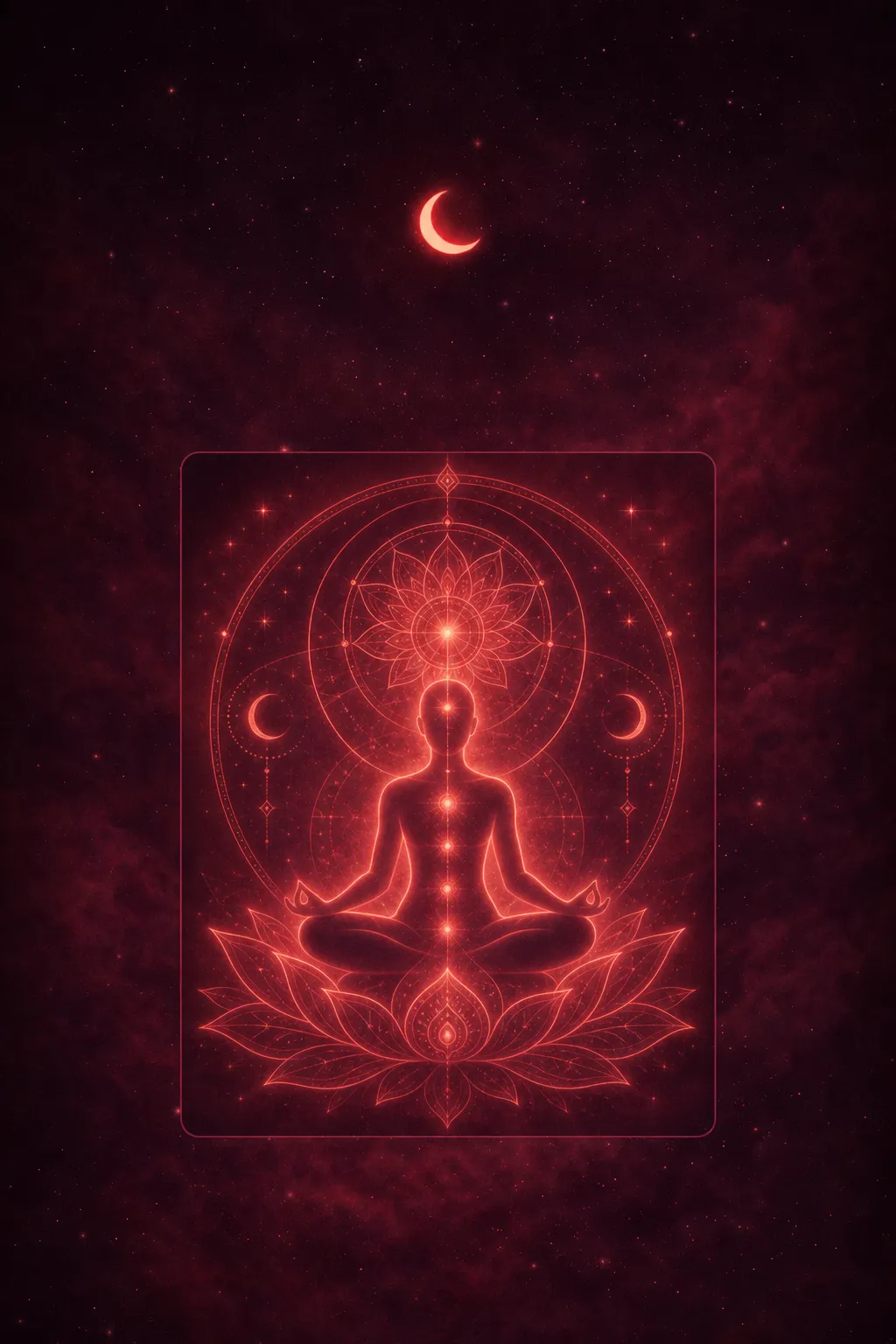

Dreaming of meditation often reflects a deep need for inner peace, stillness, or emotional balance in your waking life. It can signal that your subconscious is urging you to slow down, reconnect with yourself, or seek clarity amid stress. This dream may also represent personal growth, spiritual awakening, or a desire to resolve inner conflict.
In under a minute you could read what your exact dream means for you, and see a picture of it. Free.
A dream still on your mind? Get your personal reading.
Describe your dream in a line or two. In seconds you get a reading of your exact dream, a picture drawn from your own words, and every symbol explained.
Free. No sign-up. Takes 10 seconds. Your dream stays private.
0%
Analyzing your dream…
Something went wrong. Please try again in a moment.
Your dreams deserve more than a dictionary
Common Meditation Dream Scenarios
Meditating and Feeling Profound Peace
You're seated, breathing, and the world dissolves into something luminous and calm. This is one of the more quietly powerful dreams you can have — not dramatic, but deeply significant. It points to integration: some part of your inner life is settling into alignment, and your sleeping mind is marking that shift.
Ernest Hartmann, who spent decades studying how dreams process emotional experience, would read this as your brain doing exactly what it's built for — filing away unresolved tension and replacing it with coherence. The peace isn't just pleasant imagery. It's the feeling of emotional knots coming loose. If you've been running from something in recent dreams, this kind of dream often arrives as the counterweight.
But what does your version mean?
Unable to Meditate or Stay Still
You sit down to meditate in the dream, but your mind won't quiet. Thoughts spiral. Your body won't stop moving. The practice you're trying to enter keeps slipping away. This scenario is surprisingly common, and it tends to surface when you're carrying more than you're consciously acknowledging.
Think of it as your subconscious holding up a mirror. The inability to reach stillness in the dream reflects a waking state of fragmentation — something unresolved that you're circling without landing on. It can also signal anxiety about self-examination itself. What if you stop long enough to hear what's underneath? If teeth-falling-out dreams have been appearing alongside this one, you're likely in a period of real psychological pressure.
Meditating and Leaving Your Body
The meditation deepens, and suddenly you're watching yourself from above. Or you drift through walls. Or the room dissolves and you're somewhere else entirely. This overlap between meditation dreams and out-of-body experiences is one of the most reported in this category — and one of the most charged.
Jung would call this a brush with the deeper layers of the psyche — the collective unconscious announcing itself. The experience of floating free from the body in a dream isn't random neural noise. It often arrives at moments of significant personal transition, when your sense of identity is loosening its grip on old forms. It's related to lucid dreaming territory: the mind becoming aware of itself becoming aware.
Someone Else Meditating — or Watching You
You observe another person in deep meditation, or you realize mid-practice that someone is watching you. The dynamic shifts the meaning considerably. Watching someone else meditate often reflects projected longing — you see in them a peace or centeredness you're reaching for in yourself.
Being watched while meditating carries a different charge. There's vulnerability in stillness, and the presence of an observer can introduce judgment, performance anxiety, or the sense that your inner life isn't truly private. If the watcher in your dream felt threatening, it's worth connecting this to dreams about being watched more broadly — the theme of surveillance over your most interior self.
What this dream could look like
Tap an image to open it full screen
Example images. Only you can see what you write in Dream Book.
Psychological Interpretation
Freud would have found meditation dreams interesting precisely because they seem to resist his framework — and then reveal it. He saw the act of going inward in dreams as wish fulfillment: the dreaming mind staging a retreat from the pressures of waking life, desire, and conflict. But the stillness itself, for Freud, was never truly empty. The quiet of a meditation dream is often where repressed material surfaces most clearly — in the images that intrude, the thoughts that won't stop, the feeling underneath the calm.
Was yours a sign? Find out.
Jung took a more generous view. For him, meditation in a dream is an image of individuation — the lifelong process of becoming fully yourself. The meditating figure is the Self archetype at work, integrating the Shadow and the Persona into something whole. He'd pay close attention to the setting: meditating in a forest carries different weight than meditating in a sterile white room. The environment is part of the message. If your dream meditation involved light, expansion, or a sense of the third eye opening, Jung would see that as the psyche signaling real developmental movement.
Calvin Hall's content analysis of over 50,000 dream reports found that dreams of stillness and contemplation are far less common than action-based dreams — which makes them statistically significant when they do appear. Hall argued that dreams reflect our cognitive concerns: what we're thinking about, what we're trying to solve. A meditation dream, in his framework, suggests you're consciously or unconsciously working on a problem that requires turning inward rather than acting outward. Hobson and McCarley's activation-synthesis model would add a neurological layer: the brain, during REM sleep, generates random neural firing and then constructs a narrative. That your brain chose the image of meditation — of deliberate stillness — as its organizing metaphor says something about the emotional tone it's trying to process.
Every dream you log starts to connect.
Dream Book keeps your dreams in one place and reveals the threads between them over time — your private dream journal. Free to start.


Cultural & Spiritual Meaning
In Eastern traditions — Hindu, Buddhist, Taoist — dreaming of meditation is considered auspicious, a sign that the dreamer is progressing on a spiritual path whether or not they practice in waking life. The dream is understood as the deeper mind recognizing what the surface mind hasn't yet accepted. In Tibetan Buddhist dream practice specifically, the meditating dream-self is seen as the consciousness preparing for the clarity required at death — a rehearsal for the bardos. If your dream included imagery of flying or rising, that vertical movement is read as spiritual ascent.
Ibn Sirin, the 8th-century Islamic scholar whose dream interpretations remain foundational across the Muslim world, wrote that dreaming of sitting in a posture of quiet reflection and prayer signifies closeness to divine guidance and the settling of affairs that have long been in turmoil. He specifically noted that dreams of inner stillness arriving during times of outer chaos are signs of divine mercy — the soul being steadied from within when the world cannot provide stability. The spiritual frame here is less about the self and more about receiving.
A bad dream isn't a bad sign.
In Western psychological tradition, meditation dreams have gained more attention as mindfulness practices have entered mainstream culture. There's a feedback loop at work: people who meditate regularly report more vivid and coherent dreams, and their dreams more frequently feature contemplative imagery. The astral projection experiences that sometimes emerge in meditation dreams sit at the intersection of neuroscience and mysticism — neither tradition fully owns them, and both have something true to say.
Related Dream Meanings

nightmares
Being Chased Dream Meaning: Anxiety & Avoidance
5 min read

body health
Teeth Falling Out Dream: Anxiety, Loss & Vulnerability
5 min read

nightmares
Out of Body Experience Dream Meaning
6 min read
common dreams
Lucid Dreaming Meaning: Control, Awareness & Self-Discovery
5 min read
nightmares
Being Watched: Meaning & Interpretation
5 min read

common dreams
Forest Dream Meaning: Growth, Fear & Hidden Desires
5 min read
common dreams
Third Eye Dream Meaning: Intuition & Awakening
5 min read

common dreams
Flying Dream Meaning: Freedom, Ambition & Escape
5 min read
What to Do After This Dream
Write down everything you remember as soon as you wake — not just the images, but the feeling tone. Was the stillness in the dream something you were reaching for, or something you'd arrived at? That distinction tells you whether you're in the longing or the integration phase of whatever your psyche is working through.
Notice what's happening in your waking life around rest, attention, and noise. Meditation dreams often spike when you're overstimulated, when you're making a significant decision, or when you've been avoiding something you know needs to be looked at. The dream is an invitation, not a verdict.
If this dream keeps returning — especially in different forms — it's worth going deeper than a single interpretation. Dream Book lets you describe your dream in your own words and ask follow-up questions to understand what your subconscious is actually working through, not just what the symbol means in general.
But what does your version mean?
Understanding your meditation dream is the first step. The next is asking what it means for your life right now — that's where a personalized interpretation goes deeper than any dictionary.
One dream is never the whole picture.
The free app remembers your dreams, draws them, and connects the threads over time — so the next one means even more. Free to start.
People Also Ask
Dreaming about meditating usually signals a deep need for stillness, self-examination, or inner integration. It can reflect genuine spiritual progress, unresolved emotional tension seeking resolution, or a turning point where your subconscious is urging you to slow down and listen to yourself.
An out-of-body experience during meditation in a dream often points to a significant personal transition — a loosening of your old identity as you move toward something new. Jung associated this kind of imagery with the deeper layers of the psyche announcing themselves, particularly during periods of real psychological growth.
Dreaming that you can't settle into meditation reflects fragmentation or avoidance in waking life — something unresolved that you're circling without confronting. It often appears during periods of high stress or when you're unconsciously resisting self-examination. The dream is pointing directly at what you're not yet ready to sit with.
Many traditions — including Islamic dream interpretation through Ibn Sirin and Tibetan Buddhist dream practice — consider meditation dreams spiritually significant, often reading them as signs of divine guidance or deepening awareness. Whether you hold a spiritual or psychological framework, the dream consistently signals that something important is happening at the level of your inner life.
Curious what your dream would look like?