
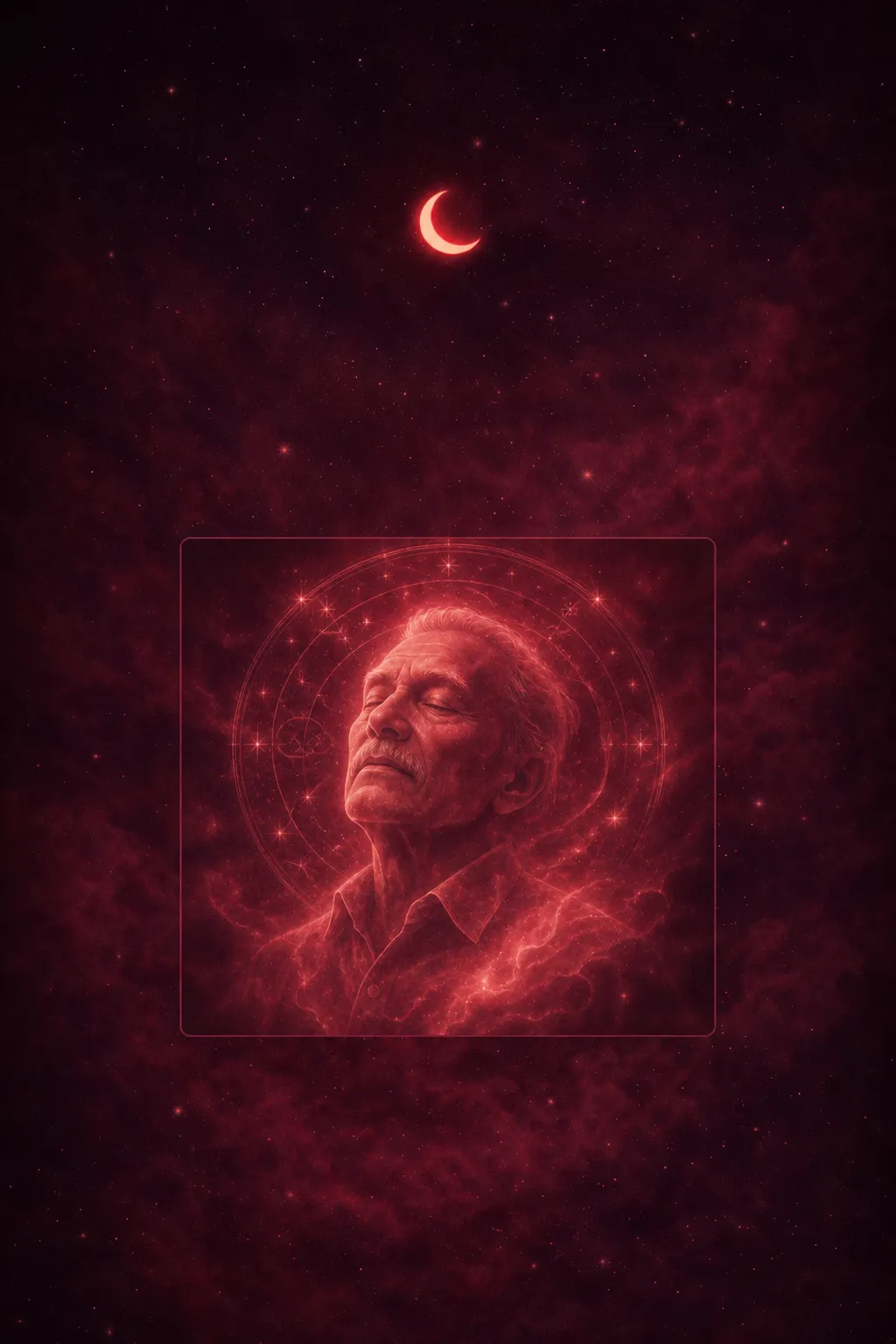

Dreaming of a dead uncle meaning centers on guidance, wisdom, and unresolved grief, as your subconscious conjures this family figure to deliver emotional support, remind you of inherited values, or signal that you need to confront feelings about loss, legacy, and the protective male influences that shaped your life.
In under a minute you could read what your exact dream means for you, and see a picture of it. Free.
If they came to you in that dream, you already know it felt like more than a dream.
This page can't tell you what the visit meant for you. The free app gives you the warm, spiritual reading of your own dream — gently, in plain words.


Common Dream Scenarios Involving a Dead Uncle
The shape the dream takes matters as much as the figure himself. When your uncle appears alive and well — moving through the dream as though nothing ever happened — the psyche is most likely performing an act of wish-fulfillment, restoring a bond the waking mind knows is gone. The feeling is bittersweet rather than eerie: comfort wrapped around loss. A warm reunion, hug, or shared meal deepens this consolation quality, offering a kind of closure that real life rarely packages so neatly — many grievers report these as the most vivid and emotionally settling dreams they experience. At Dream Book we explore this symbol in depth.
- Uncle speaks or gives advice: You are drawing on his remembered perspective to work through a live decision. The words feel external, but the voice is your own internalized version of his guidance — a healthy sign of how mentors shape us long after they are gone.
- Uncle is present but silent, distant, or turning away: This scenario often points to unfinished business — a conversation that never happened, guilt over the relationship's real-life texture, or a general sense of emotional distance that persisted even before he died.
- Witnessing him die again: Delayed or incomplete mourning frequently replays the loss in dream form. If this recurs, consider whether waking life gave you enough space to grieve — or whether modern pressures pushed you to move on too quickly.
- Uncle warns, scolds, or appears troubled: A conscience signal. Anxiety about a family obligation or personal choice you suspect he would disapprove of tends to recruit exactly this kind of authority figure. Revisiting a funeral or gravesite setting within the dream works similarly, helping the mind organize loss into a familiar ritual frame that restores a sense of control.
Was yours a sign? Find out.
Across all these variants, the core question the dream is asking is the same: what did this relationship mean, and what piece of it still needs your attention?
What this dream could look like
Tap an image to open it full screen
Example images. Only you can see what you write in Dream Book.
The Psychological Reading: Grief, Authority, and the Inner Life
From a psychological standpoint, a dead uncle appearing in a dream is rarely just a memory replaying — it is the subconscious actively working through unfinished emotional business. Continuing-bonds theory, a well-established framework in grief research, holds that mourning is not a clean severance but an ongoing, evolving relationship with the person who has gone. The dream becomes a space where that relationship can breathe: you may receive the word of reassurance he never gave you in life, or feel the sting of something left unsaid. If guilt or regret colors the dream's atmosphere, the psyche is flagging unresolved material that conscious life has kept neatly shelved — much like dreaming of other deceased relatives often does.
The uncle occupies a psychologically distinctive role: he is an authority figure, but one removed from the high emotional charge of a parent. Object-relations theory frames this as a transferred caregiver — someone who modeled values, temperament, or a way of being in the world without the full weight of parental attachment. Dreaming of him can therefore surface questions about inherited identity: which of his traits have you quietly absorbed, and which do you quietly resist? In a modern-anxiety context — where many people feel uncertain about legacy, career direction, or who they are becoming — that mentor-at-a-distance can represent the part of yourself searching for guidance that feels earned rather than imposed.
There is also an existential layer worth sitting with. Losing an uncle places a generation between you and mortality; his death reshuffles the family line and quietly reminds you that aging moves in one direction. Common psychological responses include:
But what does your version mean?
- Death-salience anxiety — the dream forcing a reckoning with your own mortality timetable
- Projection of disowned traits — seeing in him qualities you have not yet owned in yourself
- Memory consolidation — the sleeping brain emotionally tagging a specific moment or conversation that still carries unprocessed weight
- A desire for control — grief dreams often intensify during periods of stress, when the mind reaches back for a stabilizing presence
General meanings end here. Read your own dream.
0%
Analyzing your dream…
Something went wrong. Please try again in a moment.
Your dreams deserve more than a dictionary
Cultural and Traditional Readings of a Dead Uncle in Dreams
In mainstream Anglo-American culture, the uncle occupies a distinctive emotional slot in family life — close enough to matter deeply, yet slightly removed from the high-stakes authority of a parent. Folk narratives have long coded the uncle as the cool elder, the mentor who taught you something your parents wouldn't, or the jokester who made holidays bearable. When he appears after death in a dream, that cultural shorthand carries weight: many people instinctively read the vision as a visit or a message rather than random mental noise. Broadly speaking, modern Western attitudes treat dreams about deceased relatives as a healthy, normal part of grieving rather than an ill omen — a sharp contrast to traditions that would have treated such dreams as prophetic warnings requiring ritual action.
Within US Christian households, a dream of a deceased uncle is often interpreted through a comforting lens: the sense that a loved one is "at peace" and checking in. This reading is pastoral rather than doctrinal, rooted in folk piety more than scripture, and it tends to ease anxiety rather than provoke it. From a more secular modern standpoint, the dream often surfaces during periods of stress or life transition — job changes, family conflict, questions of identity — when the psyche reaches for a stabilizing figure who once offered guidance without judgment. The uncle's relative distance from parental authority makes him a safe stand-in for wisdom the dreamer feels they need but cannot demand from parents or peers.
A bad dream isn't a bad sign.
- Mentor archetype: Folk belief often frames the uncle as the guide who bridges generations without the pressure of a parent-child dynamic.
- Comfort over omen: Mainstream Anglo attitudes read these dreams as grief processing, not supernatural warning.
- Anxiety trigger: Recurrent appearances frequently coincide with moments of lost control or identity uncertainty in waking life.
The Spiritual Reading: Visitation, Legacy, and Sacred Comfort
Within a broadly Christian framework — the one many Americans carry even when faith sits quietly in the background — a dream visit from a deceased uncle is often received as something more than mere psychology. Folk-Christian tradition has long held that the dead can appear in dreams bearing peace rather than disturbance, and that such moments echo the biblical hope of reunion beyond death. Scripturally, the emphasis is on comfort rather than divination: these dreams are less about predicting the future and more about feeling, however briefly, that love survives the grave. If your uncle appears calm, reassuring, or simply present, many believers interpret that as a quiet grace — a reminder that the bond formed in life is not fully severed. A broader reflection on dreaming of a deceased relative shows how widely this comfort framework extends across family figures.
Modern anxiety gives this spiritual reading extra weight. When life feels unstable — career pressure, family fractures, decisions that seem too large — the dreaming mind may summon an uncle figure as a stand-in for steadying wisdom you feel is missing. Spiritually framed, this is the soul reaching for guidance it cannot manufacture on its own. Rather than reading the dream as ominous, a spiritually grounded interpretation invites self-reflection: What unresolved question is troubling you? What legacy from this man are you being called to honor or finally release? The dream becomes less a haunting and more a prompt toward self-knowledge — a nudge to examine what values and responsibilities you have inherited, and how consciously you are choosing to carry them forward.
Related Dream Meanings

nightmares
Funeral Dream Meaning: End, Loss & New Beginnings
5 min read
nightmares
Dead Relative: Meaning and Interpretation
5 min read
nightmares
Prison Dream Meaning: Confinement, Freedom & Inner Struggle
5 min read

nightmares
Dead Fish Dream Meaning: Loss, Stagnation & Clarity
5 min read

nightmares
Sword Dream Meaning: Power, Conflict & Protection
5 min read

nightmares
Dream of Being Attacked with a Knife: Meaning and Interpretation
6 min read

nightmares
Explosion Dream Meaning: Emotions, Change & Turmoil
5 min read
nightmares
Shooting Someone Dream Meaning: Anger & Guilt
5 min read
Practical Takeaways: What to Do After This Dream
Rather than waiting for the dream to fade, treat it as a low-key prompt for self-reflection. Jot down the mood and any words your uncle spoke — even a fragment recalled in the morning can clarify what unfinished emotional business your mind is circling. If grief is still raw, this kind of journaling sits alongside, not instead of, talking to someone you trust or a counsellor who works with loss.
- Check in on family ties. A dead uncle in a dream often surfaces when extended-family relationships have quietly drifted. A brief message to a cousin or aunt can close the loop your subconscious is nudging you about.
- Identify the mentor gap. Ask yourself whether you are missing a source of steady, low-pressure guidance in waking life — someone a step removed from the pressure of a parent. If so, consider who in your current circle could fill that role, or whether a mentor relationship is worth actively seeking.
- Name the legacy question. If the dream carried a sense of duty or inherited values, write down one concrete way you could honour — or consciously revise — what your uncle represented to you. Legacy does not have to be accepted wholesale; it can be edited.
- Manage modern-anxiety triggers. Recurring dreams about a deceased family member often spike during periods of high stress or major life change. Tracking whether the dream clusters around deadlines, family gatherings, or transitions gives you useful data about your own stress responses.
Was yours a sign? Find out.
The goal is not to decode a hidden message but to use the dream as a mirror — one that reflects where you stand on grief, identity, and the kind of guidance you may still be quietly looking for.
Keep the ones that matter close.
The free app saves your most meaningful dreams and reads the signs across them — so a visit or a sign is never lost. Free to start.
People Also Ask
An uncle in a dream often symbolizes guidance, protection, or authority outside the immediate parental bond. He can represent wisdom, life experience, or aspects of your own personality linked to that relative. Sometimes he reflects unresolved family dynamics, inherited values, or a need for mentorship and practical advice in waking life.
Spiritually, seeing a deceased relative is widely regarded as a visitation or message from beyond. Many traditions believe the soul briefly crosses back to offer comfort, warnings, or reassurance. It may signal that unfinished emotional business needs resolution, or simply remind you that love and connection persist beyond physical death.
The Bible cautions against seeking the dead for guidance, as seen in Deuteronomy 18:11, yet also records meaningful dreams as divine communication. Many believers interpret such dreams as God using a familiar face to deliver comfort or direction rather than an actual spirit visitation, urging prayerful discernment of any message received.
Dreaming of a family member dying rarely predicts literal death. It more commonly signals a major transition, the end of a role or relationship dynamic, or suppressed fear of loss. It can also reflect grief being processed subconsciously, personal transformation, or anxiety about a loved one's health or wellbeing in waking life.
Curious what your dream would look like?