
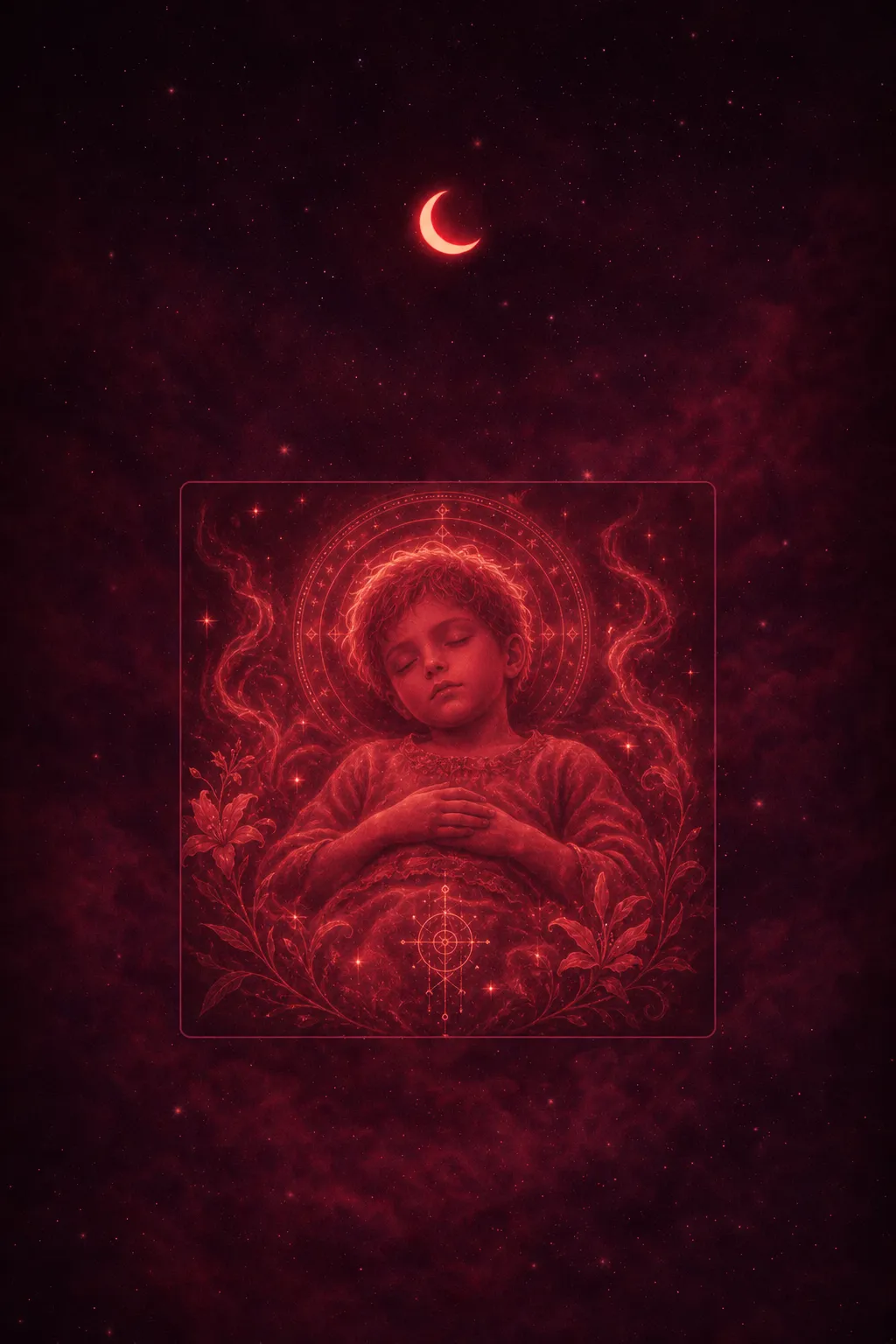

Dreaming about a dead son meaning typically reflects deep grief, unresolved guilt, or fear of loss, as your subconscious processes the pain of bereavement or anxiety about your child's well-being, symbolizing the end of a chapter, a longing for what was lost, or a powerful emotional message urging you to heal and find inner peace.
In under a minute you could read what your exact dream means for you, and see a picture of it. Free.
A dream still on your mind? Get your personal reading.
Describe your dream in a line or two. In seconds you get a reading of your exact dream, a picture drawn from your own words, and every symbol explained.
Free. No sign-up. Takes 10 seconds. Your dream stays private.
0%
Analyzing your dream…
Something went wrong. Please try again in a moment.
Your dreams deserve more than a dictionary
Common Dream Scenarios and What They Mean
The most frequently reported version — a living son who appears dead or dies during the dream — almost never signals prophecy. Instead, it tends to reflect parental anxiety spiking around a real-life transition: a child leaving for college, pushing back against rules, or simply growing more independent. The unconscious mind dramatizes the fear of losing closeness as an outright death, and the helplessness many parents feel in that moment mirrors the broader modern struggle with control. A related scenario — desperately trying but failing to save or revive a son — sharpens that same theme into guilt and perceived inadequacy, much like the sinking dread explored in falling dreams, often pointing to pressures at work or in the marriage rather than anything directly involving the child himself.
For parents who have genuinely lost a son, these dreams take on a completely different weight. Reunion or contact imagery with a deceased child is widely understood as part of natural grief processing — what therapists call continuing bonds. Seeing a son appear calm, peaceful, or even delivering a quiet message is commonly experienced as comforting rather than distressing, and many bereaved parents describe it as one of the few moments of relief they find. On the other end of the emotional spectrum, dreaming of receiving the news of a son's death often mirrors waking-life distance or a breakdown in communication — the dread of not knowing how a child is doing crystallized into worst-case imagery, closely related to the shock-and-separation themes found in death dreams more broadly.
Was yours a sign? Find out.
- Son dies, then returns alive: Signals transition and renewal — an old dynamic ending so a healthier one can begin.
- Hearing news of death from a third party: Points to separation anxiety or a real communication gap with the child in waking life.
- Son represents a project or personal ambition: The death is symbolic — an endeavor, identity, or phase of life is closing rather than an actual relationship ending.
What a dream about your dead son could look like
Tap an image to open it full screen
Example images. Only you can see what you write in Dream Book.
The Psychological Reading: Fear, Guilt, and the Need for Control
From a psychological standpoint, dreaming of a dead son is one of the mind's most direct expressions of attachment anxiety. The image of loss is rarely about death itself; it is the psyche dramatizing how much is at stake in the parent-child bond. When waking life brings reminders that a son is growing beyond parental reach — making risky choices, pulling away emotionally, or simply becoming his own person — the subconscious can stage the ultimate worst-case scenario as a way of processing fears that feel too raw to confront head-on. This connects to a broader pattern seen in dreams about a dead child, where the loss imagery nearly always points to transition and dread rather than prediction. Similar displacement of anxiety appears in classics like teeth-falling-out dreams, where the body becomes a symbol for things slipping out of one's grasp.
Guilt and responsibility sit close to the surface of these dreams as well. Parents who carry a nagging sense that they have not done enough — set the right boundaries, offered the right guidance, been present enough — often encounter this dream during periods of high stress or self-doubt. The dream is not a verdict; it is the mind holding up a mirror to unresolved worry. Modern life intensifies this dynamic: a culture that frames good parenting as a measurable outcome quietly convinces many parents that any sign of struggle in a child is a personal failure. The same helplessness that fuels being-chased dreams — a sense that something threatening cannot be outrun — often underlies these parental loss scenarios.
But what does your version mean?
- Loss of control: The dream often peaks when a parent feels powerless over a son's safety, health, or future direction.
- Identity and legacy: A son can represent the dreamer's own projected hopes; his symbolic death may signal the need to release those expectations.
- Anticipatory grief: The psyche rehearses painful possibilities as a coping mechanism, not a prophecy.
- Invitation to reflect: The distress left behind on waking is a signal worth exploring — often pointing toward a conversation, boundary, or unspoken fear that needs attention in waking life.
Every dream you log starts to connect.
Dream Book keeps your dreams in one place and reveals the threads between them over time — your private dream journal. Free to start.


Cultural and Traditional Readings of Dreaming About a Dead Son
Across Western folk tradition, dreams involving the death of a child have rarely been taken as literal omens. In many Anglo-American communities, such dreams were historically understood as warnings about transition rather than tragedy — a signal that a chapter of family life was closing. This reading aligns with broader European folklore in which dreaming of a dead child often symbolized the end of innocence or the natural severing of a dependent bond, not an approaching funeral. The imagery is unsettling precisely because it carries cultural weight: in most traditions, a parent burying a child violates the expected order of generations, making the dream feel morally charged even when the sleeper wakes to find everyone safe.
Within US Christian culture, this dream is sometimes filtered through a biblical lens of stewardship — the sense that a parent is entrusted with, rather than the owner of, a child's life. That framing can amplify guilt when the dream arrives during a period of conflict or distance with a son, since it touches the fear of having somehow failed a sacred responsibility. At the same time, mainstream American folk wisdom tends to reframe the image more gently, treating it as the mind processing the anxiety of modern parenthood: packed schedules, hyperconnected surveillance of a child's wellbeing, and the cultural pressure to guarantee outcomes that are ultimately beyond anyone's control. Some people also report that this image resurfaces alongside other unsettling symbols — such as teeth falling out — during periods of prolonged stress, suggesting a shared cultural script for dreams that dramatize loss of control.
- Transition marker: Folk tradition widely links this dream to a son reaching a major milestone — adulthood, independence, or a significant life change.
- Moral reckoning: In Christian-influenced culture, the dream can surface around feelings of parental guilt or unresolved conflict.
- Control and legacy: Modern anxiety culture reads the symbol as a reflection of the pressure parents feel to shape outcomes they cannot fully determine.
The Spiritual Reading: Entrusting What You Cannot Control
For many Christians, waking from a dream about a dead son carries an immediate impulse toward prayer — and that instinct is worth honoring. Rather than treating the image as a dark omen, a faith-informed reading frames it as an invitation to release control and entrust a child's life to God's care. The story of David in 2 Samuel 12 is quietly instructive here: after mourning deeply, David accepts his son's death and continues living, expressing trust that "I will go to him." That posture — grief held alongside faith — offers a more grounding spiritual response than dread. Similarly, the raising of the widow's son in Luke 7 plants a resurrection motif at the center of such dreams: endings within a spiritual framework do not have to mean permanent loss. They can signal transformation, renewed hope, or a call to deeper reliance on something beyond a parent's own strength.
A bad dream isn't a bad sign.
A smaller folk tradition holds that unusually vivid dreams of a deceased child may carry a sense of visitation or spiritual communication — a feeling that something beyond ordinary anxiety is present. Such impressions share emotional ground with broader dreams about confronting death or, more quietly, with the unsettled feeling that runs through dreams about losing your footing entirely. Most mainstream interpreters in this cluster treat such impressions as emotionally meaningful rather than literally prophetic, but they are worth acknowledging as part of how many people actually experience these dreams. Spiritually, the more useful question is less "is this a warning?" and more "where am I placing my trust?" A dream this charged often surfaces precisely when a parent feels their sense of protection and legacy slipping — and the spiritual tradition, at its best, responds not with fear but with consolation.
Related Dream Meanings
common dreams
Falling Dream Meaning: Insecurity, Fear & Loss of Control
5 min read

nightmares
Dead Child Meaning - Interpretation Guide
5 min read

nightmares
Death Dream Meaning: Transformation, Loss & Change
5 min read

body health
Teeth Falling Out Dream: Anxiety, Loss & Vulnerability
5 min read

nightmares
Being Chased Dream Meaning: Anxiety & Avoidance
5 min read

nightmares
Knife Dream Meaning: Conflict, Fear & Cutting Ties
5 min read

nightmares
Plane Crash Dream Meaning: What Your Subconscious Is Telling You
5 min read

nightmares
Mirror Dream Meaning: Self-Reflection & Hidden Truths
5 min read
Practical Takeaways: What to Do After This Dream
Waking from a dream about a dead son is jarring, but the distress itself is data — your mind is flagging something that deserves conscious attention. Rather than dismissing the image or spiraling into worst-case thinking, treat it as a prompt for honest self-review. Ask yourself what feels out of your hands right now in your relationship with your son, and whether anxiety about losing influence over him has been building quietly beneath the surface of daily life. Dreams involving death imagery of any kind tend to spike during periods of real-life transition, and this one is no different.
- Name the specific fear. Write down, in plain language, what you are most afraid of losing — your son's trust, his safety, your role in his life. Naming it reduces its grip.
- Check where control is slipping. If a real transition is underway (a move, a conflict, growing independence), acknowledge that some loss of control is normal and healthy rather than something to fight. This mirrors the helpless sensation common to falling dreams — the unconscious registering that the ground has shifted.
- Have the conversation you've been avoiding. Recurring dreams about losing a child often ease once underlying tension is addressed directly — a calm, honest talk with your son can do more than any amount of internal worry.
- Monitor sleep and stress patterns. Parental anxiety dreams tend to cluster during high-pressure periods. Better sleep hygiene and deliberate stress management often reduce their frequency.
- Seek support if the dream recurs. A few sessions with a therapist — especially one familiar with parental anxiety — can help untangle guilt and fear before they calcify into chronic worry.
Was yours a sign? Find out.
The goal is not to decode a hidden prophecy but to use the dream as leverage for positive action in your waking relationship.
Keep the ones that matter close.
The free app saves your most meaningful dreams and reads the signs across them — so a visit or a sign is never lost. Free to start.
People Also Ask
Dreaming of a dead child often reflects deep grief, unresolved guilt, or fear of loss. It may symbolize the end of innocence, a missed opportunity, or an aspect of yourself that feels lost. For bereaved parents, such dreams can be the mind's way of processing profound sorrow and longing.
A visitation dream from someone who has passed often feels vivid and emotionally intense. Many people interpret these as meaningful encounters — a sense of closure, reassurance, or a final message of love. Psychologically, they reflect your subconscious keeping the bond alive and working through unfinished emotional grief, much like dreaming of a deceased loved one.
Scripture acknowledges that God can communicate through dreams, as seen in Job 33:14-15. However, it also cautions against seeking the dead. Most biblical scholars suggest such dreams reflect the dreamer's inner state rather than literal contact, encouraging prayer and discernment when trying to understand their spiritual significance — similar to processing grief in waking life.
Warning dreams from God typically feel deeply purposeful, are remembered vividly upon waking, and carry a clear moral or spiritual message. They often prompt a sense of urgency to pray, change behavior, or protect a loved one. Repeated themes and a feeling of peace alongside the message are common signs, especially when talking to dead figures appears.
Curious what your dream would look like?