
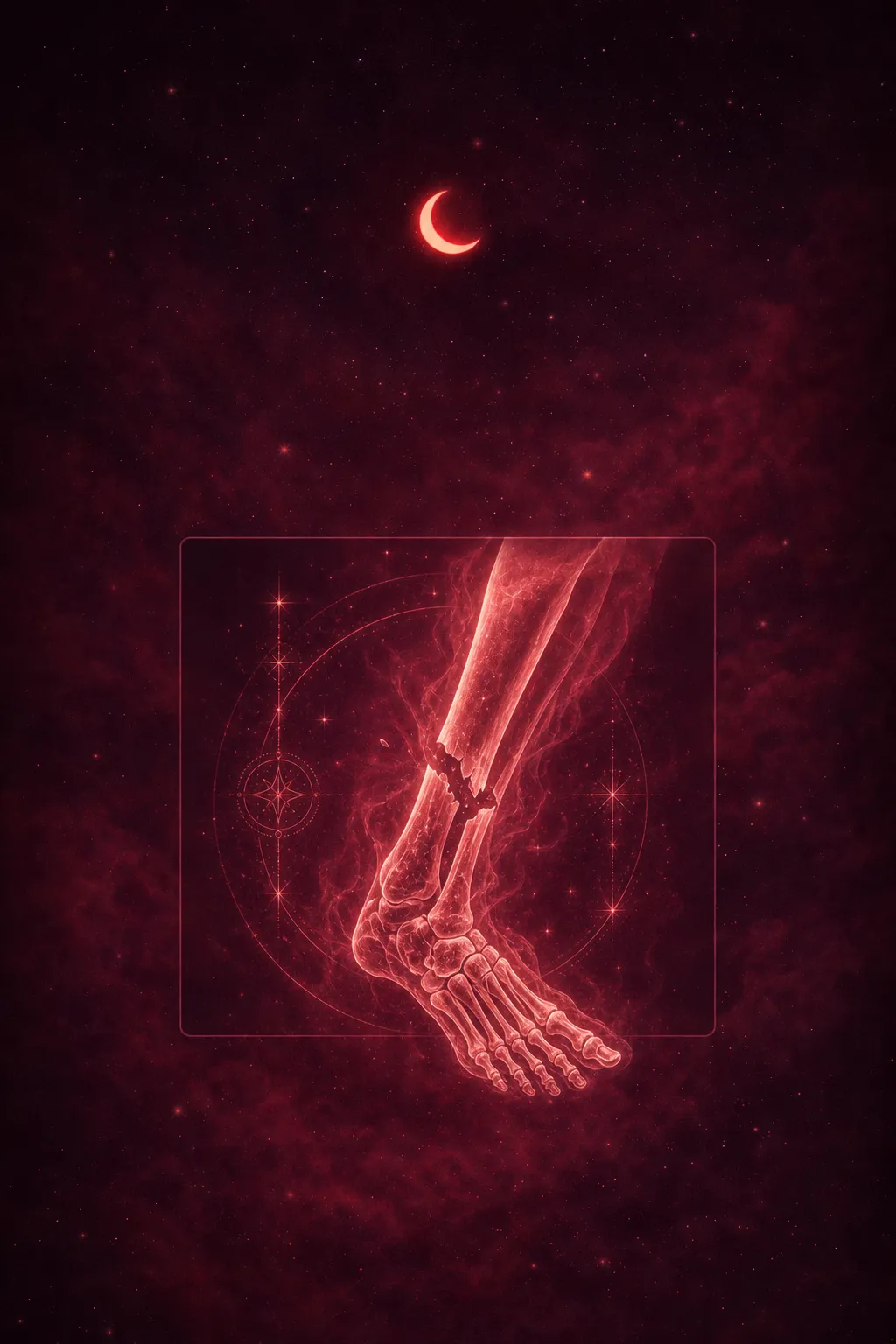

A broken leg in a dream typically means you are feeling emotionally weakened, held back, or unable to move forward in some area of your waking life, reflecting fears of losing independence, facing an unexpected setback, or struggling with self-doubt that is undermining your confidence and progress toward important personal goals.
In under a minute you could read what your exact dream means for you, and see a picture of it. Free.
A dream still on your mind? Get your personal reading.
Describe your dream in a line or two. In seconds you get a reading of your exact dream, a picture drawn from your own words, and every symbol explained.
Free. No sign-up. Takes 10 seconds. Your dream stays private.
0%
Analyzing your dream…
Something went wrong. Please try again in a moment.
Your dreams deserve more than a dictionary
Common Dream Scenarios Involving a Broken Leg
The specific circumstances surrounding the break often carry as much meaning as the injury itself. The most frequent variant — your own leg snapping suddenly — points to a sharp, unwelcome halt in your waking life: a project derailed, a goal that felt within reach now stopped cold. Modern anxiety tends to sharpen this image; high-pressure schedules and the fear of falling behind can translate directly into dreams of sudden immobility. When a fall causes the break, the dream adds a loss-of-control layer — you were moving, you slipped, and now you cannot continue. This sequence often mirrors a real fear of a single misstep undoing hard-won progress.
- Unable to walk or stand: The emphasis shifts to dependence — you need others to function, and the dream may be surfacing anxiety about relying on support you feel you shouldn't need. Dreams of paralysis share this same helpless quality and are worth considering alongside this image.
- Leg in a cast or on crutches: A more hopeful signal. Recovery is underway, but patience and temporary limitation are required — a reminder that healing on a forced timeline rarely goes well.
- Pushing through the pain anyway: Walking on a broken leg despite agony suggests you are overextending in waking life and ignoring clear signals to stop and regroup.
- Someone else has the broken leg: Your concern may center on another person's stability — a partner, colleague, or dependent — whose vulnerability feels like your responsibility.
- The leg broken by another person: An external force is sabotaging your momentum. The dream may be processing feelings of betrayal or deliberate obstruction by someone in your life.
But what does your version mean?
Across all variants, the core question the dream presses you to answer is the same: where in your waking life do you feel you cannot stand on your own, and is that limitation truly permanent or simply asking for a slower, steadier approach?
What a dream about a broken leg could look like
Tap an image to open it full screen
Example images. Only you can see what you write in Dream Book.
Psychological Meaning of a Broken Leg in Dreams
From a psychological standpoint, legs represent agency — the raw capacity to move through life on your own terms. When the subconscious fractures one, it is often dramatizing a waking sense that your forward momentum has been yanked away. Compensation theory helps explain this: feelings of being held back by circumstance, obligation, or self-doubt rarely stay abstract in dreams. The psyche converts them into something visceral — a snap, a crumple, a sudden inability to stand — making the emotional truth impossible to ignore. The dream is not predicting a physical injury; it is staging an internal one. This impulse to physicalize inner helplessness shares territory with dreams of teeth falling out, another classic image of control slipping away without warning.
The support dimension matters just as much as the mobility one. Legs bear the full weight of the body, so a fracture can signal that a foundation you relied on — financial security, a key relationship, your own self-reliance — feels dangerously compromised. This resonates with a broadly Christian-influenced cultural instinct around being able to "stand on your own two feet" as a mark of integrity and responsibility; when that capacity breaks down in a dream, the shame and vulnerability can feel disproportionately heavy. The imagery overlaps meaningfully with dreams of paralysis, where the body's refusal to cooperate mirrors a waking loss of control.
Modern stress and burnout add another layer worth sitting with. Consider what the broken leg actually forces: stillness, dependence, recovery time. If your waking life has been running at an unsustainable pace, the dream may be less a warning and more an imposed prescription — your subconscious engineering the rest your conscious mind keeps refusing to take. Key psychological threads to reflect on include:
Was yours a sign? Find out.
- Loss of control: Which plans or decisions feel suddenly out of your hands?
- Undermined foundations: Is a support structure — financial, relational, or emotional — quietly cracking?
- Burnout signal: Is the forced stop in the dream mirroring a pace that is genuinely unsustainable?
- Shifting roles: Does accepting help from others in waking life feel threatening to your sense of identity?
Every dream you log starts to connect.
Dream Book keeps your dreams in one place and reveals the threads between them over time — your private dream journal. Free to start.


Cultural and Traditional Readings of a Broken Leg Dream
Across Western folk tradition, the legs have long symbolized a person's standing in the community — both literally and socially. Old English superstition held that dreaming of a physical injury to the lower body was an omen of setbacks to travel or trade, a warning to pause before committing to a new venture. That instinct maps surprisingly well onto modern anxiety: in an era defined by hustle culture and the pressure to keep moving forward at all costs, a broken leg in a dream can feel like the psyche staging a forced intervention — halting progress precisely because the dreamer won't stop voluntarily. It echoes the emotional register of dreams of being chased, where forward movement is desperately needed yet somehow impossible.
Within American Christian folk belief, such dreams are sometimes read through a biblical lens of humbling — a reminder that human plans are not always sovereign, echoing Proverbs 16:9's sense that a person maps out a course, but circumstances redirect it. This sits alongside a broader cultural unease about dependence: in a society that prizes self-reliance, dreaming of an inability to stand on your own is a potent image of lost control. It shares emotional territory with classic vulnerability dreams like dreaming of paralysis, where the body simply refuses to obey the will.
A bad dream isn't a bad sign.
- Omen of delay: Folk traditions across Northern Europe linked leg-injury dreams to stalled journeys or blocked opportunities.
- Loss of social standing: In older community-based cultures, "not being able to stand" carried shame around dependence on others.
- Call to self-knowledge: Contemporary popular dream culture reframes the symbol positively — the forced stop as an invitation to reassess, not just a punishment.
Spiritual Meaning of a Broken Leg Dream
Within a Christian framework, legs and feet carry rich scriptural weight — they represent one's "walk," the daily conduct and direction of a life lived in faith. Psalm 37:23–24 reassures that even when a person stumbles, they will not fall headlong because God upholds them; Proverbs 3:26 pairs confidence with sure footing. Against that backdrop, dreaming of a broken leg can feel like a spiritual signal: your current path may need to be interrupted before it can be corrected. Rather than pure punishment, the imagery suggests a forced pause that invites honest reflection on whether the direction you are pushing toward is one you are meant to pursue under your own strength alone.
Folk intuition — the quiet, lay spirituality that sits just beneath formal theology — reads a broken leg dream as a warning to slow down and reassess. Many people wake from such a dream with a gut sense that they have been overreaching, leaning too heavily on personal willpower while ignoring signs of instability ahead. This resonates with modern anxieties around productivity and control: the broken leg becomes a visceral symbol that self-sufficiency has limits. If you have been feeling the pressure to keep moving no matter the cost, the dream may be nudging you toward a kind of surrender — not defeat, but a conscious recognition that rest and reliance on something larger than yourself is not weakness. For dreamers wrestling with themes of being unable to advance, the imagery of feeling suddenly paralyzed in a dream often surfaces alongside this same spiritual call to yield and regroup. So too does the vertiginous shock of falling, which shares that same gut-level loss of control that the broken leg so vividly dramatizes in the spiritual imagination.
Related Dream Meanings

common dreams
Falling Dream Meaning: Insecurity, Fear & Loss of Control
5 min read

nightmares
Paralysis Dream Meaning: Helplessness & Loss of Control
5 min read

body health
Teeth Falling Out Dream: Anxiety, Loss & Vulnerability
5 min read

nightmares
Being Chased Dream Meaning: Anxiety & Avoidance
5 min read

body health
Hair Falling Out Dream: Loss, Insecurity & Change
5 min read

body health
Pregnancy Test Dream Meaning: New Beginnings & Anxiety
5 min read

body health
What Does It Mean When You Dream About Bleeding
6 min read

body health
Dreaming About Eggs Meaning - Dream Interpretation Guide
6 min read
What to Do After a Broken Leg Dream
The most useful first step is a simple audit of where you feel stuck right now. Ask yourself honestly: is there a goal, relationship, or commitment that has quietly lost its footing? Dreams of a broken leg tend to surface when waking pressure has been building unnoticed, so treating the dream as an early-warning signal — rather than a bad omen — gives you the upper hand.
- Name the blocked area. Write down one or two projects or plans that feel stalled. Seeing them on paper shifts the anxiety from vague dread to something you can actually address.
- Check your support structures. Are you over-relying on one income source, one relationship, or one coping strategy? The dream may be flagging a single point of failure before it becomes a real crisis — much like dreams about teeth falling out often signal a fear of losing control before a situation fully collapses.
- Practice deliberate pacing. If the dream follows a period of over-commitment, it may be your mind's way of forcing the rest you have been refusing to take. Scheduling genuine downtime is not giving up — it is strategic.
- Separate what you can control from what you cannot. Much of the helplessness tied to dreams about paralysis or loss of movement comes from blurring the two. A quick control/no-control list can restore a sense of agency quickly.
But what does your version mean?
If the dream recurs, treat the pattern as data rather than anxiety fodder. Recurring imagery usually means the underlying pressure has not yet been acknowledged in waking life — and acknowledgment, even without an immediate solution, is often enough to ease both the stress and the dream.
One dream is never the whole picture.
The free app remembers your dreams, draws them, and connects the threads over time — so the next one means even more. Free to start.
People Also Ask
Spiritually, a broken leg in a dream often signals that your life path feels blocked or that you are being called to pause and reflect. It may suggest a need to slow down, reassess your direction, or heal unresolved emotional wounds before moving confidently forward on your journey.
Legs in dreams typically symbolize your independence, stability, and ability to move through life. They represent confidence, drive, and personal power. Healthy legs suggest you feel grounded and capable, while damaged legs — much like dreams about falling — may reflect self-doubt, dependency on others, or a sense that your progress is being hindered by internal or external forces.
Seeing yourself injured in a dream usually reflects vulnerability, fear of failure, or emotional pain in waking life. It can signal that a situation has left you feeling weakened or powerless. Such dreams often encourage you to acknowledge hidden stress and take steps toward healing, both physically and emotionally.
Dreaming of someone else with a broken leg may reflect concern for that person's wellbeing or your worry that they are struggling. Alternatively, it can represent a part of yourself projected onto them, suggesting that qualities you associate with that person — determination or independence — feel compromised in your own life right now.
Curious what your dream would look like?