
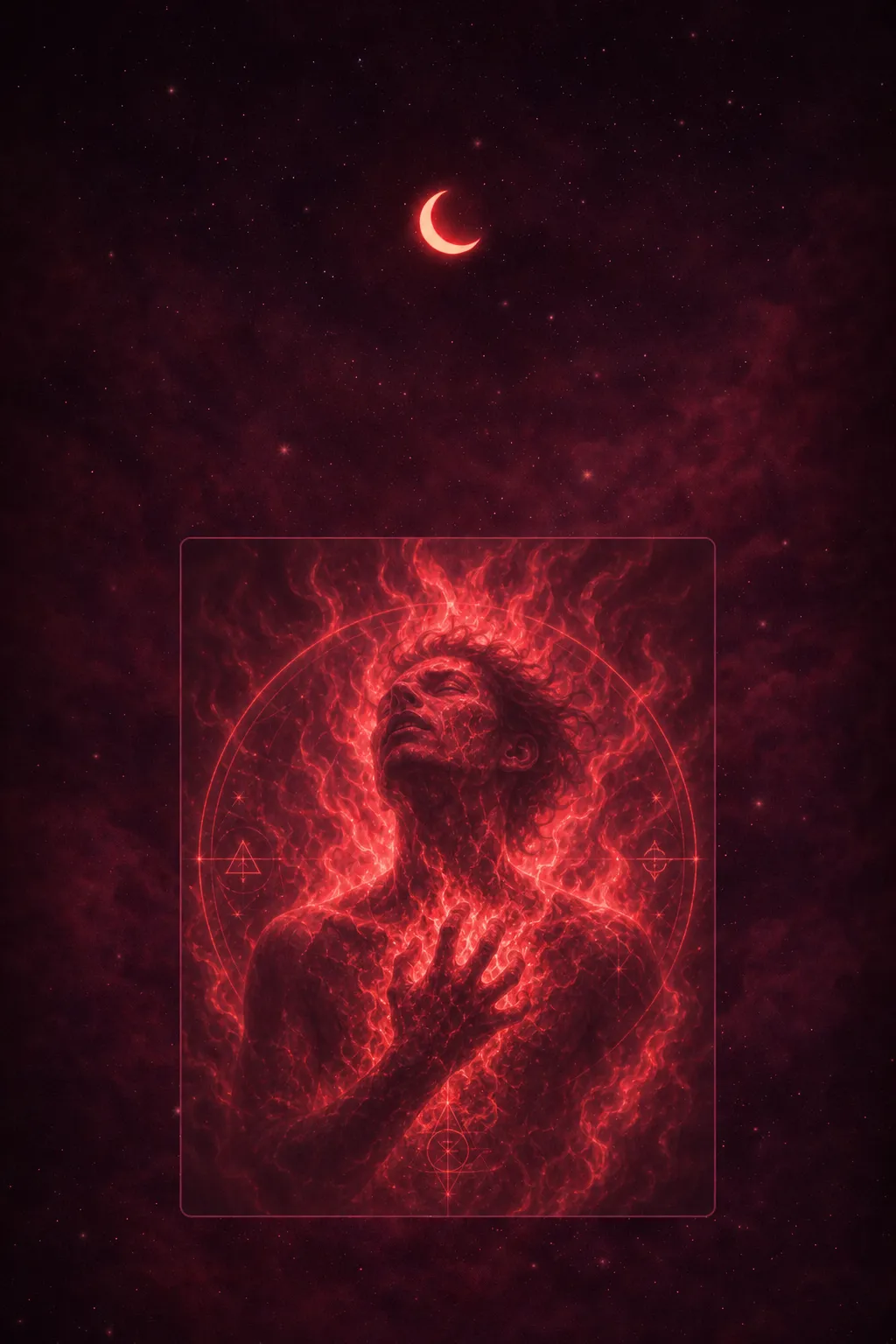

Dreaming of being burned often reflects intense emotional pain, overwhelming stress, or a situation in waking life that feels destructive. It can also symbolize passionate desire or a powerful inner transformation — something old being consumed so something new can emerge. The context and your feelings in the dream usually reveal whether the fire represents harm or renewal.
In under a minute you could read what your exact dream means for you, and see a picture of it. Free.
A dream still on your mind? Get your personal reading.
Describe your dream in a line or two. In seconds you get a reading of your exact dream, a picture drawn from your own words, and every symbol explained.
Free. No sign-up. Takes 10 seconds. Your dream stays private.
0%
Analyzing your dream…
Something went wrong. Please try again in a moment.
Your dreams deserve more than a dictionary
Common Being Burned Dream Scenarios
Being Burned Alive
This is the most visceral version of the dream — you feel the heat closing in, and there's no escape. When you're burned alive in a dream, it almost always reflects a waking situation where you feel trapped in suffering with no visible exit. A relationship, a job, a secret. Something is consuming you and you haven't found a way out yet.
The sensation of being unable to escape is the key detail here. If you've also had dreams of being buried alive or drowning, they're speaking the same language — suffocation by circumstance, the feeling that life has closed around you.
A bad dream isn't a bad sign.
Someone Else Burning You
When another person is the one setting you alight — deliberately, with intention — this dream is about betrayal. Someone in your life holds power over you, and some part of you fears how they might use it. The figure may be recognizable or faceless, but the feeling is the same: you are vulnerable, and they know it.
Pay attention to who holds the flame. A boss, a partner, a parent. The dream isn't predicting anything — it's reflecting a dynamic you already feel in your body but haven't fully named yet. If you've been dreaming of being attacked in other ways too, your subconscious is building a case worth listening to.
Your House on Fire
Standing outside watching your house burn is a different kind of burn dream — less about physical pain and more about loss. The house in dreams almost always represents the self, your inner world, your sense of security. Watching it catch fire and burn down signals that something foundational in your life is collapsing or transforming beyond recognition.
This version of the dream can actually carry a hopeful undercurrent. Fire destroys, yes — but it also clears. Some burn dreams arrive at the exact moment you're ready to let something go, even if it doesn't feel that way yet.
Being Burned and Feeling No Pain
This one unsettles people most. The flames are there, but you feel nothing — or even a strange calm. Emotional numbness in waking life often produces exactly this dream. You've been through enough that the fire no longer registers as a threat. That's not strength. That's dissociation, and your dreaming mind is flagging it.
It can also appear during periods of radical personal transformation — the kind where you've already decided to burn the old version of yourself down. Jung would recognize this immediately. More on that below.
What a dream about being burned could look like
Tap an image to open it full screen
Example images. Only you can see what you write in Dream Book.
Psychological Interpretation
Freud read fire dreams through the lens of desire and control. In his view, fire was one of the oldest symbols of human mastery — and dreaming of being consumed by it pointed to desires or impulses that had slipped beyond your control. The burning isn't random; it's what happens when something repressed finally ignites. He connected fire imagery to primal instincts, particularly those we spend enormous energy suppressing in waking life.
But what does your version mean?
Jung took a wider view. For him, fire was the alchemical agent of transformation — the element that burns away what is false to reveal what is essential. Being burned in a dream could represent the individuation process itself: the painful, necessary work of becoming who you actually are by destroying who you were pretending to be. If your dream carries a sense of ritual or inevitability — if the burning feels almost ordained — Jung would say your psyche is undergoing something real. He'd also point to the Shadow: the parts of yourself you've denied, finally demanding to be seen. Sometimes the fire is the Shadow speaking.
Calvin Hall's massive content analysis of over 50,000 dream reports found that aggression and physical harm were among the most consistent dream themes across cultures — and that being the victim of harm (rather than the aggressor) correlated strongly with waking feelings of powerlessness and anxiety. Being burned fits squarely into this pattern. Hall's work suggests that if you're dreaming of burning, you're likely processing a real, specific stressor — not a generalized fear, but something particular your mind is trying to metabolize.
Ernest Hartmann's emotional processing theory adds another layer. Hartmann argued that nightmares — especially intense physical ones like burning dreams — are the mind's way of weaving a difficult emotion into your existing memory network. The fire is a metaphor your brain chose because it matches the emotional intensity of what you're actually going through. Hobson and McCarley's activation-synthesis model offers a more neurological angle: the brain stem fires signals during REM sleep, and the cortex assembles them into narrative. But even in that framework, the emotional charge of a burning dream isn't random — the brain reaches for fire because it already associates it with danger, pain, and transformation at a deep, pre-verbal level.
Every dream you log starts to connect.
Dream Book keeps your dreams in one place and reveals the threads between them over time — your private dream journal. Free to start.


Cultural & Spiritual Meaning
In Western spiritual traditions, fire has always carried a dual nature — purifying and punishing in equal measure. Being burned in a dream was historically read as either divine trial or divine cleansing. Medieval dream interpreters saw it as a warning: examine your conscience, because something you've done or left undone is about to catch up with you. The imagery of hellfire isn't incidental here — for centuries, the burning dream was the nightmare of the guilty. If you've been dreaming of fire in other forms too, this symbolic weight compounds.
Ibn Sirin, the 8th-century Islamic scholar whose dream interpretations remain influential today, was specific about fire dreams. He interpreted being burned by fire as a sign of oppression — that someone in your life holds authority over you and may be using it unjustly. He also noted that fire without smoke in a dream pointed to a trial that would ultimately pass, while fire with smoke indicated a more prolonged suffering. His framework consistently tied the burning dream to social and relational dynamics, not just inner psychology.
Was yours a sign? Find out.
In many Indigenous traditions, fire is an ancestor, a teacher, a living force — not simply an element. Dreaming of being burned in these contexts is rarely read as punishment. Instead, it's often seen as an initiation: the fire is testing whether you're ready to carry something new. Eastern traditions, particularly in Hindu dream symbolism, connect fire dreams to karma — the burning off of accumulated debt, or a period of intense spiritual acceleration. Across all these traditions, one theme persists: fire in dreams is never meaningless. It demands your attention.
Related Dream Meanings
nightmares
Being Buried Alive: Meaning and Interpretation
5 min read
nightmares
Drowning Dream Meaning: Overwhelm, Fear & Hidden Stress
5 min read
nightmares
Being Attacked Dream Meaning: Fear & Hidden Anxiety
5 min read
nightmares
House on Fire Dream Meaning: Chaos, Change & Loss
5 min read
common dreams
What Does It Mean to Dream About Fire
5 min read

nightmares
Being Chased Dream Meaning: Anxiety & Avoidance
5 min read
nightmares
Snakebite Dream Meaning: Betrayal, Fear & Change
5 min read
nightmares
What Does It Mean to Dream About Rotten Food? Interpretation and Meaning
6 min read
What to Do After This Dream
First, sit with the emotional residue before you try to analyze it. Burn dreams are physically intense — your body may have registered the heat even as your mind was asleep. That physiological response is data. What does the feeling in your chest remind you of from your waking life right now?
Ask yourself what is currently consuming you. Not metaphorically — literally. What situation, relationship, or responsibility feels like it's burning through your energy, your peace, your sense of self? The dream is almost always pointing at something specific, not abstract. If you've also been having dreams of being chased or snakebites, look for a common thread — your subconscious may be circling the same wound from different angles.
Journaling immediately after the dream helps — not to interpret it, but to capture the details before they fade. Who was present? What was burning? Did you feel pain? The specific texture of the dream matters more than the general symbol. If this dream keeps returning, it's worth exploring with a personalized interpretation — Dream Book lets you describe your dream in detail and ask follow-up questions to understand what your subconscious is actually trying to surface.
A bad dream isn't a bad sign.
Understanding your being-burned dream is the first step. The next is asking what it means for your life right now — that's where a personalized interpretation goes deeper than any dictionary.
If it keeps coming back, the app helps you understand the pattern.
Log each recurring dream and the free app shows you what's underneath — calmly, over time. Free to start.
People Also Ask
Dreaming of being burned by fire typically reflects intense emotional pain, feelings of guilt or shame, or a situation in your waking life that feels overwhelming and destructive. It can also signal a major transformation — something in your life (or your sense of self) is being consumed to make way for something new.
Not necessarily. While burn dreams are uncomfortable, they're rarely literal warnings. Most dream interpreters — from Jung to Ibn Sirin — see fire as a symbol of transformation and purification as much as destruction. The dream is more likely reflecting an emotional truth than predicting a physical event.
Recurring burn dreams usually point to an unresolved source of stress, guilt, or emotional pain in your waking life. Your mind keeps returning to the image because the underlying issue hasn't been addressed yet. Paying attention to the specific details — who burns you, where it happens, how it feels — can help identify what your subconscious is processing.
Feeling no pain while burning in a dream often reflects emotional numbness or dissociation — you've been under so much pressure that you've stopped registering it consciously. It can also appear during periods of deliberate personal transformation, when you've already accepted that something in your life needs to be completely dismantled.
Curious what your dream would look like?