
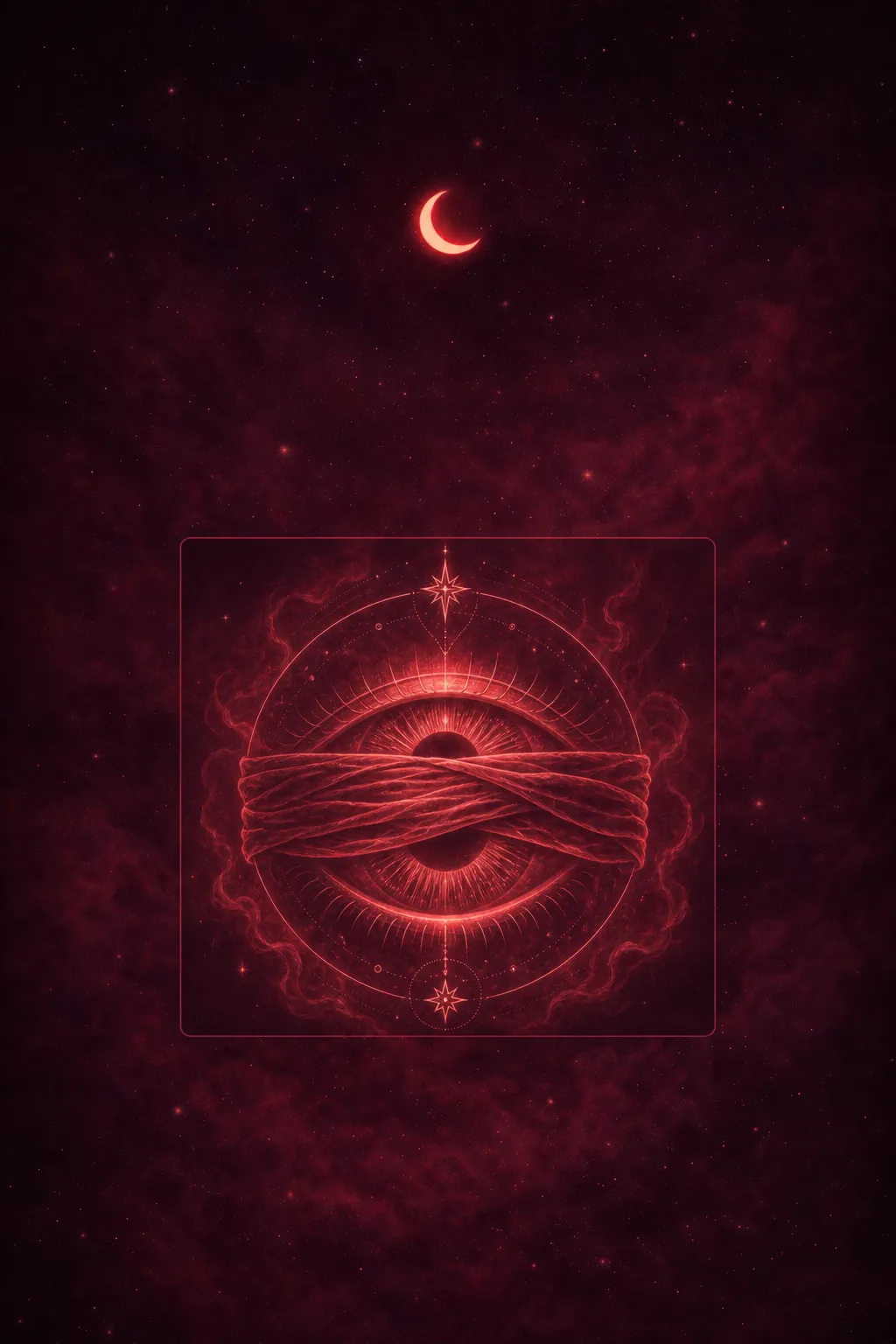

Dreaming of being blind often reflects a reluctance to face a difficult truth or a situation where you feel lost and without direction. It can also signal emotional overwhelm, where too much is happening at once for you to process clearly. In some cases, blindness in a dream points to a fear of the unknown or a sense that others are not seeing your perspective.
In under a minute you could read what your exact dream means for you, and see a picture of it. Free.
A dream still on your mind? Get your personal reading.
Describe your dream in a line or two. In seconds you get a reading of your exact dream, a picture drawn from your own words, and every symbol explained.
Free. No sign-up. Takes 10 seconds. Your dream stays private.
0%
Analyzing your dream…
Something went wrong. Please try again in a moment.
Your dreams deserve more than a dictionary
Common Being Blind Dream Scenarios
Suddenly Going Blind Mid-Dream
You're moving through a familiar scene — your home, your street, a conversation — and then the world goes dark. This sudden onset of blindness is one of the most unsettling versions of this dream, and it almost always points to something that has shifted abruptly in your waking life. A revelation you weren't ready for. A relationship that no longer looks the way it used to.
The suddenness matters. When blindness arrives without warning in a dream, it mirrors the feeling of being blindsided — the rug pulled from under your perception of reality. If you've recently discovered a betrayal or had a belief shattered, this dream is your mind processing the shock of having to see the world differently now.
But what does your version mean?
Being Born Blind or Always Having Been Blind in the Dream
In this version, there's no moment of loss — you simply exist in the dream as someone who has never seen. This is a quieter, stranger experience than sudden blindness, and it carries a different weight. It often reflects a long-standing blind spot: something you've never been able to see about yourself or your life, not because it was hidden from you, but because you were never shown how to look.
This scenario connects closely to what Jung called the Shadow — the parts of the psyche you've always kept in the dark, not through active repression but through simple unawareness. If you're also dreaming of eyes in other dreams, or noticing eyes as a recurring symbol, the two are worth reading together.
Trying to See but Unable to Focus
Your eyes are open. The world is technically there. But everything is blurred, obscured, or just out of reach of your vision. This is less about blindness and more about the frustration of partial sight — you can sense the truth, but you can't quite make it out. It's the dream equivalent of a word on the tip of your tongue.
This scenario often surfaces during periods of genuine confusion: a decision you can't make, a person you can't read, a future you can't picture. It's your subconscious telling you that the information you need isn't fully available yet — and that forcing clarity right now might be the wrong move. Sometimes, like the dream itself, you have to sit with the blur. People who dream of being lost often report this same visual fog as a companion symbol.
Someone Else Going Blind in Your Dream
When it's not you losing sight but someone you know — a partner, a parent, a stranger — the dynamic shifts entirely. You're watching the blindness happen rather than experiencing it. This often reflects anxiety about someone in your life who you feel is refusing to see something important, or grief over a connection that feels like it's losing its ability to truly perceive you.
It can also be a projection. The person going blind in your dream may represent a part of yourself that you've externalized — a quality you've split off and placed onto another character in your inner theater. If the person going blind is someone you're in conflict with, consider whether the blindness you're attributing to them might partly belong to you. Dreams of an eye falling out carry a related but more visceral version of this same theme.
What this dream could look like
Tap an image to open it full screen
Example images. Only you can see what you write in Dream Book.
Psychological Interpretation
Freud read blindness in dreams as a classic displacement symbol — specifically, he connected it to castration anxiety and the fear of punishment for forbidden looking. In his framework, the eyes stand in for other things we desire to see or possess, and blindness becomes the price of that desire. It's a dramatic reading, but there's something in it worth holding: blindness dreams often do carry a quality of guilt, as though the dreamer feels they deserve not to see.
Was yours a sign? Find out.
Jung took the symbol somewhere more interesting. For him, blindness in a dream wasn't punishment but initiation. He saw it as a threshold experience — the darkness before transformation. The blind dreamer, in Jungian terms, is being stripped of their ordinary way of perceiving so that something deeper can emerge. This connects to his concept of individuation: the process of becoming whole requires confronting what you've refused to look at. If you find yourself also dreaming of being trapped or being paralyzed, Jung would see these as the same archetypal cluster — the psyche forcing a pause before growth.
Calvin Hall's content analysis of over 50,000 dream reports found that sensory impairment dreams — including blindness, deafness, and paralysis — were strongly correlated with feelings of helplessness and social anxiety in waking life. For Hall, the dream isn't symbolic so much as it is a direct cognitive rehearsal of your fears: if you feel powerless, your dreaming mind stages scenarios of physical powerlessness. Ernest Hartmann, whose work focused on how dreams process emotional memory, would add that blindness dreams often spike after experiences of shock or betrayal — the kind of events where your emotional system needs to metabolize the feeling of having been unable to see something coming.
Hobson and McCarley's activation-synthesis model offers the neurological counterpoint: the visual cortex is highly active during REM sleep, and when that activity is disrupted or suppressed, the brain may generate the experience of blindness as its best attempt to make narrative sense of incomplete visual signals. In other words, sometimes the darkness in the dream is partly the brain's own circuitry. But even if the origin is neural, the emotional content your mind wraps around that darkness is yours — and it's worth reading.
Every dream you log starts to connect.
Dream Book keeps your dreams in one place and reveals the threads between them over time — your private dream journal. Free to start.


Cultural & Spiritual Meaning
In Western spiritual traditions, blindness has long carried a dual meaning: it is both affliction and gift. The blind prophet — Tiresias in Greek mythology, Homer himself in legend — sees more truly than the sighted. To be blind in a dream, in this tradition, can be a signal that you are being called to develop inner sight: intuition, spiritual discernment, the ability to perceive what isn't visible to the ordinary eye.
Ibn Sirin, the 8th-century Islamic dream scholar whose interpretations remain foundational in the tradition, wrote that dreaming of blindness in one eye specifically could indicate a loss of religious or moral clarity — a straying from one's path. Blindness in both eyes, however, he interpreted more gravely: as a warning of serious misguidance or a sign that the dreamer was moving through life without proper spiritual orientation. He also noted context carefully — a blind person who dreams of gaining sight was seen as a profoundly positive omen, suggesting the arrival of guidance or blessing.
A bad dream isn't a bad sign.
In many Indigenous traditions across the Americas and Africa, blindness in a dream is treated as a visitation — the spirit world obscuring ordinary vision so that deeper perception can be activated. The dreamer isn't being punished; they're being prepared. Eastern traditions, particularly in Taoist and Buddhist frameworks, echo this: the loss of external sight in a dream points toward the cultivation of inner awareness. Blindness, in these readings, is the beginning of a different kind of seeing — one that doesn't rely on the surface of things.
Related Dream Meanings
body health
Eyes Dream Meaning: Perception, Insight & Hidden Truths
5 min read
common dreams
Being Lost Dream Meaning: Confusion & Direction
5 min read
nightmares
Eye Falling Out: What It Really Means
5 min read
nightmares
What Does It Mean to Dream About Being Trapped
6 min read

nightmares
Paralyzed Dream Meaning: Powerlessness & Feeling Stuck
5 min read
body health
Cutting Hair Dream Meaning: Change, Loss & Control
5 min read

body health
What Does It Mean When You Dream About Losing Teeth
5 min read

body health
Hair Falling Out Dream: Loss, Insecurity & Change
5 min read
What to Do After This Dream
Start by sitting with the specific texture of the blindness in your dream. Was it terrifying or oddly peaceful? Did you fight it or accept it? The emotional quality tells you more than the symbol itself. Blindness-as-panic points toward avoidance; blindness-as-stillness often points toward readiness for change.
Ask yourself what you might be refusing to see right now. This isn't always dramatic — sometimes it's as quiet as not wanting to acknowledge that a friendship has shifted, or that a job is no longer right for you. The dream isn't accusing you. It's asking you to look.
Journaling the dream immediately after waking — before the details dissolve — is one of the most useful things you can do. Write down not just what happened but how it felt, and what in your waking life it reminds you of. If this dream keeps returning, it's worth exploring with a personalized interpretation — Dream Book lets you describe your dream in detail and ask follow-up questions to understand what your subconscious is really working through.
But what does your version mean?
Understanding your being-blind dream is the first step. The next is asking what it means for your life right now — that's where a personalized interpretation goes deeper than any dictionary.
One dream is never the whole picture.
The free app remembers your dreams, draws them, and connects the threads over time — so the next one means even more. Free to start.
People Also Ask
Dreaming about going blind usually reflects a refusal or inability to see something clearly in your waking life — a truth you're avoiding, a situation that feels overwhelming, or a part of yourself you haven't confronted. It can also signal feeling powerless or disoriented during a period of uncertainty.
Not necessarily. While some traditions, including Ibn Sirin's Islamic dream interpretation, associate blindness dreams with spiritual disorientation, many others — including Jungian psychology and Eastern spiritual frameworks — see it as a threshold symbol pointing toward inner growth and transformation. Context and emotional tone matter enormously.
Recurring blindness dreams often indicate an unresolved issue your subconscious keeps returning to — something you're persistently avoiding seeing in your waking life. Ernest Hartmann's research on emotional memory processing suggests that recurring dreams of this type tend to persist until the underlying emotional material is acknowledged and processed.
When another person loses their sight in your dream, it often reflects your perception that someone in your life is refusing to see the truth — or it can be a projection of your own blind spots onto another character. Consider whether the quality you're attributing to them might also apply to some part of yourself.
Curious what your dream would look like?