
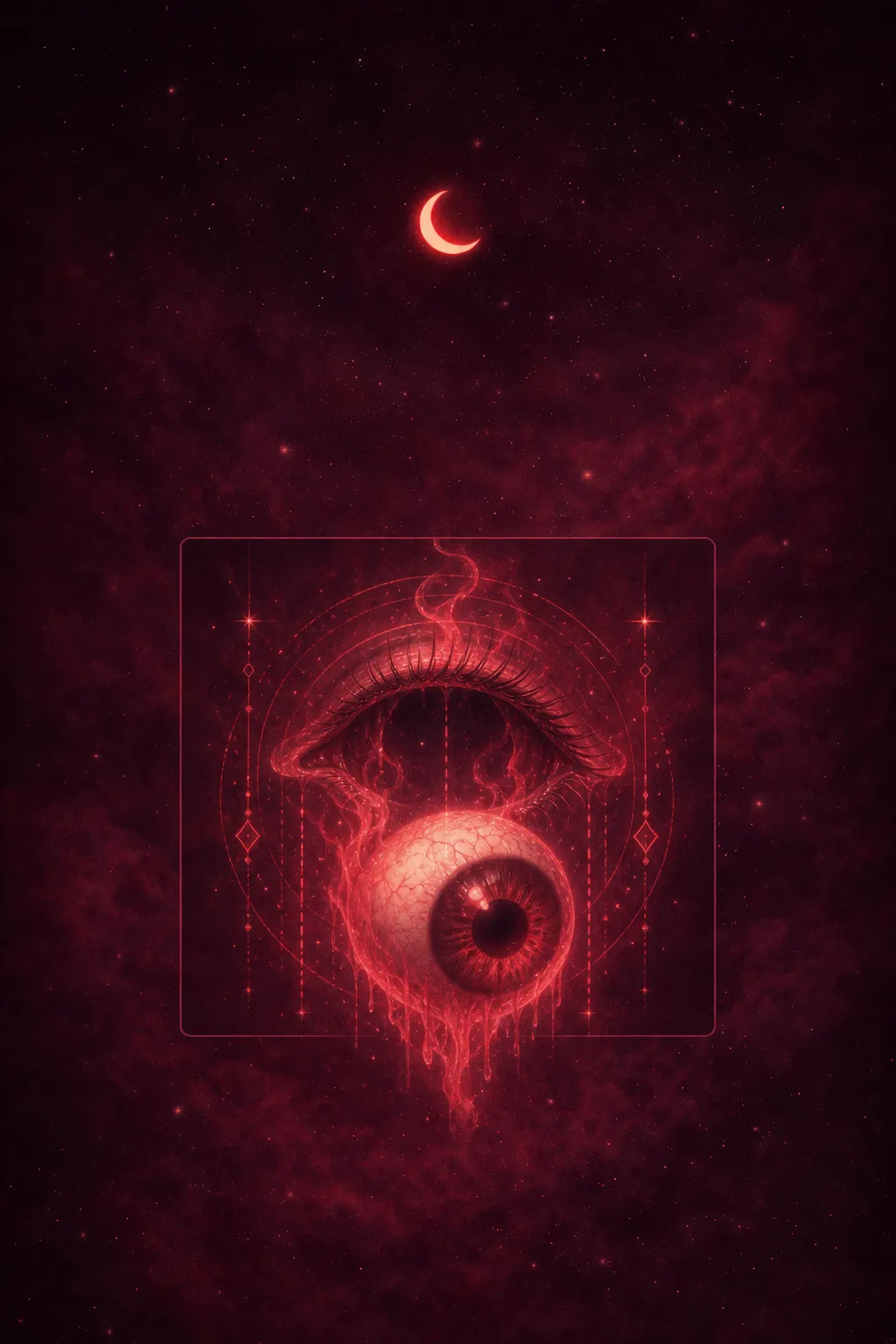

Dreaming about an eye falling out typically signals a felt loss of clarity, insight, or control in your waking life — your mind is dramatizing the fear that you can't see a situation clearly, are avoiding an uncomfortable truth, or feel powerless over a significant change you didn't choose.
In under a minute you could read what your exact dream means for you, and see a picture of it. Free.
A dream still on your mind? Get your personal reading.
Describe your dream in a line or two. In seconds you get a reading of your exact dream, a picture drawn from your own words, and every symbol explained.
Free. No sign-up. Takes 10 seconds. Your dream stays private.
0%
Analyzing your dream…
Something went wrong. Please try again in a moment.
Your dreams deserve more than a dictionary
What the Specific Scenario Tells You
The details of an eye-falling-out dream carry a lot of weight. The same symbol plays out very differently depending on how many eyes are lost, whether there's pain, and what you do next.
One eye falls out
This is the most commonly reported version. Losing a single eye in a dream often reflects a one-sided view of a real problem — a situation where you know, on some level, that you're not getting the full picture. It might be a relationship where you've been giving one person the benefit of the doubt past the point of evidence, or a professional decision you've been assessing too narrowly. The shock you feel in the dream mirrors the vulnerability you'd feel if that partial blindness were exposed.
A bad dream isn't a bad sign.
Both eyes fall out or you go blind
When both eyes are lost — or the dream slides into total blindness — the stakes feel absolute. This version tends to surface during periods of genuine overwhelm: burnout, decision paralysis, or a life transition so large it feels like you simply cannot see the path forward. It's the mind's dramatic way of saying I am completely disoriented right now. If you've been having this dream repeatedly, take it as a signal that the sense of directionlessness isn't just stress — it's asking for your attention. Dreams about going blind share this same emotional core and are worth exploring alongside this one.
The eye falls out painlessly and you can still see
This uncanny version is actually one of the more hopeful readings. When the detachment doesn't hurt and your vision remains intact, the dream may be pointing to a voluntary shift in perspective — releasing an old way of looking at something rather than losing sight entirely. Think of it as shedding an outdated lens rather than suffering a loss.
You catch or hold the fallen eye
Catching your own eye is one of the dream's most telling details. The urgency of that reach — the instinct to keep it, to put it back — reflects a strong problem-solving drive in the face of a threatened sense of clarity. You haven't given up. You're trying to reclaim something. That's meaningful.
Someone else's eye falls out
When the eye belongs to another person, the dream often signals anxiety about someone close to you — worry that they're missing something important, or that their judgment is compromised. It can also be a projection: what you fear about your own perception, externalized onto a face that's easier to observe than your own.
The eye is forcibly removed or decays first
These lower-frequency versions carry sharper emotional charge. A forced removal points to coercion — an external pressure stripping you of your ability to see clearly or assert your own view. An eye that slowly rots before falling out suggests a long-neglected issue that has finally become impossible to ignore. Both are worth sitting with carefully.
What a dream about an eye falling out could look like
Tap an image to open it full screen
Example images. Only you can see what you write in Dream Book.
The Psychology Behind the Dream
Mainstream dream psychology treats body-part-detachment dreams as the mind externalizing a felt loss of capacity. The eye is one of the most psychologically loaded body parts available — it stands simultaneously for how I see the world and how the world sees me. Losing it in a dream tends to reflect one of four underlying experiences.
But what does your version mean?
Loss of clarity or judgment. You may be in a situation where you genuinely can't see what the right move is — a relationship, a career decision, a health concern — and the dream is literalizing that confusion.
Denial or avoidance. Sometimes we don't want to look at something. The falling eye can be the psyche's way of dramatizing the cost of turning away.
Identity and self-image threat. Eyes carry the double weight of seeing and being seen. If you're afraid of being judged, exposed, or "seen through" — in a new social role, a relationship, or a professional context — the eye becomes the symbol most at risk. This overlap with dreams about teeth falling out is notable: both tap into deep fears about self-presentation and social vulnerability.
Powerlessness over change. An organ falling out without your consent is the mind's most dramatic image of losing control. If you're navigating an imposed transition — a job loss, a relationship ending, a health diagnosis — this dream makes emotional sense even if it feels extreme.
Was yours a sign? Find out.
It's also worth noting that vivid bodily-damage dreams cluster with elevated stress, disrupted sleep, and cognitive overload. If you've been running on empty, your dreams will often get louder and stranger. The intensity of the dream tracks your waking level of overwhelm, not an objective danger.
Every dream you log starts to connect.
Dream Book keeps your dreams in one place and reveals the threads between them over time — your private dream journal. Free to start.


Cultural Context: The Eye in Everyday Language
English idiom gives this symbol extra resonance. We "turn a blind eye" to things we choose not to confront. We "can't see eye to eye" when a relationship breaks down. Something is an "eye-opener" when it forces a new perspective. Losing an eye in a dream lands inside this whole web of meaning — the dreaming mind is fluent in metaphor, and it reaches for the most expressive image available.
There's also a modern anxiety layer worth naming honestly. Many people carry quiet worry about their actual eyesight — screen fatigue, aging, a relative who lost vision — and the eye can become a focal point for that concern during stress. This doesn't mean the dream is a medical warning; it means the eye was already emotionally charged before you fell asleep. Similar bodily anxiety can show up in dreams about hair falling out or other physical changes, all serving the same psychological function: processing what feels fragile or threatened in the body you inhabit.
A Spiritual Lens
For those who hold a Christian framework, the eye carries specific scriptural weight. Matthew 6:22-23 frames the eye as the "lamp of the body" — a metaphor for spiritual perception, conscience, and moral clarity. A dream in which the eye is lost can gently prompt the question: What am I choosing not to see? What truth am I avoiding for the sake of comfort?
There's also the harder passage in Matthew 5:29 — the idea of sacrificial removal as the cost of integrity — but this is worth holding lightly. Read charitably, it points to the theme of letting go of something that compromises your vision or values, not literal suffering. If your faith tradition is part of how you process experience, this dream may be an invitation to reflect on spiritual clarity rather than a warning to fear.
Related Dream Meanings
body health
What Does It Mean to Go Blind in a Dream? Dream Interpretation Guide
6 min read

body health
Teeth Falling Out Dream: Anxiety, Loss & Vulnerability
5 min read

body health
Hair Falling Out Dream: Loss, Insecurity & Change
5 min read
nightmares
Losing Control: Meaning and Interpretation
5 min read

nightmares
What Does It Mean to Dream About Being Chased by a Bear
6 min read

nightmares
Intruder Dream Meaning: Threat, Anxiety & Boundaries
5 min read
nightmares
Calling 911: Meaning and Interpretation
5 min read

nightmares
Dream of Dog Attacking Me: Meaning and Interpretation
5 min read
What to Do With This Dream
The most useful question to ask after this dream isn't "what does this predict?" but "what am I refusing to look at?" Run through the main areas of your life — relationships, work, health, a decision you've been deferring — and notice where the phrase I don't want to see this clearly feels true.
A few grounding steps:
- Name the situation. Write down what you were feeling in the dream — the specific emotion (shock, helplessness, urgency) — and then ask which waking situation carries that same feeling.
- Check your stress load. Vivid body-loss dreams intensify with exhaustion and overwhelm. Sleep quality matters. If the dream recurs, that's your mind asking for relief, not just interpretation.
- Hold the spiritual prompt gently. If faith is part of your life, ask whether there's something you're turning away from that deserves a clearer look.
- Don't treat it as prophecy. This dream says nothing about your literal eye health. Dream Book and sleep researchers are consistent on this point: the eye here is always a symbol, never a medical forecast.
A bad dream isn't a bad sign.
If the dream keeps returning, consider what in your waking life still feels unresolved — especially around themes of losing control or facing an unwelcome truth. The dream will usually quiet down once the underlying situation gets the honest attention it needs.
If it keeps coming back, the app helps you understand the pattern.
Log each recurring dream and the free app shows you what's underneath — calmly, over time. Free to start.
People Also Ask
An eye falling out in a dream almost always symbolizes a felt loss of clarity, insight, or control rather than any physical prediction. Your psyche uses the eye to represent perception and judgment — so losing it signals you may be struggling to see a waking situation clearly, avoiding an uncomfortable truth, or feeling powerless over a change you didn't choose.
Losing an eye in a dream points to compromised insight or self-image threat. One eye lost often reflects a one-sided view of a problem; losing both eyes suggests feeling completely directionless or overwhelmed. The emotional tone — shock, helplessness, urgency — usually mirrors exactly how a real waking situation is making you feel right now.
Yes. Sleep apnea disrupts normal sleep architecture, particularly REM sleep, which is when vivid and emotionally intense dreams occur. Repeated micro-arousals and oxygen fluctuations during the night are associated with more disturbing or bizarre dream content, including bodily-damage imagery. If your dreams are consistently disturbing and you snore or wake unrefreshed, a sleep evaluation is worth considering.
From a Christian perspective, spiritually significant dreams often carry a persistent, emotionally weighty quality that lingers after waking, a clear thematic message rather than random imagery, and alignment with scripture or a moral question you're already wrestling with. An eye-falling-out dream may prompt reflection on Proverbs' call to wisdom or Jesus' metaphor of the eye as the lamp of the body — what you choose to see or ignore.
Curious what your dream would look like?