
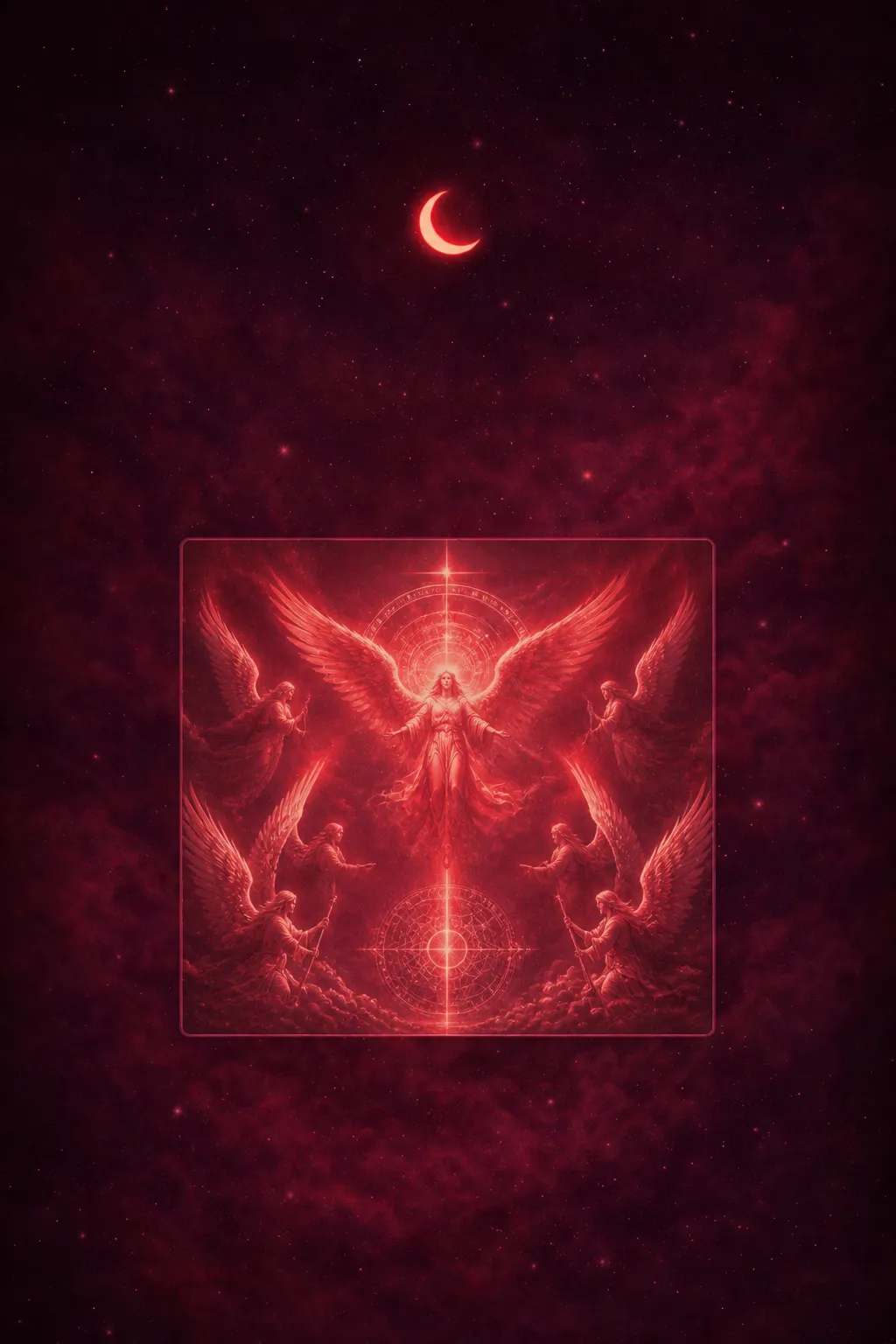

Dreaming about angels typically symbolizes protection, guidance, and divine support, suggesting that your subconscious mind is seeking comfort, reassurance, or moral clarity during a challenging time in your waking life.
In under a minute you could read what your exact dream means for you, and see a picture of it. Free.
A dream still on your mind? Get your personal reading.
Describe your dream in a line or two. In seconds you get a reading of your exact dream, a picture drawn from your own words, and every symbol explained.
Free. No sign-up. Takes 10 seconds. Your dream stays private.
Add who was there and how you felt, and the reading will be about your dream.
0%
Analyzing your dream…
Something went wrong. Please try again in a moment.
Your dreams deserve more than a dictionary
Common Angel Dream Scenarios and What They Mean
The specific way an angel appears in your dream shifts its meaning considerably. A guardian angel silently watching over you is one of the most frequently reported variations — it typically reflects your psyche's response to ongoing stress or a period of change, quietly affirming that inner resources and support are available even when waking life feels precarious. When an angel delivers a message or warning, pay close attention to what was said: your dreaming mind is usually surfacing a decision or uncomfortable truth you already sense but haven't yet fully acknowledged. This scenario is less about divine intervention and more about self-knowledge pressing through — your own moral compass finding a voice.
- Angel appearing after a loss: A common and comforting grief response; the dream helps process mourning and expresses the wish that someone you loved is at peace.
- Angel flying or lifting you upward: Points to a longing to rise above a heavy situation — often tied to a sense of freedom or release from a burden that feels overwhelming in waking life.
- Becoming an angel yourself: Suggests identity pressure around caretaking or moral perfection — a signal to examine whether you are holding yourself to an unrealistic standard for others' sake.
- A fallen or dark angel: Reflects inner conflict between your values and impulses, or unease about trusting something — or someone — that appears safe but triggers doubt.
- A multitude of angels or blinding light: Can signal deep reassurance or spiritual longing, but also emotional overwhelm — a cue to seek calm rather than chase intensity.
What this dream could look like
Tap an image to open it full screen
Example images. Only you can see what you write in Dream Book.
What Your Mind Is Really Saying
From a psychological standpoint, an angel in a dream is rarely about theology — it is your subconscious externalizing something you already carry within yourself. Jungian theory would frame the angel as an archetype: a projection of your inner protector or moral guide, given wings so your waking mind can more easily trust and receive its message. When life feels genuinely out of control — deadlines, relationship strain, financial pressure — the psyche compensates by conjuring a figure of unconditional reassurance, essentially telling you that you still have inner resources available, even when conscious thought insists you do not.
But what does your version mean?
This wish-fulfillment dimension is worth sitting with honestly. If the angel in your dream arrives to rescue or redirect you, that image may be signaling a deeper reluctance to take personal ownership of a difficult decision. Modern anxiety research consistently finds that people under chronic stress outsource their sense of agency — sometimes to institutions, sometimes to other people, and sometimes, in dreams, to benevolent supernatural figures. The angel, in this reading, is a mirror held up to your longing for certainty and guidance, not a message from outside yourself. Dreams of ascending toward heaven often carry this same quality — a desire to escape complexity rather than move through it.
- Comfort after loss: The angel may represent a deceased loved one your grief has not yet fully processed.
- Conscience speaking: A stern or warning angel frequently reflects unresolved guilt or a value you feel you have compromised.
- Transformation cue: An angel guiding you somewhere new points toward a readiness for meaningful personal change you have not yet consciously acknowledged.
Every dream you log starts to connect.
Dream Book keeps your dreams in one place and reveals the threads between them over time — your private dream journal. Free to start.


What Cultures and Traditions Say About Dreaming of Angels
Across Western folk tradition, an angel appearing in a dream has long been treated as a genuinely meaningful event rather than mere mental noise. In broadly Christian-influenced culture — still a significant frame for many Americans — angels are understood as divine messengers, and a dream visitation can carry the weight of reassurance from beyond ordinary life. This belief sits comfortably alongside mainstream psychology rather than contradicting it: even people who hold no strong religious views often describe angelic dream figures as feeling authoritative and trustworthy in a way ordinary dream characters do not. Folk wisdom has historically read a luminous, calm angel as a favorable omen — a signal that protection is near — while a stern or warning angel has been interpreted as a nudge from the conscience to change course before circumstances force the issue.
Was yours a sign? Find out.
Modern anxiety culture has quietly reshaped how people interpret these dreams. When daily life feels high-stakes and control seems just out of reach, dreaming of an angel is increasingly understood as the mind's way of seeking permission to let go — an internal signal that not every burden must be carried alone. This maps onto a widespread contemporary instinct: the desire for heavenly reassurance in a world that rarely offers it. Key folk and cultural readings of angel dreams include:
- A watching angel — traditional sign of protection during a vulnerable period; culturally read as comfort rather than warning.
- A speaking angel — folk belief holds that the message, even if forgotten on waking, carries moral weight and deserves reflection.
- A stern or sorrowful angel — widely interpreted across traditions as a prompt toward self-examination or a change in behavior.
- An angel associated with someone who has died — common folk belief sees this as a reassuring continuation of bond rather than a disturbing omen.
The Spiritual and Religious Meaning of Dreaming About Angels
Within a US-Christian framework, dreaming of angels carries quiet but meaningful weight. Scripture presents angels as both guardians and messengers — Psalm 91:11 promises that God commands angels to watch over believers, while the angelic announcements in Luke 1 underscore their role as bearers of reassurance in moments of upheaval. When anxiety is running high and a sense of control feels distant, a dream angel can land as something closer to a felt spiritual answer than a random image — a nocturnal reminder that you are not navigating difficulty entirely alone. Many people who hold Christian faith report waking from such dreams with a genuine shift in mood, a calm that lingers into the morning.
A bad dream isn't a bad sign.
Beyond formal theology, a broader popular-spiritual reading treats the angel as a symbol of heavenly presence — a watchful, benevolent force that does not demand doctrinal precision to feel real. This guardian-angel belief is widespread across American culture, cutting across denominational lines and even into secular households where the image of a protective presence simply resonates emotionally. In this gentler frame, the angel reflects a deep human need: when life feels unsteady, the mind reaches toward something trustworthy and larger than itself. Rather than replacing the psychological reading, this spiritual layer adds texture to it — the dream may be both your inner conscience speaking and, for those who hold faith, something that points beyond the self toward grace, protection, and renewed hope.
Related Dream Meanings
common dreams
Flying Dream Meaning: Freedom, Ambition & Escape
5 min read
common dreams
What Does It Mean to Dream About Heaven
5 min read

people
Dreaming of a Sister: Bond, Rivalry and Mirror
5 min read

people
Dreaming About Your Wife Meaning and Interpretation
5 min read
people
Baby Girl Dream Meaning: New Beginnings & Nurturing
5 min read

people
Dreaming About Your Boyfriend: Meanings and Interpretations
6 min read

people
Dream of My Brother: Rivalry, Support and Your Own Drive
6 min read
people
Being Ignored Dream Meaning: Rejection & Self-Worth
6 min read
What to Do After You Dream of an Angel
The most useful first step is to note the emotional tone the moment you wake up. Relief, calm, or a sense of being watched over points to an unmet need for reassurance in your waking life — a signal worth taking seriously rather than dismissing. Ask yourself honestly: where do you feel least in control right now? Work pressure, a strained relationship, or a health worry can all quietly generate the kind of vulnerability that your sleeping mind answers with a protective figure.
- Journal the feeling, not just the image. Write down what emotion the angel carried — comfort, warning, awe — and match it to a current stressor. That pairing is where the practical insight lives.
- Identify one support gap. If the dream compensates for feeling unsupported, consider who or what you could realistically lean on: a trusted friend, a counselor, a faith community, or even a structured routine that returns a sense of order.
- Check for a deferred decision. A stern or warning angel often mirrors your own conscience signaling that something needs attention — a conversation you have been putting off, a boundary you have not set, or a choice you know is overdue.
- Use the imagery intentionally. If the dream left you feeling genuinely reassured, treat that calm as a resource. A few minutes of quiet reflection or a dream about heaven revisited in your mind can anchor that steadiness before a difficult day.
But what does your version mean?
None of this requires a theological framework to be useful. Whether you read the angel as divine messenger or inner archetype, the practical takeaway is the same: your mind is flagging a need. Meeting that need in waking life — through connection, honest self-assessment, or deliberate action — is what turns a vivid dream into something genuinely constructive.
One dream is never the whole picture.
The free app remembers your dreams, draws them, and connects the threads over time — so the next one means even more. Free to start.
People Also Ask
Angels appearing in your dreams often symbolize protection, guidance, or a message from your subconscious. They may reflect a need for comfort during difficult times, a desire for spiritual connection, or reassurance that you are on the right path. The emotion you feel during the dream strongly shapes its personal meaning.
The Bible contains many accounts of angels delivering divine messages through dreams, such as the angel appearing to Joseph in Matthew 1:20. Biblically, dreaming of angels is often viewed as a potential channel for God's guidance or warning, reminding believers to remain faithful and attentive to spiritual direction in waking life.
Many believers interpret an angel sent by God in a dream as a sign of divine intervention, comfort, or a call to action. It may signal that you need to change direction, trust a difficult decision, or that you are being watched over during a period of personal struggle or transition.
A dream angel visit often feels distinctly vivid, peaceful, and unlike ordinary dreams. People commonly report a profound sense of calm, a clear message or instruction, and lingering feelings of warmth upon waking. If the experience stays with you deeply and feels meaningful, many believe it may carry genuine spiritual significance.
Curious what your dream would look like?