
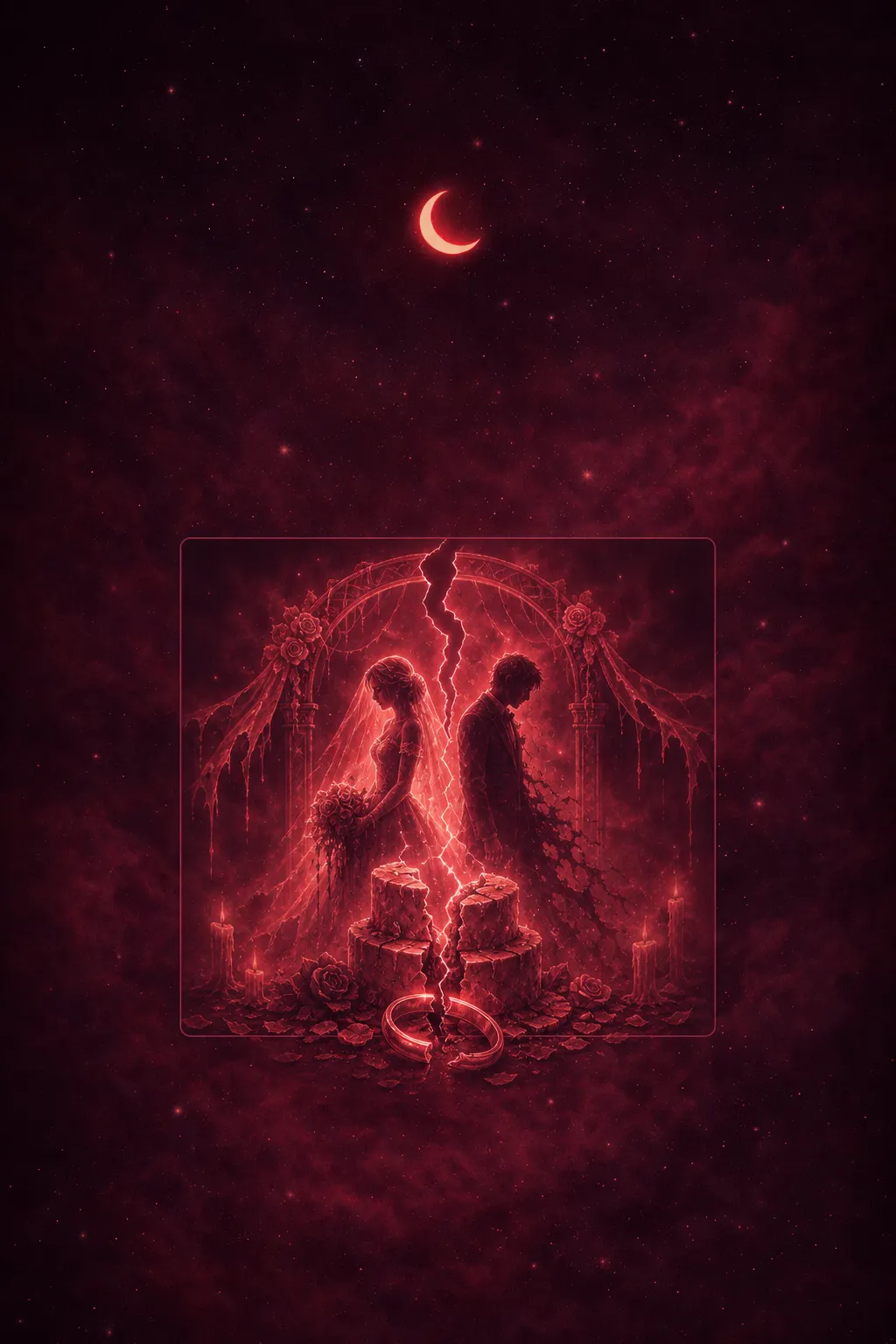

Dreaming about a wedding going wrong typically reflects deep anxiety about commitment, fear of failure, or unresolved doubts about a major life transition, as your subconscious uses the chaos of a ruined ceremony to surface worries about losing control, disappointing others, or making an irreversible decision you aren't fully ready to embrace.
In under a minute you could read what your exact dream means for you, and see a picture of it. Free.
You read what it can mean. But what did yours mean?
General meanings stop here. In the free app, tell Dream Book your exact dream and get a reading that actually makes sense for you.


A dream still on your mind? Get your personal reading.
Describe your dream in a line or two. In seconds you get a reading of your exact dream, a picture drawn from your own words, and every symbol explained.
Free. No sign-up. Takes 10 seconds. Your dream stays private.
0%
Analyzing your dream…
Something went wrong. Please try again in a moment.
Your dreams deserve more than a dictionary
Common wedding-gone-wrong dream scenarios and what they mean
While no two versions of this dream are identical, a handful of scenarios repeat across dreamers — each one spotlighting a distinct anxiety about commitment, control, or self-worth.
Dreaming that your partner doesn't show up or goes missing
Standing at the altar alone is one of the most unsettling variants. It rarely predicts literal abandonment; instead it surfaces a nagging doubt about whether a bond is truly mutual. The dream asks whether you trust — not just your partner, but your own judgment in choosing them.
But what does your version mean?
Dreaming of marrying the wrong person
Finding a stranger or the wrong face beside you signals a mismatch between the path you're on and what you genuinely want. This scenario is especially common during major life crossroads, nudging you to examine whether a current commitment reflects your authentic self or someone else's expectations.
Dreaming about being unprepared — no dress, forgotten vows, arriving late
Showing up without the right clothes or blanking on your vows is the wedding version of a classic being-late dream: raw performance anxiety and imposter feelings bundled together. It points to a real-life sense of not being ready for a responsibility that's bearing down on you.
Dreaming of a wedding disaster or total chaos
Venues collapsing, guests fighting, everything unraveling despite meticulous planning — this is the control-loss scenario in full. Modern wedding culture loads enormous pressure onto a single day; the dreaming mind dramatizes the fear that no amount of preparation can prevent life from going sideways.
Dreaming that you run away or call the wedding off
When you're the one who flees, the dream is giving a voice to suppressed ambivalence. Part of you is resisting a commitment or a role you feel pushed into. Rather than a verdict, treat this as an invitation to sit honestly with any cold feet you may be rationalizing away while awake.
Was yours a sign? Find out.
Dreaming about being left at the altar
Public rejection in front of everyone you know strikes at self-worth and the deep fear of not being chosen. This scenario often surfaces during periods of relational insecurity, reflecting vulnerability rather than any real-world forecast about your relationship.
What this dream could look like
Tap an image to open it full screen
Example images. Only you can see what you write in Dream Book.
What Your Subconscious Is Really Processing
From a psychological standpoint, a wedding-gone-wrong dream is less about matrimony itself and more about the deeper fears that major life transitions stir up. Commitment anxiety sits at the core: the mind registers any binding, point-of-no-return decision — a new job, a relocation, a relationship milestone — as high-stakes, and the wedding ceremony, with its public vows and formal finality, becomes the brain's go-to stage for dramatizing that dread. The collapsed ceremony is essentially your subconscious running a stress simulation, asking What if I lose control of something I've planned for? This connects closely to dreams about teeth falling out, which psychologists read as a similar signal: vulnerability, loss of control, and fear of others' judgment converging in one vivid image.
The public setting amplifies everything. Weddings are watched, evaluated, and remembered — making them a natural symbol for self-image under scrutiny. When the ceremony unravels in a dream, it often reflects real-life perfectionism and the modern pressure to perform flawlessly in front of others. From a Christian psychological perspective, this can also surface as guilt or ambivalence about whether a significant choice truly aligns with one's values and sense of calling.
- Commitment anxiety: Fear of an irreversible decision masquerading as a failing ceremony.
- Loss of control: Even meticulous planning cannot guarantee outcomes — a truth the dreaming mind rehearses.
- Identity transition stress: The ritual marks an old self ending; the dream may signal incomplete readiness for that shift.
- Unresolved ambivalence: Repressed doubts about any major life direction can surface here as cold feet or chaos at the altar.
General meanings end here. Read your own dream.
Describe your dream in a line or two. In seconds you get a reading of your exact dream, a picture drawn from your own words, and every symbol explained.
Free. No sign-up. Takes 10 seconds. Your dream stays private.
0%
Analyzing your dream…
Something went wrong. Please try again in a moment.
Your dreams deserve more than a dictionary
Every dream you log starts to connect.
Dream Book keeps your dreams in one place and reveals the threads between them over time — your private dream journal. Free to start.
Cultural and Traditional Readings of a Wedding Gone Wrong
Across Western folk tradition, dreaming of a disrupted wedding has long been treated with a mixture of superstition and practical wisdom. Older European beliefs held that a chaotic ceremony dream was an omen of unexpected change — not necessarily disaster, but a warning to review plans before committing to a major course of action. In many American households shaped by Christian tradition, the wedding ritual carries the weight of covenant, so seeing that ritual collapse in a dream could prompt quiet reflection on whether a current life decision truly aligns with one's values and intentions. Importantly, most traditional interpreters were quick to stress what psychologists now echo: the dream almost never predicts an actual wedding falling apart.
The modern cultural layer adds considerable pressure of its own. Today's wedding — with its months of planning, significant expense, and social media visibility — has become one of the most performance-laden milestones in contemporary life. That cultural perfectionism bleeds directly into the dreaming mind. When the flowers wilt, the venue floods, or the guests disappear, the dream is often mirroring the very real anxiety of trying to control an event that, by its nature, involves too many moving parts. This connects to a broader fear of being unprepared or falling behind that many people carry into high-stakes situations.
A bad dream isn't a bad sign.
- Folk omen tradition: disrupted-wedding dreams historically signaled a need for caution before a major commitment, not inevitable failure.
- Christian-influenced reading: the broken ceremony may invite reflection on sincerity of vows — literal or figurative — rather than serving as a dire prophecy.
- Modern perfectionism: the "perfect day" ideal makes the wedding an ideal stage for control-loss anxiety to perform its worst-case scenarios.
- Self-knowledge angle: culturally, such dreams have been read as the psyche's honest mirror — surfacing doubts that waking social pressure makes difficult to voice.
Spiritual Meanings of a Wedding Gone Wrong Dream
From a Christian perspective, the wedding is one of Scripture's most resonant symbols — the bride and groom imagery woven through the Song of Solomon and culminating in Revelation's vision of the Lamb's wedding feast. When that ceremony falls apart in a dream, many believers instinctively read it as a nudge toward self-examination: Am I honoring the commitments I've already made? Is there an unconfessed reluctance — toward a relationship, a calling, or a season of life — that needs to be brought into the light rather than buried? The dream rarely functions as a warning omen so much as an invitation to honest prayer and reflection on where your sense of loyalty and trust actually stands.
More broadly, spiritual traditions that emphasize covenant — the idea that meaningful bonds carry sacred weight — treat a disrupted wedding dream as a signal that the soul is wrestling with surrender and control. Modern life amplifies this tension: we are conditioned to orchestrate perfect outcomes, and the dream of things running hopelessly off schedule taps into the same spiritual anxiety about not being enough, or not being ready. Spiritually, that collapse can be redemptive — the crumbling ceremony strips away the performance and asks what genuine commitment looks like beneath the planning and the pressure.
- Covenant examination: A prompt to reflect honestly on promises made or pending, rather than fear an external outcome.
- Surrender vs. control: Spiritually, the unraveling ceremony can mirror resistance to trusting a process larger than yourself.
- Identity before God or a higher purpose: The public ritual's failure may point to a deeper question about who you are apart from others' expectations.
Related Dream Meanings
common dreams
Being Late Dream Meaning: Anxiety, Fear & Missed Chances
5 min read

body health
Teeth Falling Out Dream: Anxiety, Loss & Vulnerability
5 min read
people
Getting Married: Meaning and Interpretation
5 min read

people
Ex-Boyfriend Dream Meaning: Unresolved Feelings Explained
5 min read
people
Dreaming About Children Meaning - Dream Book Interpretation
5 min read
people
What Does It Mean to Dream About a Wedding Ring
5 min read
people
Kissing Dream Meaning: Intimacy, Desire & Connection
5 min read

people
Ex-Girlfriend Dream Meaning: Unresolved Feelings & Desires
5 min read
Practical Takeaways: What to Do After This Dream
Because this dream is so tightly wired to control anxiety and decision fatigue, the most useful first step is a simple stress audit. Ask yourself what major commitment — at work, in a relationship, or in your personal life — is currently sitting unresolved. Dreams of ceremonies unraveling tend to spike when a real-life deadline is approaching and your preparation feels insufficient. Writing down the three things you most fear going wrong can defuse the loop; naming the worry moves it out of the subconscious rehearsal stage and into territory you can actually manage.
If the dream keeps returning, treat it as a signal to check in on any relationship where you haven't been fully honest — with your partner or with yourself. That doesn't mean panic; it means a deliberate, calm conversation is overdue. Similarly, if you're not currently planning a wedding but dreamed of one arriving too late or unprepared, reflect on whether perfectionism is driving you to over-plan other areas of your life to the point of paralysis.
But what does your version mean?
- Journal the emotional residue: Note whether you felt dread, relief, or embarrassment — each points to a different underlying need.
- Identify the real commitment: Pin down which binding decision in your waking life triggered the dream's imagery.
- Have the overdue conversation: If doubt about a relationship is present, address it directly rather than letting the subconscious keep staging the warning.
- Ease the perfectionism load: Scale back one area where your standards are generating more anxiety than results.
One dream is never the whole picture.
The free app remembers your dreams, draws them, and connects the threads over time — so the next one means even more. Free to start.
People Also Ask
Dreaming of a wedding going wrong often reflects anxiety about commitment, major life transitions, or fear of failure. It rarely predicts real events. Instead, it signals that you may feel unprepared for a big decision or worry about meeting expectations — your subconscious is processing stress, not forecasting disaster.
Spiritually, a wedding in a dream symbolizes union, transformation, and the merging of two aspects of yourself. When the wedding goes wrong, it may suggest an inner conflict or imbalance — perhaps two parts of your personality or life path are not yet aligned. It is a call to seek inner harmony and clarity.
No, dreaming of a wedding is not considered bad luck in most traditions. Even chaotic wedding dreams are generally seen as symbolic rather than prophetic. They point to emotional tension or unresolved feelings about relationships and change. Treat them as useful messages from your subconscious, not as omens of misfortune.
Dreams involving intense emotions — fear, grief, or overwhelming anxiety — deserve attention. Recurring dreams, nightmares about losing control, and vivid dreams tied to real-life stress are especially worth reflecting on. They often highlight unresolved issues your waking mind avoids, making them valuable tools for emotional growth and self-understanding.
Curious what your dream would look like?