
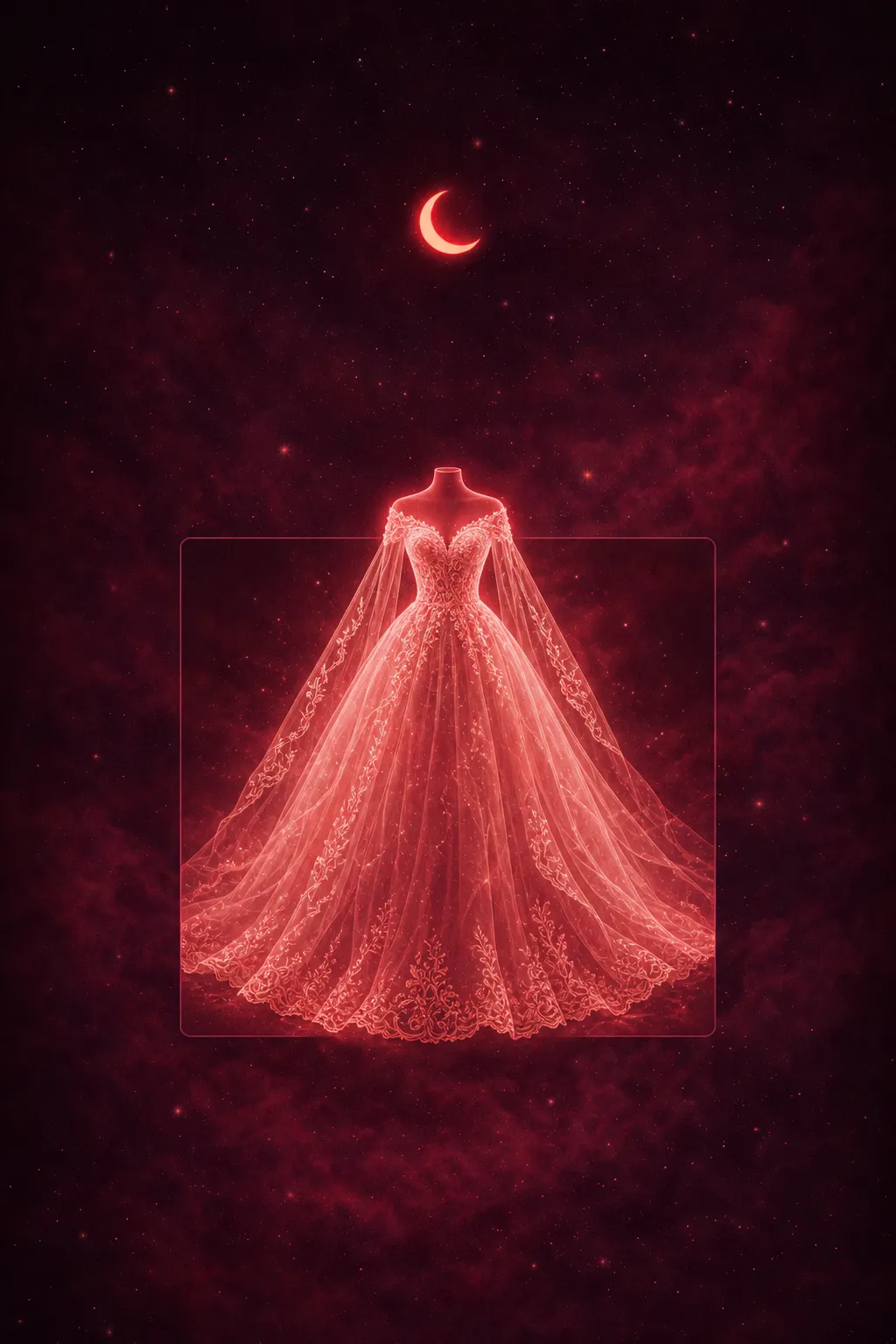

Dreaming about a wedding dress typically symbolizes commitment, transition, and a desire for union—reflecting your feelings about love, self-worth, or a major life change, whether you are anticipating a real wedding, longing for deeper connection, or navigating a significant personal transformation.
In under a minute you could read what your exact dream means for you, and see a picture of it. Free.
You read what it can mean. But what did yours mean?
General meanings stop here. In the free app, tell Dream Book your exact dream and get a reading that actually makes sense for you.


A dream still on your mind? Get your personal reading.
Describe your dream in a line or two. In seconds you get a reading of your exact dream, a picture drawn from your own words, and every symbol explained.
Free. No sign-up. Takes 10 seconds. Your dream stays private.
0%
Analyzing your dream…
Something went wrong. Please try again in a moment.
Your dreams deserve more than a dictionary
Common Wedding Dress Dream Scenarios
The emotional tone of the dream is your clearest clue. Wearing a wedding dress and feeling joy suggests genuine readiness for a transition or commitment you are moving toward; wearing it with dread or discomfort signals that part of you is resisting the change, regardless of how confident you appear in waking life. Similarly, a torn, stained, or dirty dress is one of the most anxiety-loaded variants — it typically mirrors fears that something important is already compromised, whether a relationship, a plan, or your own self-image at a high-stakes moment.
- A dress that won't fit or feels wrong: Points to a mismatch between who you are and a role being asked of you — a classic sign that a commitment or expectation may not suit you as well as it appears on the surface.
- Shopping for or trying on dresses: Reflects an active weighing of options; your identity or future path is still being explored, not yet settled.
- Lost or can't find the dress: A textbook unpreparedness dream — the mind rehearsing fear of losing control at a critical moment.
- Someone else wearing the dress: May surface comparison, envy, or the sense that a transition you desire is happening for another person instead.
- A black or unconventional dress: Signals grief, ambivalence, or a deliberately non-traditional path woven into the union or change.
- Receiving the dress as a gift: Raises the question of agency — is this life step genuinely self-chosen, or shaped by outside expectation?
But what does your version mean?
Across all variants, notice what you feel most strongly in the dream. That emotional undercurrent — not the dress itself — is where the real meaning lives.
What a dream about a wedding dress could look like
Tap an image to open it full screen
Example images. Only you can see what you write in Dream Book.
Psychological Reading: Identity, Anxiety, and Inner Union
From a psychological standpoint, the wedding dress functions as the unconscious mind's costume for a rehearsed identity shift. When the psyche is processing a significant transition — not only marriage but any commitment that redefines who you are — it can stage that shift as a bridal scene, using the dress as a symbol for the new self waiting to be put on. In Jungian terms, the marriage imagery points toward an inner union of opposing drives: ambition and vulnerability, independence and belonging. The dress, then, is less about weddings literally and more about the vessel the self steps into at a threshold moment.
Modern anxiety tends to show up in the details. Dreams in which the dress is stained, torn, doesn't fit, or goes missing are classic expressions of stress over uncontrollable change and high-stakes performance — the same psychological territory as dreams about teeth falling out. The underlying fear is not really about fabric; it is about losing control of how you are perceived at precisely the moment when perception feels most consequential. Being watched while wearing the dress amplifies this: the dreaming mind is rehearsing judgment, testing whether the self feels worthy of the role it is about to claim.
- Commitment ambivalence: A dress that feels wrong or too tight often signals unconscious doubt about a decision, not necessarily romantic — it may be a career move or life path.
- Longing and wish-fulfillment: For those not in a relationship, the dress can express a desire for belonging, validation, or partnership rather than a literal event.
- Control anxiety: Logistical failures in the dream (wrong size, wrong venue, wrong dress) mirror waking-life stress about outcomes that lie outside your control.
- Self-worth rehearsal: Feeling radiant in the dress reflects growing integration — a part of you accepting the new identity rather than resisting it.
General meanings end here. Read your own dream.
Describe your dream in a line or two. In seconds you get a reading of your exact dream, a picture drawn from your own words, and every symbol explained.
Free. No sign-up. Takes 10 seconds. Your dream stays private.
0%
Analyzing your dream…
Something went wrong. Please try again in a moment.
Your dreams deserve more than a dictionary
Every dream you log starts to connect.
Dream Book keeps your dreams in one place and reveals the threads between them over time — your private dream journal. Free to start.
Cultural and Traditional Readings of the Wedding Dress
In Western tradition, the white wedding dress carries centuries of symbolic freight: purity, celebration, and a publicly recognized life milestone. That weight did not arrive neutrally — Victorian convention cemented white as the standard after Queen Victoria wore it in 1840, and the twentieth-century wedding industry amplified it into a near-sacred "perfect day" script. When that imagery surfaces in a wedding dream, it rarely arrives stripped of that cultural pressure. The dress is not just clothing; it is a costume the culture has assigned to one of its most scrutinized threshold moments.
Was yours a sign? Find out.
Folk belief adds another layer of unease. The old superstition that a groom must not see the bride's dress before the ceremony persists in popular consciousness, and dreamers who recall it on waking may find their dream imagery tinged with a vague sense of violation or bad omen — even when the dream itself seemed straightforward. This background anxiety maps neatly onto modern performance pressure: in an era of social media and curated milestones, the dress becomes a symbol not only of commitment but of self-presentation under public judgment.
- Purity and renewal: White traditionally signals a clean slate, making the dress a marker of hoped-for transformation.
- Performance pressure: Wedding-industry culture frames the dress as a peak moment of being seen, which the dreaming mind can convert into anxiety about measuring up.
- Superstition and control: Folk rules about the dress reinforce a need to manage outcomes — a theme the dream may be reflecting when waking life feels similarly out of your hands.
Spiritual Meaning of the Wedding Dress in Dreams
For dreamers who hold a faith framework, the wedding dress carries resonance that goes beyond psychology. In Revelation 19:7–8, the bride clothed in fine white linen represents righteousness and covenant — a soul prepared to meet something sacred. Dreaming of a wedding dress through this lens can feel less like a commentary on an actual wedding and more like an inner spiritual prompting: Are you ready? Have you done the inner work a new season requires? The garment becomes a mirror for your sense of spiritual readiness, not just social performance.
A bad dream isn't a bad sign.
White as a color of renewal and consecration matters here. If the dress in your dream is radiant and fits well, many Christian dreamers interpret that as a season of alignment — a sense that they are walking in their calling or approaching a genuine covenant, whether with a person, a vocation, or a deeper commitment to faith. A torn, stained, or ill-fitting dress may surface honest anxiety about whether the self being presented outwardly matches the inner life. That gap between appearance and authenticity is a quietly spiritual concern, one that connects naturally to the modern pressure to perform wholeness at threshold moments — a dream set inside a church intensifies this covenant dimension further.
At its core, the spiritual reading invites self-examination rather than guilt: the dress asks you to consider what you are truly consecrating yourself to, and whether your heart is honestly prepared for the crossing ahead.
Related Dream Meanings

body health
Teeth Falling Out Dream: Anxiety, Loss & Vulnerability
5 min read
people
Wedding Dream Meaning: Commitment & New Beginnings
5 min read
people
Church Dream Meaning: Spirituality, Guidance & Belief
5 min read
people
Ring Dream Meaning: Commitment, Love & Unity
5 min read
people
Jealousy Dream Meaning: Insecurity, Fear & Hidden Desires
5 min read
people
What Does It Mean to Dream About Betrayal
5 min read
people
Abandoned Dream Meaning: Neglect, Fear & Unresolved Pain
5 min read
people
Boss Dream Meaning: Authority, Ambition & Stress
5 min read
Practical Takeaways: What to Do After This Dream
Rather than searching for a single fixed meaning, treat the dream as a prompt for honest self-reflection. Ask yourself what major commitment, role, or transition is on your radar right now — it need not involve an actual wedding. The dress is simply the mind's shorthand for a threshold moment. If the image left you feeling anxious or trapped, that discomfort is worth sitting with: write down what the dress felt like to wear, what was expected of you in the dream, and who was watching. Those details often point directly to where real-life pressure is building.
- Name the transition. Identify the waking-life change the dream may be mirroring — a career shift, a relationship milestone, a major decision — and honestly assess whether you feel ready or railroaded.
- Check whose expectations you are carrying. If the dress felt wrong or ill-fitting, ask whether a current commitment reflects what you genuinely want or what others want for you.
- Use the emotional contrast. Joy in the dream is a green light worth noticing; dread is a signal to slow down before moving forward, not necessarily to retreat entirely.
- Journal the specifics. Details like a torn hem, a missing veil, or an absent ring each sharpen the message — record them before they fade.
But what does your version mean?
If the dream recurs or leaves lasting unease, consider talking it through with a therapist or trusted confidant. Recurring threshold imagery is often the mind's way of flagging that an unresolved decision needs conscious attention, not just sleep-cycle processing.
One dream is never the whole picture.
The free app remembers your dreams, draws them, and connects the threads over time — so the next one means even more. Free to start.
People Also Ask
Seeing yourself in a wedding dress often reflects a desire for commitment, a major life transition, or a longing for love and acceptance. It can also signal anxiety about an upcoming decision. The dress's condition matters — a pristine gown suggests confidence, while a torn or dirty one may hint at unresolved fears.
Spiritually, a wedding dress represents purity, union, and divine purpose. Many traditions view it as a symbol of the soul preparing for a sacred covenant — either with another person, a higher calling, or one's true self. It often appears during periods of deep personal transformation or spiritual awakening.
In biblical symbolism, a wedding dress represents righteousness, holiness, and being chosen. Revelation describes the bride of Christ clothed in fine linen, symbolizing pure and faithful deeds. Dreaming of a wedding dress through a biblical lens often suggests spiritual readiness, divine favor, or a call toward a more devoted, purposeful life.
Dreaming of a wedding spiritually signals union — the merging of opposites within yourself or alignment with a higher purpose. It can represent a soul-level commitment, answered prayer, or a new covenant beginning in your life. Many spiritual traditions interpret wedding dreams as deeply positive omens of wholeness and divine blessing.
Curious what your dream would look like?