
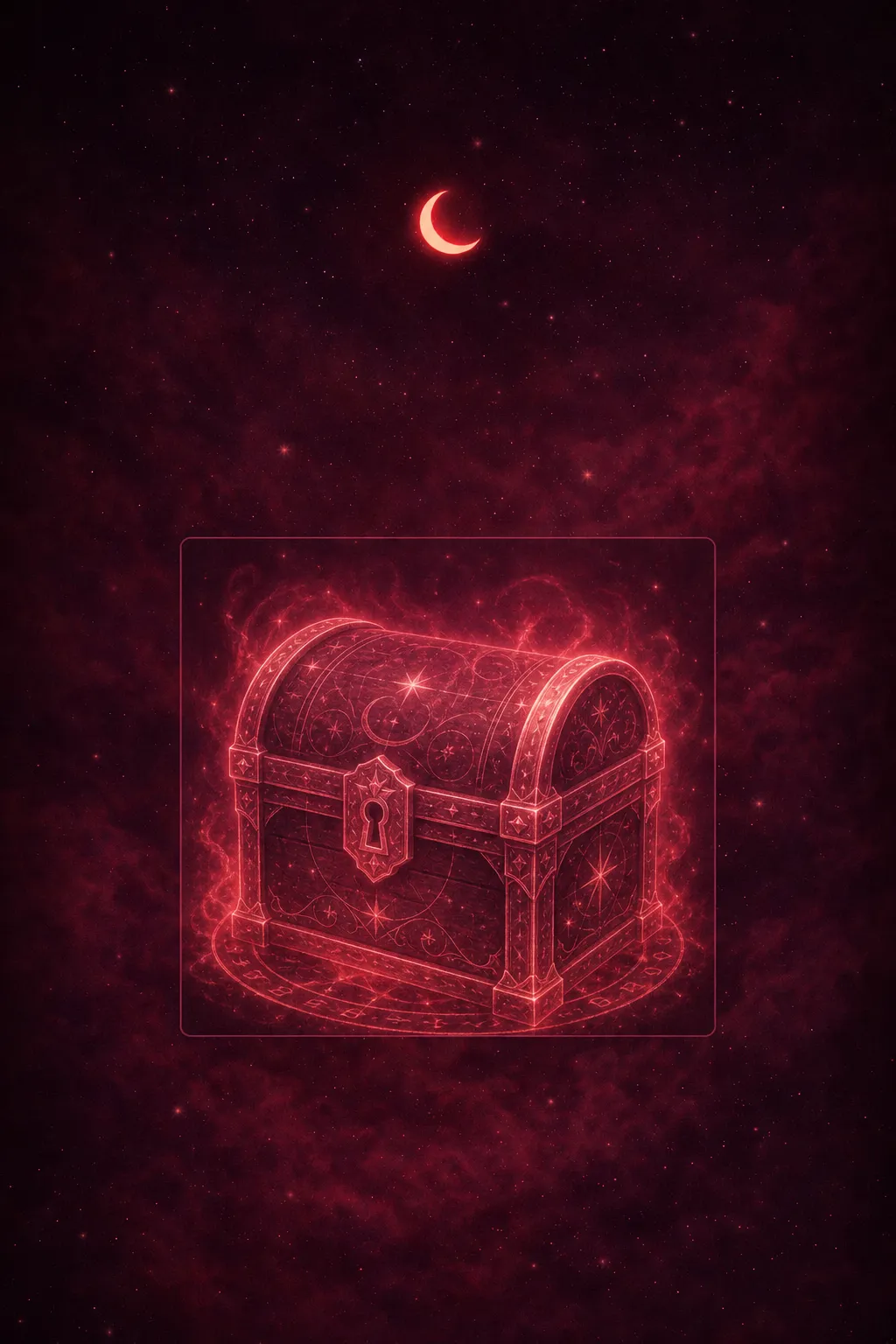

Dreaming of a treasure chest often reflects hidden potential, self-worth, or rewards you haven't yet allowed yourself to claim. It can speak to talents, emotions, or opportunities buried beneath the surface. The condition of the chest — locked, open, or empty — may offer deeper clues about where you are in that journey.
In under a minute you could read what your exact dream means for you, and see a picture of it. Free.
You read what it can mean. But what did yours mean?
General meanings stop here. In the free app, tell Dream Book your exact dream and get a reading that actually makes sense for you.


A dream still on your mind? Get your personal reading.
Describe your dream in a line or two. In seconds you get a reading of your exact dream, a picture drawn from your own words, and every symbol explained.
Free. No sign-up. Takes 10 seconds. Your dream stays private.
0%
Analyzing your dream…
Something went wrong. Please try again in a moment.
Your dreams deserve more than a dictionary
Common Treasure Chest Dream Scenarios
Finding a Treasure Chest and Opening It
You're standing in some half-lit space — a cave, a beach, an attic — and there it is: a chest, weathered and heavy, waiting for you. You lift the lid. What you find inside matters enormously. Gold coins spilling over the edges point toward recognition and reward you feel is overdue in waking life. A chest full of strange objects you don't recognize suggests untapped potential you haven't yet named.
This is the most hopeful version of the dream. It carries the feeling of arrival — of finally getting to something you've been working toward. If you've been grinding through a difficult project or a long season of uncertainty, your dreaming mind may be rehearsing what it would feel like to break through. Pay attention to whether you feel joy, relief, or strangely numb when you open it. That emotional texture is the real message.
But what does your version mean?
Discovering a Treasure Chest That's Empty
The chest is there. You open it. Nothing. Or worse — something rotted, broken, or worthless inside. This version lands like a gut punch, and it's meant to. Dreams about finding money that disappears or turns to dust carry the same sting: your subconscious is processing a fear of disappointment, of chasing something that won't deliver.
An empty chest often surfaces during transitions — after a promotion that didn't feel as good as expected, after a relationship milestone that left you hollow. It's not a prophecy of failure. It's your psyche asking a harder question: are you pursuing the right treasure in the first place?
Someone Else Finds the Treasure Chest
You watch someone else — a friend, a stranger, a rival — open the chest and claim what's inside. You're standing just outside the frame of the reward. This dream is drenched in the feeling of being overlooked, and it connects directly to dreams about being ignored or left behind. Comparison is the thief of peace, and your sleeping mind knows it.
Jung would say the figure claiming the treasure is worth examining closely. If they look like someone you know, the dream might be asking whether you've projected your own potential onto that person — whether you've outsourced your ambition to someone else's story. The chest was never really theirs.
A Treasure Chest You Can't Reach or Open
It's locked. Or it's behind glass. Or you're running toward it and it keeps receding — the way dreams do when they want to show you something just out of grasp. This scenario shares its emotional DNA with running but not being able to move: the goal is visible, the effort is real, and the gap won't close. Frustration is the point.
The locked chest is one of the most psychologically rich variations. What's keeping the chest sealed — a missing key, a combination you can't remember, your own hands refusing to work? Each obstacle is a symbol of a specific internal block. A missing key suggests you feel you lack permission. A chest you physically can't pry open suggests you know what you want but can't make yourself reach for it.
What this dream could look like
Tap an image to open it full screen
Example images. Only you can see what you write in Dream Book.
Psychological Interpretation
Freud saw buried treasure as one of the cleaner examples of wish fulfillment in dreams. For him, the chest was almost always tied to something hidden and desired — not necessarily material wealth, but the things we've locked away from conscious life: ambitions we've dismissed as unrealistic, desires we've told ourselves we don't deserve. The act of opening it is the act of allowing. The fact that it appears in a dream rather than waking action tells you something about where that permission currently lives.
Was yours a sign? Find out.
Jung took a different angle entirely. For him, the treasure chest is an image of the Self — the integrated whole that individuation is always moving toward. The chest buried in the earth, or sunk in water, represents the unconscious: rich, largely unexplored, and containing everything you haven't yet claimed about yourself. He wrote about the treasure that's "hard to attain" as a central motif in myth and dream alike — the gold is always guarded, always requiring something from you before it yields. If you're dreaming of gold inside a chest, Jung would say you're dreaming about your own unrealized wholeness.
Calvin Hall's content analysis of over 50,000 dream reports found that dreams involving discovery — finding hidden rooms, uncovering objects, opening containers — appeared consistently during periods of personal transition. Hall's cognitive theory frames dreams as a kind of thinking: you're working through beliefs about yourself and the world, not just processing emotions. A treasure chest in Hall's framework represents a belief about what you deserve and what's available to you. The condition of the chest and its contents reflects your current self-concept more than any external circumstance.
Ernest Hartmann's emotional memory processing theory adds another layer. Hartmann argued that dreams help us metabolize emotionally charged experiences by embedding them in new imagery — the stronger the emotion, the more vivid and symbolic the dream. A treasure chest dream often spikes in frequency during emotionally loaded periods: career crossroads, the end of a relationship, a creative breakthrough. Your brain is doing something useful here. It's not just replaying your anxiety about money or success — it's building a new emotional context around it, one where the reward is tangible and within reach.
General meanings end here. Read your own dream.
Describe your dream in a line or two. In seconds you get a reading of your exact dream, a picture drawn from your own words, and every symbol explained.
Free. No sign-up. Takes 10 seconds. Your dream stays private.
0%
Analyzing your dream…
Something went wrong. Please try again in a moment.
Your dreams deserve more than a dictionary
Every dream you log starts to connect.
Dream Book keeps your dreams in one place and reveals the threads between them over time — your private dream journal. Free to start.
Cultural & Spiritual Meaning
In Western symbolic tradition, the treasure chest carries centuries of layered meaning — from fairy tales where the chest at the end of the quest proves the hero's worth, to alchemical imagery where gold represents spiritual transformation rather than material gain. The chest itself is a threshold object: it holds something precious and requires an act of will to open. Medieval dream interpreters read buried gold as a sign of hidden virtue in the dreamer — something noble waiting to be expressed rather than hoarded.
Ibn Sirin, the 8th-century Islamic scholar whose dream interpretations remain influential today, wrote specifically about finding treasure in dreams. For Ibn Sirin, discovering hidden gold or a sealed chest full of wealth was a favorable omen — often pointing toward knowledge, wisdom, or spiritual insight rather than literal financial gain. He drew a careful distinction: treasure found in a known, familiar place suggested rewards coming through honest effort, while treasure found in a strange or foreign location could indicate something unexpected entering your life, not always welcome. The spiritual weight of the dream, in his view, depended heavily on the emotional state of the dreamer upon waking.
A bad dream isn't a bad sign.
In many Indigenous and Eastern traditions, the earth itself is a keeper of ancestral wisdom, and anything buried in it carries the resonance of what came before. Dreaming of unearthing a chest in these frameworks isn't about personal gain — it's about receiving something that was always meant for you, held in trust by the land or by ancestors. Chinese dream traditions associate finding hidden treasure with good fortune arriving through unexpected channels, but also with responsibility: what you uncover, you must use wisely. The chest is never just yours to keep.
Related Dream Meanings
common dreams
Finding Money Dream Meaning: Luck, Wealth & Hidden Talents
5 min read

people
Being Ignored Dream Meaning: Rejection & Self-Worth
6 min read

nightmares
Running But Can't Move: Meaning and Interpretation
5 min read

common dreams
Gold Dream Meaning: Wealth, Success & Self-Worth
5 min read

common dreams
Money Dream Meaning: Wealth, Worth & Anxiety
5 min read

common dreams
Old House Dream Meaning: Past, Nostalgia & Unresolved Issues
5 min read

common dreams
Ocean Dream Meaning: Emotions, Change & the Subconscious
5 min read
common dreams
Finding Treasure Dream Meaning: Potential & Self-Worth
6 min read
What to Do After This Dream
Start with the chest itself. Before you try to interpret the symbolism, sit with the physical details: Was it ornate or plain? Heavy or light? Where did you find it — underground, underwater, in a familiar room? The setting of a treasure chest dream carries as much meaning as the chest's contents. A chest found in an old house points toward your past and what you've left unexamined there. A chest found at the bottom of the ocean suggests the treasure is deep in your emotional life, requiring real effort to surface.
Ask yourself what you've been working toward that feels locked or delayed. The treasure chest is rarely about literal wealth — it's about value, recognition, and the things you believe you have to earn before you're allowed to want them. If the chest was full and you felt joy, lean into that feeling. Your subconscious is telling you something is ready to be claimed. If it was empty or locked, that's worth sitting with too — not as a bad omen, but as an honest reflection of where your belief in your own potential currently stands.
Journal the dream in as much detail as you can remember, including the emotions. Notice whether the treasure chest dream connects to other recurring symbols in your sleep life — dreams about finding treasure often appear alongside secret rooms or gold coins, forming a cluster that points toward a specific area of your life asking for attention. If this dream keeps returning, it's worth exploring with a personalized interpretation — Dream Book lets you describe your dream in your own words and ask follow-up questions to understand what your subconscious is actually trying to surface.
But what does your version mean?
Understanding your treasure chest dream is the first step. The next is asking what it means for your life right now — that's where a personalized interpretation goes deeper than any dictionary.
One dream is never the whole picture.
The free app remembers your dreams, draws them, and connects the threads over time — so the next one means even more. Free to start.
People Also Ask
Dreaming of finding a treasure chest usually points to untapped potential, hidden talents, or rewards you feel are within reach. The condition of the chest and what's inside it reflects your current beliefs about what you deserve and what's available to you.
An empty treasure chest often surfaces when you've been chasing a goal that hasn't delivered the satisfaction you expected. It's your subconscious asking whether you're pursuing the right things — not a prophecy of failure, but an invitation to reassess what you actually value.
In most cultural and psychological traditions, yes — treasure dreams are considered positive omens pointing toward recognition, self-discovery, or incoming reward. Ibn Sirin specifically interpreted finding treasure in dreams as a sign of wisdom or unexpected good fortune entering your life.
A treasure chest you can't open or reach reflects a sense that the goal is visible but blocked — often by self-doubt, a missing sense of permission, or an internal barrier you haven't yet identified. Pay attention to what specifically prevents you from opening it, as that detail usually points to the real obstacle.
Curious what your dream would look like?