
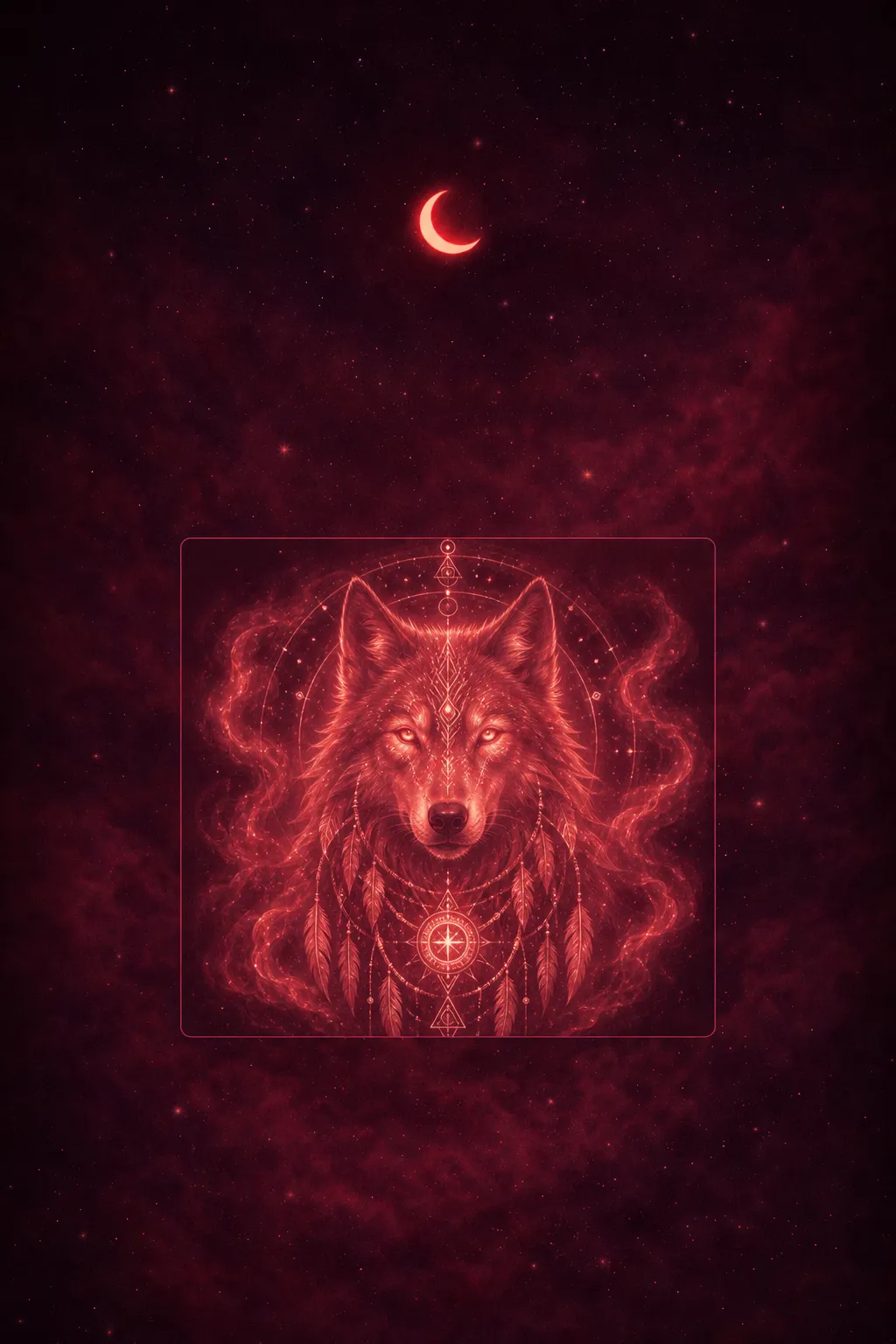

Dreaming of a spirit guide often reflects a deep need for guidance, reassurance, or clarity during a period of change or uncertainty. The guide typically represents your own inner wisdom, a protective presence, or a call to trust your intuition. These dreams can signal that you are ready to grow spiritually or make an important decision.
In under a minute you could read what your exact dream means for you, and see a picture of it. Free.
A dream still on your mind? Get your personal reading.
Describe your dream in a line or two. In seconds you get a reading of your exact dream, a picture drawn from your own words, and every symbol explained.
Free. No sign-up. Takes 10 seconds. Your dream stays private.
0%
Analyzing your dream…
Something went wrong. Please try again in a moment.
Your dreams deserve more than a dictionary
Common Spirit Guide Dream Scenarios
A Stranger Who Knows Everything About You
The most unsettling version of this dream: someone you've never met looks at you with complete recognition. They don't introduce themselves. They don't need to. There's an intimacy in the encounter that feels older than memory, and when you wake up, the feeling lingers longer than the details.
This figure — the wise stranger — often appears at crossroads moments. A career change, a relationship ending, a loss that hasn't fully landed yet. The guide isn't there to give you answers so much as to remind you that you already carry them. Pay attention to what they say, even if it sounds cryptic. Dreams like this have a way of making sense weeks later.
Was yours a sign? Find out.
An Ancestor or Deceased Loved One as Guide
Sometimes the guide wears a familiar face — a grandparent who died before you were old enough to know them, or someone whose loss still aches. If you've ever had a visitation dream, you know the texture of it: hyper-real, emotionally saturated, different from ordinary dreaming in a way that's hard to explain but impossible to dismiss.
When a deceased ancestor visits in the role of guide, they often appear younger, healthier, and radiantly calm. They may offer a single phrase, a gesture, or just their presence. The message is usually less about information and more about comfort — you are not as alone as you feel. Many people report these dreams arriving exactly when grief peaks again, as though something responds to the call.
An Animal Spirit Guide
Your guide doesn't always arrive in human form. A wolf that walks beside you without threat. An owl that lands on your shoulder and seems to be waiting. A horse that appears at the edge of a dark forest and holds your gaze. Animal guides in dreams carry their own symbolic weight — the wolf speaks to instinct and pack loyalty, while owls have carried the energy of hidden knowledge across almost every culture that ever told stories about them.
The animal guide rarely frightens you, even if the animal itself would in waking life. That calm is the signal. It's not a threat — it's an invitation to follow, to trust, to move in a direction you've been avoiding.
A Guide Who Disappears Before You Can Speak
Some spirit guide dreams are defined by the gap — you reach for the figure, and they recede. You try to ask your question, and the words won't come. This is one of the most frustrating versions of the dream, and also one of the most common. It often mirrors a waking-life feeling of being close to clarity but unable to grasp it.
If you're also experiencing screaming but no sound in your dreams, or finding that you can't wake up from particularly intense encounters, your nervous system may be processing something significant. The guide's elusiveness isn't rejection — it's the dream telling you the answer requires more than one night.
What this dream could look like
Tap an image to open it full screen
Example images. Only you can see what you write in Dream Book.
Psychological Interpretation
Freud would have looked at a spirit guide dream and asked what you're projecting onto this figure. For him, the idealized wise presence is often a stand-in for parental authority — specifically the all-knowing, all-accepting version of a parent you may never have had, or lost too soon. The dream fulfills a wish: to be seen completely and guided safely. It's wish fulfillment in its most archetypal form.
Jung went much further. For him, the spirit guide is one of the most significant archetypes the unconscious can produce — what he called the Wise Old Man or Wise Old Woman, a figure that emerges from the collective unconscious when the psyche is ready for individuation. This isn't a projection of a person you know. It's something older, drawn from the shared symbolic inheritance of every human who ever lived. Jung believed encountering this archetype in dreams was a sign of genuine psychological growth — the self reaching toward wholeness. If you've been exploring lucid dreaming, you may find this figure appears more vividly as your awareness within dreams deepens.
But what does your version mean?
Calvin Hall's content analysis of tens of thousands of dream reports found that figures of authority and wisdom appear consistently across cultures, genders, and ages — particularly during life transitions. His work suggests these aren't random neural noise but recurring cognitive structures, the mind's way of externalizing its own problem-solving capacity. The guide, in Hall's framework, is essentially you — the part of you that already knows what the anxious part is afraid to admit.
Ernest Hartmann's emotional memory processing theory adds another layer. He argued that dreams function like a form of internal therapy, weaving new emotional experiences into existing memory networks. A spirit guide dream, in this model, arrives when you're processing something that needs more than logical thought — grief, fear, a decision that can't be reasoned through. The guide is the dream's way of providing the emotional container that waking life hasn't offered. Hobson and McCarley's activation-synthesis hypothesis would push back and say the brain is simply constructing a narrative from random neural firing — but even they acknowledged that the brain reaches for the most emotionally resonant templates it has. And for humans, across all of recorded history, the wise guide is one of the most resonant templates there is.
Every dream you log starts to connect.
Dream Book keeps your dreams in one place and reveals the threads between them over time — your private dream journal. Free to start.


Cultural & Spiritual Meaning
In Indigenous traditions across North America, Australia, and Siberia, the spirit guide is not a metaphor — it's a relationship. Shamanic practice is built around the cultivation of these encounters, often through deliberate dreaming, fasting, or ceremony. The guide might be an ancestor, an animal spirit, or a being specific to that person's lineage. The dream isn't something that happens to you; it's something you learn to enter. This is a profoundly different relationship with night vision than the Western model of dreams as psychological byproduct.
Ibn Sirin, the 8th-century Islamic scholar whose dream interpretations remain influential across the Muslim world, wrote extensively about encounters with luminous or wise figures in dreams. He distinguished carefully between dreams that come from the divine, dreams that come from the self, and dreams that come from darker sources. A guide who brings peace, speaks truth, and leaves the dreamer feeling uplifted was, for Ibn Sirin, a sign of divine mercy — a form of guidance granted to the sincere seeker. He noted that such dreams often arrive during times of prayer, fasting, or genuine spiritual searching. If you've been dreaming of guardian angels alongside spirit guides, Ibn Sirin's framework would treat both as belonging to the same category of blessed communication.
A bad dream isn't a bad sign.
In Western esoteric traditions — from Neoplatonism through the Romantic era to contemporary spirituality — the spirit guide is understood as a higher-dimensional being assigned to accompany a soul through its incarnation. Carl Jung's work on the collective unconscious gave this idea a secular vocabulary without fully stripping it of its mystery. In Eastern traditions, particularly within Tibetan Buddhism, the guide figure appears in dream yoga practice as a teacher who can only be encountered when the ordinary mind quiets enough to listen. Across all of these frameworks, the thread is the same: the guide arrives when you're ready to receive something you couldn't access before.
Related Dream Meanings

nightmares
What Does It Mean When a Dead Person Visits You in a Dream
6 min read
nightmares
What Does It Mean When Ancestors Visit You in a Dream
6 min read

animals
Wolves Dream Meaning: Instincts, Loyalty & Inner Power
5 min read
animals
Owls Dream Meaning: Wisdom, Intuition & Hidden Knowledge
5 min read
nightmares
Screaming But No Sound Dream Meaning: Helplessness & Silence
5 min read
nightmares
Can't Wake Up Dream Meaning: Trapped & Overwhelmed
5 min read
common dreams
Lucid Dreaming Meaning: Control, Awareness & Self-Discovery
5 min read
people
What Does It Mean When You See Your Guardian Angel in a Dream
5 min read
What to Do After This Dream
Write it down immediately — before the edges blur. Spirit guide dreams have a way of fading faster than ordinary ones, as though they exist at a frequency the waking mind struggles to hold. Capture what the figure looked like, what they said or didn't say, and most importantly, how you felt in their presence. That emotional residue is often the most important data.
Ask yourself what question you've been carrying. Spirit guide dreams rarely arrive without context. Something in your waking life is unresolved — a decision, a grief, a direction you haven't committed to. The guide's appearance is almost always responsive to that pressure. Sit with the encounter rather than rushing to decode it. Sometimes the meaning surfaces over days, not hours.
If this dream keeps returning or feels particularly charged, it's worth exploring with a personalized interpretation. Dream Book lets you describe your dream in detail and ask follow-up questions to understand what your subconscious is actually working through — going further than any dictionary entry can on its own.
Consider whether the guide left you with anything — a word, an image, a direction they pointed. Dreams of divine encounter and spirit guide dreams share this quality: they almost always contain a seed, something small that carries more weight than it appears to. Don't dismiss the strange detail. That's usually where the meaning lives.
Was yours a sign? Find out.
Understanding your spirit guide dream is the first step. The next is asking what it means for your life right now — that's where a personalized interpretation goes deeper than any dictionary.
Keep the ones that matter close.
The free app saves your most meaningful dreams and reads the signs across them — so a visit or a sign is never lost. Free to start.
People Also Ask
A spirit guide appearing in your dream usually signals that your subconscious is seeking direction, wisdom, or reassurance during a period of transition or uncertainty. The figure often represents your own deeper knowing, an archetypal presence from the collective unconscious, or — in spiritual frameworks — genuine guidance from beyond yourself. Pay close attention to what the guide says or does, as the message is often specific to something unresolved in your waking life.
Yes — deceased relatives and loved ones frequently appear as guides in dreams, particularly during grief or major life decisions. These encounters often feel distinctly different from ordinary dreams: more vivid, emotionally intense, and carrying a quality of presence that feels real rather than constructed. Whether you interpret this spiritually or psychologically, the dream is processing something significant, and the figure's message deserves careful attention.
A guide who vanishes before you can speak often mirrors a waking-life experience of being close to clarity but unable to reach it. It can also reflect anxiety about the encounter itself — the dreaming mind sometimes pulls back from intensity. This type of dream frequently recurs until the underlying question is addressed, so it's worth exploring what you were trying to ask.
Many spiritual traditions — from Indigenous shamanic practice to Tibetan Buddhism to Islamic dream interpretation — would say yes, particularly if the encounter feels peaceful, luminous, and leaves you with a sense of expanded awareness. From a psychological standpoint, Jung would describe it as a sign of individuation — the psyche moving toward wholeness. Either way, these dreams tend to arrive at meaningful moments, not randomly.
Curious what your dream would look like?