
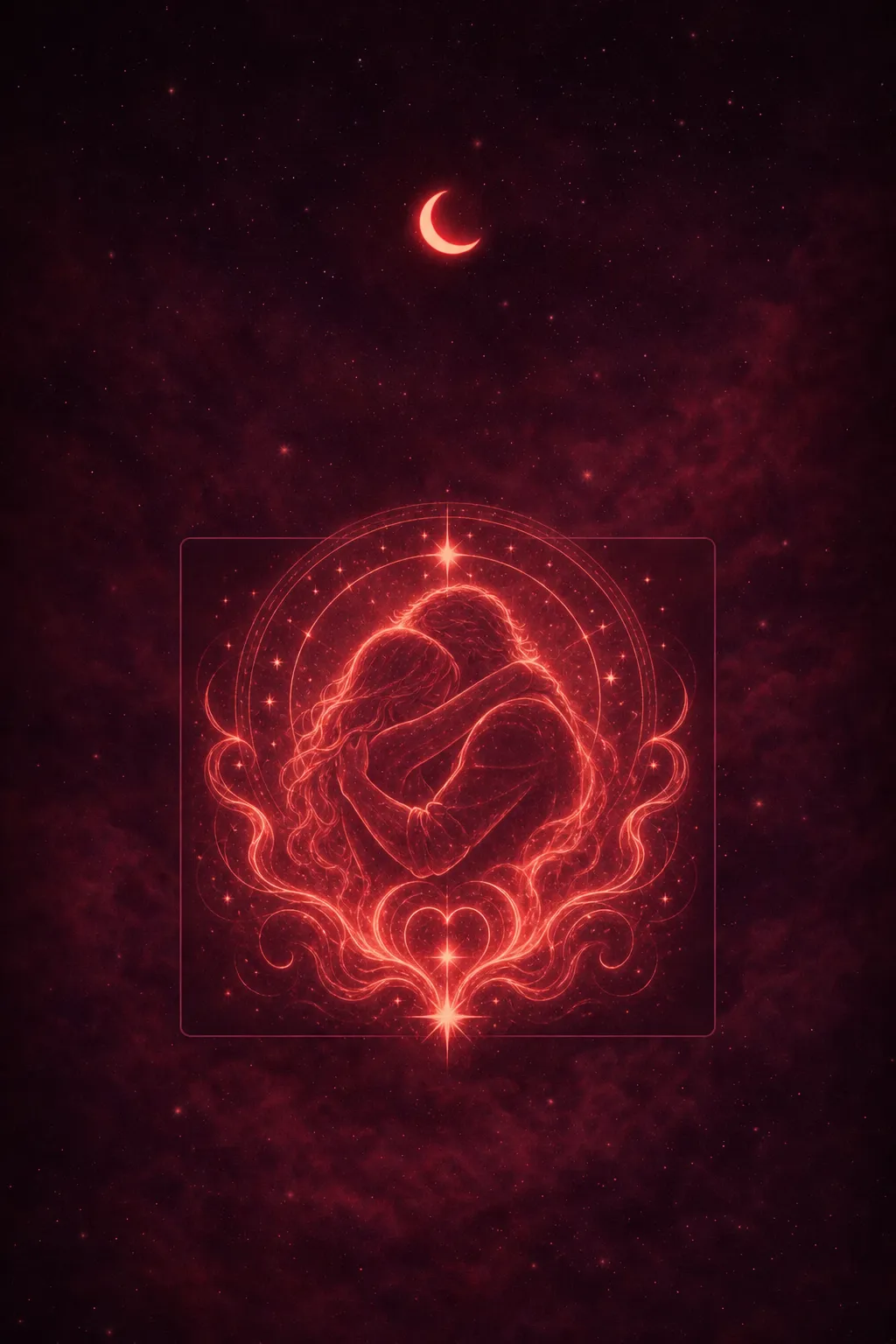

Dreaming of a reunion often reflects a deep longing for connection, closure, or reconciliation with people or experiences from your past. It can signal emotional healing, unfinished business, or a subconscious desire to reclaim something you feel you have lost. These dreams are usually a prompt to examine what relationships or aspects of yourself need attention and care.
In under a minute you could read what your exact dream means for you, and see a picture of it. Free.
You read what it can mean. But what did yours mean?
General meanings stop here. In the free app, tell Dream Book your exact dream and get a reading that actually makes sense for you.


Common Reunion Dream Scenarios
Reuniting with an Old Friend
You're standing somewhere familiar — a school hallway, a childhood street — and suddenly someone you haven't thought about in years is right there. The feeling is almost unbearably warm, or sometimes unexpectedly awkward. Either way, your sleeping mind chose this person for a reason.
Dreams about reconnecting with an old friend often signal that you're missing something that friendship represented — freedom, laughter, a version of yourself you've outgrown or abandoned. It's rarely about the person themselves. It's about what they unlocked in you.
But what does your version mean?
Reunion with a Deceased Loved One
These are the dreams people remember for decades. You see someone who has died — a parent, a grandparent, a friend — and for a few seconds, the loss is undone. The grief floods back when you wake up, but the dream itself often feels like a gift.
Dreams of a deceased loved one visiting in a reunion context carry particular weight. They tend to arrive during anniversaries, transitions, or moments when you need guidance. Many people report that the dead person seems calm, even radiant — as if they came specifically to reassure you. Whether you read that as spiritual or psychological, the emotional function is the same: your mind is completing something that death interrupted.
If the deceased is a parent, the dream often carries unresolved questions about identity or approval. Dreaming of your family gathering together — including those who have passed — suggests a deep need to feel held by your roots.
Reunion with an Ex-Partner
Few dreams create as much morning confusion as this one. You wake up flooded with feeling, wondering if it means something, wondering if you should text them. Slow down before you do anything.
A reunion dream involving an ex is almost never a literal instruction. More often, your ex is standing in for a quality you associate with them — passion, security, adventure, conflict — that you're currently craving or avoiding. The relationship ended, but the emotional chapter may not have.
Reunion with Your Younger Self or Childhood Home
Sometimes the reunion isn't with another person at all. You find yourself back in a childhood home, walking through rooms you haven't thought about in years, and the feeling is a strange mixture of recognition and loss. This is one of the most psychologically layered reunion dreams there is.
It points directly to the question of continuity — who you were, who you became, and whether those two people have ever properly met. These dreams tend to spike during major life transitions: a new job, a divorce, a birthday that feels heavier than expected.
What this dream could look like
Tap an image to open it full screen
Example images. Only you can see what you write in Dream Book.
Psychological Interpretation
Freud read reunion dreams through the lens of wish fulfillment — the sleeping mind staging what waking life denies you. If someone is gone, distant, or lost, the dream hands them back. He would have been particularly interested in the emotional texture: is the reunion joyful, guilty, or erotically charged? Each shade points toward a different repressed desire pushing its way to the surface.
Jung took a broader view. For him, the figures who appear in reunion dreams aren't just people — they're aspects of your own psyche returning from exile. A childhood friend might represent your Shadow Self, the parts of your personality you suppressed to become who you are now. A deceased parent might carry the weight of your Anima or Animus — the inner feminine or masculine that shapes how you move through the world. Jung saw these reunions as the psyche's attempt at individuation, the lifelong process of becoming whole.
Was yours a sign? Find out.
Calvin Hall's content analysis of over 50,000 dream reports found that reunion themes cluster heavily around loss and transition. People dream of reunions most frequently when they are geographically displaced, ending relationships, or grieving. Hall's data showed that these dreams are rarely random — they map directly onto the emotional concerns dominating waking life. The person who shows up is almost always someone whose absence has created an unresolved emotional charge.
Ernest Hartmann's work on dreams as emotional memory processing adds another layer. He argued that dreaming is how the brain metabolizes strong feeling — weaving new emotional experiences into existing memory networks. A reunion dream, in Hartmann's framework, is the brain doing repair work. It's taking the raw material of longing or grief and finding a way to hold it. Hobson and McCarley's activation-synthesis model would push back slightly, suggesting the emotional intensity is the brain's meaning-making response to random neural firing — but even they acknowledged that the themes the brain reaches for aren't arbitrary. Loss and connection are among the most electrically charged territories in the human mind, and the sleeping brain returns to them like water finding its level.
General meanings end here. Read your own dream.
0%
Analyzing your dream…
Something went wrong. Please try again in a moment.
Your dreams deserve more than a dictionary
Cultural & Spiritual Meaning
In Western psychological tradition, reunion dreams are read as the unconscious surfacing unfinished business. But in many Indigenous traditions, they carry a more literal spiritual weight — the dream world is understood as a genuine meeting place, a space where the living and the dead can speak. A reunion in this context isn't symbolic; it's a visitation, and the message delivered should be taken seriously.
Ibn Sirin, the 8th-century Islamic dream interpreter whose work remains foundational across much of the Muslim world, wrote specifically about dreams of reunion with the dead. He interpreted them as signs of mercy and good news — the deceased appearing in peace suggested that the living person was in a state of spiritual grace, and that prayers offered for the dead were being received. A joyful reunion dream, in Ibn Sirin's reading, was among the most auspicious a person could have. A troubled or painful reunion, however, might signal that something remained unresolved in the relationship, calling for prayer or acts of charity on the deceased's behalf.
A bad dream isn't a bad sign.
In East Asian traditions, particularly within Chinese folk belief, dreaming of a deceased ancestor in a reunion setting is understood as the ancestor reaching out — sometimes to warn, sometimes to bless. The emotional quality of the dream is the key interpretive lens: warmth signals protection, while distress signals a need for ritual attention. Across cultures, what's consistent is this: reunion dreams are never treated as noise. They are treated as signal.
Related Dream Meanings
people
Old Friend Dream Meaning: Nostalgia & Unresolved Feelings
5 min read

nightmares
Deceased Visiting Dream: Closure, Guidance & Grief
5 min read

people
Dreaming About Family Members Meaning - Dream Interpretation Guide
5 min read

people
Ex Partner Dream Meaning: What Your Dreams About Former Lovers Reveal
6 min read

common dreams
Childhood Home Dream Meaning: Nostalgia & Unresolved Past
5 min read

people
Love Dream Meaning: Relationships, Desire & Intimacy
5 min read
people
Jealousy Dream Meaning: Insecurity, Fear & Hidden Desires
5 min read

people
What Does It Mean to Dream About Betrayal
5 min read
What to Do After This Dream
First, don't dismiss it. Reunion dreams arrive with emotional weight for a reason, and that weight is data. Before the feeling fades, write down who appeared, where you were, and how it felt when you first saw them — not what happened next, but that initial moment of recognition. That feeling is the whole message.
Ask yourself what that person (or that younger version of you) represents. What did they bring into your life? What did their absence take away? If it was a deceased loved one, consider whether there's grief you've been managing rather than feeling. If it was an ex-partner, ask what quality the relationship held that you might be missing in your current life — not them, but what they represented.
If the dream keeps returning, that's your psyche being persistent about something unresolved. It's worth exploring with a personalized interpretation — Dream Book lets you describe your dream in detail and ask follow-up questions to understand what your subconscious is actually working through, not just what reunion dreams mean in general.
Some reunion dreams call for action: reaching out to someone you've lost touch with, visiting a place from your past, or simply sitting with a grief you've been outrunning. Others are purely internal — an invitation to reunite with a part of yourself that got left behind somewhere along the way.
But what does your version mean?
Understanding your reunion dream is the first step. The next is asking what it means for your life right now — that's where a personalized interpretation goes deeper than any dictionary.
One dream is never the whole picture.
The free app remembers your dreams, draws them, and connects the threads over time — so the next one means even more. Free to start.
People Also Ask
Dreaming of a reunion with someone who has died often reflects unresolved grief, longing, or a need for closure. Many traditions — and contemporary dream researchers like Ernest Hartmann — see these dreams as the mind's way of processing loss and finding emotional resolution. The feeling of the reunion matters most: warmth and peace usually signal healing, while distress may point to something still unfinished.
Recurring reunion dreams about an ex rarely mean you want them back — they usually signal that something the relationship represented (security, passion, a version of yourself) is currently missing from your life. Jung would say your ex has become an archetypal figure in your psyche, standing in for an unintegrated emotional quality rather than the actual person. Notice what the dream feels like, not just who's in it.
Generally yes — family reunion dreams tend to reflect a desire for belonging, stability, or reconnection with your roots. They often appear during periods of transition or isolation when your sense of continuity feels threatened. If the reunion in the dream is warm and easy, it usually points to a deep need for support that is either being met or being sought.
This dream is almost always about a quality or aspect of yourself, not the friend specifically. That person likely represents a time in your life when you felt more free, more authentic, or more connected to something you've since set aside. Your mind is inviting you to look at what got left behind — and whether it's worth reclaiming.
Curious what your dream would look like?