
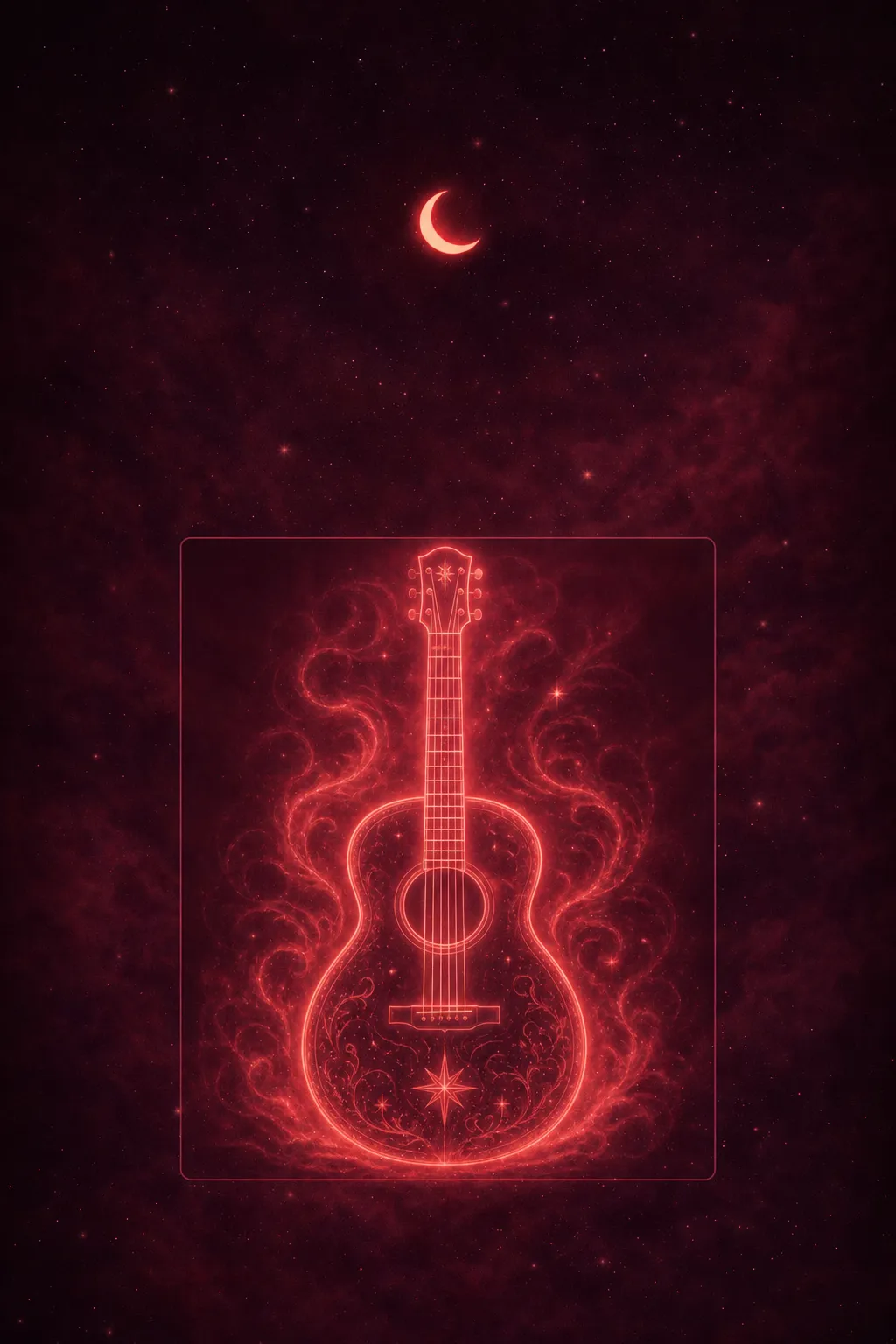

Dreaming about playing guitar symbolizes your desire for self-expression, creativity, and emotional release, suggesting you may be seeking harmony in your waking life or longing to share a deeper part of yourself with others through passion, performance, or personal connection.
In under a minute you could read what your exact dream means for you, and see a picture of it. Free.
You read what it can mean. But what did yours mean?
General meanings stop here. In the free app, tell Dream Book your exact dream and get a reading that actually makes sense for you.


A dream still on your mind? Get your personal reading.
Describe your dream in a line or two. In seconds you get a reading of your exact dream, a picture drawn from your own words, and every symbol explained.
Free. No sign-up. Takes 10 seconds. Your dream stays private.
0%
Analyzing your dream…
Something went wrong. Please try again in a moment.
Your dreams deserve more than a dictionary
Common Guitar Dream Scenarios and Their Meanings
The scenario playing out around the guitar matters as much as the instrument itself. Dreaming that you are playing guitar effortlessly — notes flowing, rhythm locked in — typically reflects a healthy connection to your authentic self and a desire to be heard in waking life. If modern pressures have left you feeling emotionally muted or over-scheduled, this dream may be compensating, offering the creative freedom your daily routine denies you. On the other end of the spectrum, dreaming that you cannot play, have forgotten the chords, or keep hitting wrong notes mirrors the classic anxiety of losing control under pressure — the guitar version of the exam-room nightmare, where the fear of being judged or found inadequate takes center stage.
- Broken or unstrung guitar: Points to creative burnout, a silenced passion, or a part of your identity that has taken a back seat to obligations.
- Guitar that won't tune: Signals discord — something in your relationships or daily life feels out of alignment, and effort isn't translating into results.
- Receiving, buying, or finding a guitar: An invitation to a new expressive outlet or a fresh personal chapter; your readiness — or hesitation — to invest in your own fulfillment.
- Performing on stage: Captures the tension between craving recognition and fearing exposure; imposter feelings are common here.
- Hearing guitar music without playing: A passive longing — witnessing joy or soulfulness from a distance rather than participating in it.
- Electric vs. acoustic guitar: Electric imagery often reflects a bold, outward-facing persona, while acoustic points to a quieter, more intimate and unfiltered sense of self.
But what does your version mean?
Across all these variants, the central question the dream is posing is the same: are you giving your inner voice the space it needs, or are external demands keeping it silent?
What this dream could look like
Tap an image to open it full screen
Example images. Only you can see what you write in Dream Book.
The Psychological Meaning of Dreaming About a Guitar
From a psychological standpoint, a guitar in a dream often surfaces as the subconscious mind's way of flagging a gap between who you are and how you are currently living. When everyday obligations crowd out creative expression, the psyche can reach for a potent symbol of voice and identity — and the guitar, culturally wired to authenticity and emotional release, fits that role perfectly. Much like dreams of teeth falling out, guitar dreams frequently cluster around anxieties about self-presentation: Am I being heard? Am I competent enough to be taken seriously?
The emotional tone of the dream is especially telling. Psychologists who work within a broadly Jungian framework would view the guitar as an extension of the shadow self — the creative, expressive part of the personality that modern life tends to suppress in favor of productivity. A Christian psychological reading adds another layer: the instrument can symbolize stewardship of one's God-given gifts, prompting the dreamer to ask whether those gifts are being honored or buried.
- Harmony vs. discord: A guitar in tune points to inner alignment; a broken or out-of-tune guitar suggests unresolved emotional conflict or a sense that life's competing demands are pulling you apart.
- Mastery anxiety: Struggling to play correctly often mirrors performance stress or imposter syndrome — fear that you lack the skill to meet real-world expectations.
- Neglected passion: Simply holding a guitar without playing can signal that a core part of your identity has been set aside and is quietly asking for attention.
General meanings end here. Read your own dream.
Describe your dream in a line or two. In seconds you get a reading of your exact dream, a picture drawn from your own words, and every symbol explained.
Free. No sign-up. Takes 10 seconds. Your dream stays private.
0%
Analyzing your dream…
Something went wrong. Please try again in a moment.
Your dreams deserve more than a dictionary
Every dream you log starts to connect.
Dream Book keeps your dreams in one place and reveals the threads between them over time — your private dream journal. Free to start.
Cultural and Traditional Readings of the Guitar Dream
Across Western folk tradition, the guitar has long carried a dual reputation: on one hand, it is the instrument of the troubadour and the storyteller, a symbol of communal warmth and celebration; on the other, it is the lone wanderer's companion, associated with longing, wandering souls, and lives lived outside polite convention. In American folk culture especially, the guitar is tied to authenticity — the blues musician baring grief, the country singer confessing heartbreak — so dreaming of one can reflect a deep cultural pull toward honest self-expression at a time when modern life demands careful performance and social filtering.
Was yours a sign? Find out.
Within US Christian tradition, musical instruments frequently appear as symbols of praise, calling, and gifted purpose. A guitar in a dream may quietly echo this framing, suggesting that a talent or vocation is going unused — a gentle prompt to steward what you have been given rather than bury it under routine obligations. This reading sits comfortably alongside broader folk belief that dreaming of music signals incoming harmony or, when the instrument is broken or silent, a warning that an important relationship or inner calling is under strain.
- Unplayed or dusty guitar: folk tradition reads this as neglected potential or a passion quietly abandoned under life's pressures.
- Gifting a guitar: widely seen as an omen of generosity or the passing of creative responsibility to another person.
- Broken strings: a common folk sign of disrupted anxiety about losing control over a situation or relationship you once felt confident navigating.
- Playing before a crowd: culturally linked to the desire for recognition and the fear that your authentic voice will be judged rather than welcomed.
The Spiritual Meaning of Dreaming About a Guitar
Within a broadly Christian spiritual framework, stringed instruments carry a long history as vessels of worship and emotional healing. The Psalms repeatedly call the faithful to praise with strings — Psalm 33 urges skillful playing as an act of devotion, while Psalm 150 frames every plucked note as an offering. Most evocatively, 1 Samuel 16 describes David's playing as something that literally soothed a troubled spirit. Dreaming of a guitar, then, can carry a quiet biblical echo: your creative voice may not just be a personal gift but something meant to be offered outward, even upward. If anxiety or overcommitment has silenced that voice, the dream may register as a gentle spiritual nudge toward reclaiming it.
Beyond the specifically Christian reading, many contemplative traditions treat music as a metaphor for inner alignment — the soul in tune with itself and with something larger. A guitar dream experienced during a stressful, fragmented season of life often carries this resonance: the instrument represents the harmony you are not yet living. The tension between a perfectly tuned string and a slack, neglected one mirrors the tension between a life shaped around meaning and one shaped purely around obligation. In that sense, the dream asks a spiritual question as much as a psychological one: not only what do you want to express, but for whom, and why?
A bad dream isn't a bad sign.
Key spiritual themes the guitar symbol tends to surface include:
- Voice as calling — a sense that creative expression is tied to purpose, not mere preference.
- Healing through sound — echoing David's role, music in dreams can signal a need for emotional or even spiritual restoration.
- Attunement — the act of tuning a guitar as a metaphor for bringing your inner life back into harmony with your deeper values.
- Offering vs. performing — a distinction between playing for approval and playing from genuine devotion or self-giving.
Related Dream Meanings

body health
Teeth Falling Out Dream: Anxiety, Loss & Vulnerability
5 min read
nightmares
Being Chased Dream Meaning: Anxiety & Avoidance
5 min read
common dreams
Cleaning: Meaning and Interpretation
5 min read

common dreams
Dream of Riding a Bike: Meaning and Interpretation
5 min read
common dreams
Praying: Meaning and Interpretation
6 min read
common dreams
Reading: Meanings and Interpretations
5 min read

common dreams
Fruit: Meanings and Interpretations
5 min read
common dreams
Riding a Bicycle: Meaning and Interpretation
5 min read
Practical Takeaways: What to Do After a Guitar Dream
Before the dream fades, treat it as useful feedback rather than a mystery to solve. The guitar is your subconscious flagging a gap — most likely between the creative or expressive life you want and the obligation-heavy routine you are actually living. A simple starting point: jot down what the guitar felt like in the dream (freeing, frustrating, out of reach?) and match that feeling to something concrete in your week. That emotional tone is the signal worth acting on.
- Audit your creative time. If your schedule has no room for play, that is the problem the dream is pointing at — not the dream itself. Block even 20 minutes a day for something expressive: music, writing, drawing, anything that bypasses performance pressure.
- Name what you want to say. Guitar dreams often surface when you feel unheard. Ask yourself: is there a conversation, a boundary, or an honest opinion you have been holding back? Naming it reduces the internal pressure that sends these dreams in the first place.
- Check the competence anxiety. If the dream featured struggle or a broken instrument, you may be avoiding a skill-building challenge out of fear of looking inadequate. Start smaller — progress beats paralysis every time.
- Reconnect with a neglected passion. If music genuinely mattered to you at an earlier point in your life, this dream may be a low-stakes nudge to pick it back up — not as a career pivot, but as a pressure valve for everyday stress.
But what does your version mean?
In short, the guitar dream rarely demands a dramatic life change. It asks for a small, honest realignment: give your authentic self a little more airtime before the noise of obligation drowns it out entirely.
One dream is never the whole picture.
The free app remembers your dreams, draws them, and connects the threads over time — so the next one means even more. Free to start.
People Also Ask
Spiritually, a guitar represents self-expression, creative energy, and the soul's desire to communicate deep emotions. It often signals a calling to embrace your authentic voice, pursue artistic gifts, or reconnect with your inner harmony. Many traditions link stringed instruments to divine inspiration and the vibration of universal energy.
Music playing in a dream typically signals emotional healing, joy, or an important message from your subconscious. The mood of the music matters greatly — uplifting melodies suggest positivity and progress, while discordant sounds may warn of inner conflict or unresolved tension that needs your waking attention.
A guitar in dreams commonly symbolizes creativity, passion, romance, and personal expression. It can reflect your desire to be heard or understood by others. Holding or strumming a guitar may indicate confidence in sharing your talents, while a broken guitar could suggest creative blocks or a fear of self-expression.
Listening to music in a dream suggests your mind is processing emotions on a deep level. It can represent nostalgia, longing, or spiritual guidance. Pay attention to the lyrics or instrument — they often carry direct symbolic messages. This dream type frequently appears during periods of significant emotional or personal transformation.
Curious what your dream would look like?