
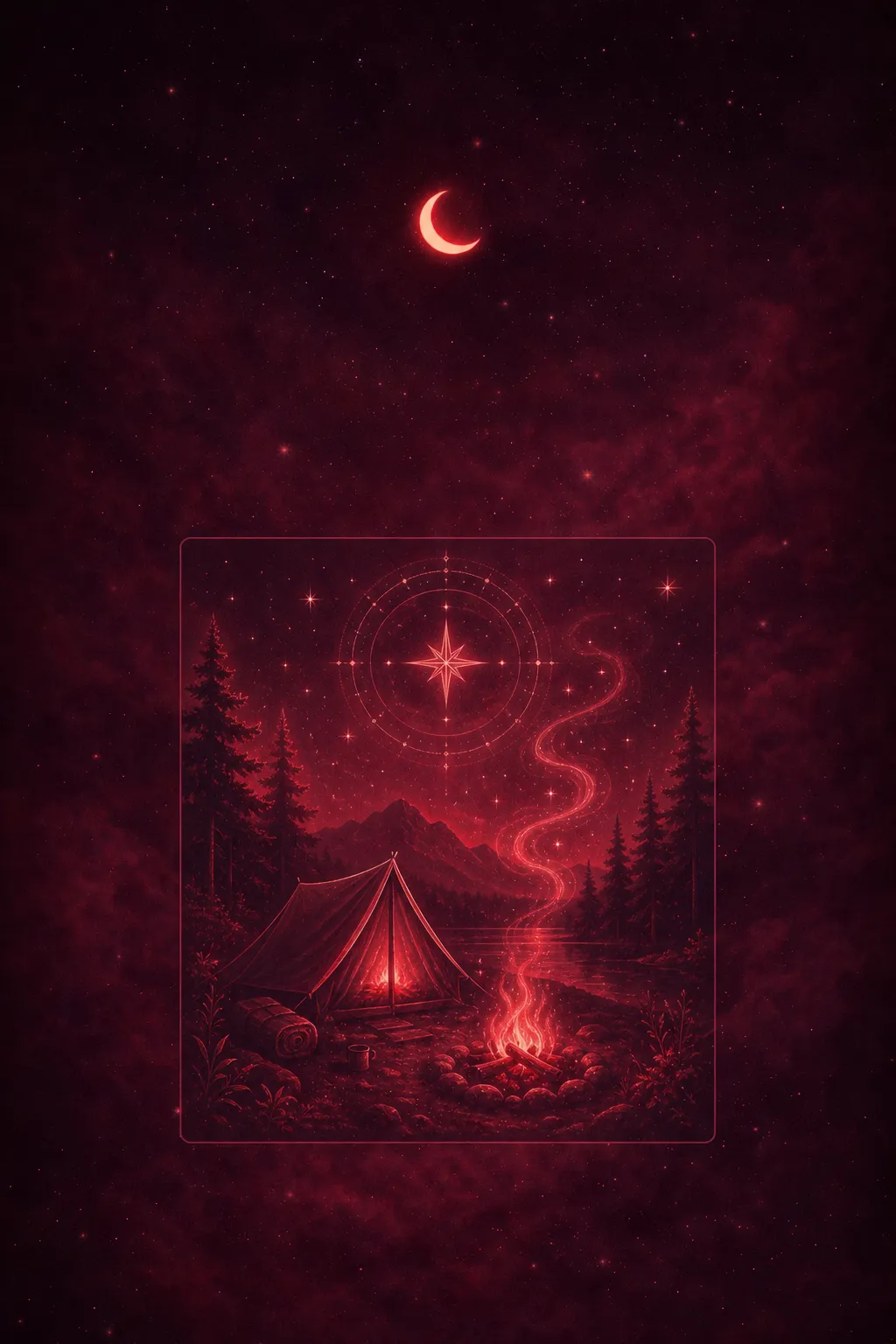

Dreaming about camping reflects a deep desire to escape routine, reconnect with nature, and embrace simplicity, often signaling that your subconscious craves freedom, self-reliance, or a temporary retreat from life's pressures to rediscover your inner strength and sense of adventure.
In under a minute you could read what your exact dream means for you, and see a picture of it. Free.
You read what it can mean. But what did yours mean?
General meanings stop here. In the free app, tell Dream Book your exact dream and get a reading that actually makes sense for you.


A dream still on your mind? Get your personal reading.
Describe your dream in a line or two. In seconds you get a reading of your exact dream, a picture drawn from your own words, and every symbol explained.
Free. No sign-up. Takes 10 seconds. Your dream stays private.
0%
Analyzing your dream…
Something went wrong. Please try again in a moment.
Your dreams deserve more than a dictionary
Common Camping Dream Scenarios and What They Mean
The most frequently reported camping dream is a peaceful scene in pleasant surroundings — clear skies, a crackling fire, an easy sense of space. This scenario typically signals that the mind is either successfully resetting or openly craving one; it reflects comfort with simplicity and a restored feeling of self-sufficiency rather than outright escape. Closely related is the campfire dream, where gathered warmth suggests managed inner energy and a sense of hearth-like belonging — though a fire that blazes out of control flips that reading toward anxiety about keeping strong emotions contained. At Dream Book we explore this symbol in depth.
- Struggling to set up a tent: A direct metaphor for trying to establish basic security under new or changing conditions. When the poles collapse or the stakes won't hold, your waking mind may be signaling that current resources feel thin against the pressures you're facing.
- Camping alone: Tone is everything here. Calm solitude points to healthy independence and a productive self-reliance test; an uneasy or lonely affect suggests withdrawal from real support rather than chosen retreat.
- Camping with family or friends: The group mirrors your actual social support network — a cooperative, cheerful camp reflects shared coping, while conflict or chaos within the group flags tensions in those waking relationships.
- Storm, rain, or bitter cold: External stressors overwhelming a fragile shelter — a classic modern-anxiety image of coping structures buckling under overload.
- Lost in the wilderness or unable to find camp: Loss of a safe reference point during transition; the dreaming mind hunting for grounding it hasn't yet secured.
- Wild animals or intruders near camp: Perceived threats breaching your protective boundary; fears or pressures that the retreat was meant to keep at bay are pushing through.
- Abandoned or collapsed campsite: A coping structure that failed or was simply left behind — often carrying a note of exhaustion or quiet regret about an earlier attempt to reset that never quite landed.
But what does your version mean?
Across all these variants, pay attention to your level of control within the scene. Dreams in which you competently manage shelter, fire, and direction tend to reflect a growing trust in your own resilience, while scenarios defined by collapse, loss, or intrusion usually surface when waking life feels like too much complexity to handle with the resources currently at hand.
What this dream could look like
Tap an image to open it full screen
Example images. Only you can see what you write in Dream Book.
What Camping Reveals About Your Inner Life
From a psychological standpoint, dreaming of camping often surfaces when the waking mind is wrestling with overload, transition, or a quiet erosion of control. The act of trading walls for a tent is the subconscious staging a deliberate reduction in complexity — a way of asking, what do I actually need, and can I manage with less? Modern life piles on role after role, and the camping dream cuts those layers away, placing the self in a setting where only basic competence matters. That stripping-back can feel liberating or unsettling depending on how the dreamer relates to uncertainty.
Mainstream psychology frames this through the lens of self-reliance and coping capacity. The shelter — however flimsy — represents the ego's boundary: how protected, or how exposed, a person feels at this moment in life. A secure, well-pitched tent suggests reasonable confidence in one's inner resources; a leaking or collapsing one may point to anxiety about whether those resources will hold under pressure. From a broadly Christian perspective, the imagery also echoes the biblical motif of wilderness as a place of honest self-examination and spiritual clarifying — not punishment, but a purposeful pause before moving forward.
Key psychological themes the camping dream tends to surface include:
Was yours a sign? Find out.
- Reset hunger: a genuine need to lower stimulation and recover baseline emotional energy
- Authenticity testing: curiosity about who you are outside your usual social roles
- Control negotiation: learning to tolerate what cannot be managed or predicted
- Boundary awareness: gauging how much protection the self currently feels it has
General meanings end here. Read your own dream.
Describe your dream in a line or two. In seconds you get a reading of your exact dream, a picture drawn from your own words, and every symbol explained.
Free. No sign-up. Takes 10 seconds. Your dream stays private.
0%
Analyzing your dream…
Something went wrong. Please try again in a moment.
Your dreams deserve more than a dictionary
Every dream you log starts to connect.
Dream Book keeps your dreams in one place and reveals the threads between them over time — your private dream journal. Free to start.
Camping in Culture, Tradition, and the Modern Psyche
In mainstream Western culture, camping carries a layered mythology that reaches well beyond weekend recreation. The American frontier tradition — shaped by figures like Thoreau and later reinforced by the national parks movement — frames voluntary time in the wilderness as morally restorative, a way of stripping away social pretense and returning to something more honest. When that imagery surfaces in a dream, it often draws on this inherited cultural script: the idea that leaving comfort behind is not a loss but a deliberate act of self-clarification.
Within a broadly Christian folk tradition, the wilderness holds a recognized spiritual weight — a place of testing, clarity, and renewed purpose after a period of wandering. Dreaming of a campsite in this context can quietly echo the sense that a season of simplicity is being called for, a pause before returning to ordinary responsibilities with clearer direction. This reading sits comfortably alongside modern stress-awareness culture, which increasingly frames "unplugging" and reducing complexity as genuine acts of self-care rather than escape.
- Frontier self-reliance: culturally, camping signals proof that you can manage with less — a theme that resonates strongly when waking life feels overloaded or out of control.
- Deliberate withdrawal: folk wisdom across many traditions treats a chosen retreat as wise rather than weak, distinguishing it from aimless avoidance.
- Temporary shelter as transition marker: a tent, by its nature, is not permanent — culturally it marks a between-stage, signaling that change is underway and a more settled footing lies ahead.
The Spiritual Meaning of Camping in a Dream
Within a broadly Christian frame, dreaming of camping resonates with one of Scripture's most persistent images: the wilderness sojourn. Israel's years of tent-dwelling in the desert were not merely hardship — they were a season of stripping away self-sufficiency so that dependence on something greater could take root. When a camping dream arrives during a period of personal overload or unwanted change, it may carry that same quiet spiritual undertone: a call to release the need for total control and trust that provision will meet you in the exposed, simpler place.
The tent itself holds meaning here. Biblical sojourner imagery frames earthly life as inherently temporary — a pilgrimage rather than a permanent settlement. Dreaming of a temporary shelter during a major life transition can function as a spiritual nudge, reminding the dreamer that the current season is not the final destination. Discomfort with the tent in the dream may reflect resistance to that transience; peace inside it may signal a growing willingness to hold life more loosely.
A bad dream isn't a bad sign.
- Wilderness as preparation: A testing ground before something new begins, not punishment but refinement.
- Temporary shelter as trust: The tent that holds against wind and rain can reflect faith that minimal but real protection exists even in uncertain seasons.
- Surrender of complexity: Spiritually, camping dreams may invite reflection on what habits, ambitions, or structures have become substitutes for genuine inner grounding.
Related Dream Meanings

common dreams
Forest Dream Meaning: Growth, Fear & Hidden Desires
5 min read
animals
Snakes Dream Meaning: Fear, Change & Hidden Threats
5 min read

body health
Teeth Falling Out Dream: Anxiety, Loss & Vulnerability
5 min read

common dreams
Garden Dream Meaning: Growth, Peace & Inner Potential
5 min read

common dreams
Space Dream Meaning: Freedom, Aspiration & the Unknown
5 min read
common dreams
Underwater Dream Meaning: Emotions & Self-Exploration
5 min read
common dreams
Sun Dream Meaning: Vitality, Clarity & Purpose
5 min read

common dreams
Stars Dream Meaning: Hope, Guidance & Aspiration
5 min read
Practical Takeaways: What to Do With a Camping Dream
When a camping dream surfaces, treat it as a signal worth acting on rather than simply filing away. The clearest first step is an honest audit of your current load: list the commitments, screens, and obligations filling your week, then ask which ones are genuinely essential. The dream's core message — that you may be carrying more complexity than you need — becomes actionable the moment you start identifying what can be set down, even temporarily.
- Schedule a real-world reset. Even a single night away from your usual environment — or a dedicated offline afternoon — can satisfy the instinct the dream is pointing toward.
- Test one area of self-reliance. The dream often probes whether you trust your own coping ability. Pick a small challenge you normally avoid or delegate, and work through it independently.
- Map your shelter needs. Consider where you feel genuinely protected in waking life and where you feel exposed. A quick journaling session on boundaries — at work, in relationships, with your time — turns the dream's imagery into concrete self-knowledge.
- Notice the anxiety underneath. If the dream felt uneasy rather than peaceful, it may be flagging a change or transition you have not yet named. Writing down what feels most uncertain right now can help you address it directly rather than absorb it as background stress.
The practical gift of a camping dream is its simplicity: it asks you to lower the noise long enough to hear what you actually need, then take one deliberate step toward it.
But what does your version mean?
One dream is never the whole picture.
The free app remembers your dreams, draws them, and connects the threads over time — so the next one means even more. Free to start.
People Also Ask
Spiritually, dreaming about camping often symbolizes a desire to reconnect with your authentic self and nature. It suggests a temporary retreat from life's pressures, a period of inner reflection, or a spiritual journey. It may signal that your soul is seeking simplicity, grounding, and a deeper connection to what truly matters.
Warning dreams typically feel vivid, emotionally intense, and unusually memorable upon waking. They often repeat or carry a strong sense of urgency. Pay attention if the dream involves danger, loss, or a strong gut feeling. Reflecting on your current life circumstances can help clarify whether the message feels genuinely significant.
A white tent in a dream typically represents purity, peace, and spiritual shelter. White symbolizes clarity and new beginnings, while the tent suggests a temporary yet protected space. Together, they may indicate a period of healing, a safe emotional refuge, or an invitation to pause and seek inner stillness and renewal.
Dreams involving recurring themes, intense emotions, or vivid imagery of danger, loss, or loved ones carrying messages deserve careful attention. Dreams that leave you feeling profoundly unsettled or inspired upon waking often reflect deep subconscious processing. Journaling these dreams and reflecting on their connection to your waking life can reveal meaningful personal insights.
Curious what your dream would look like?