
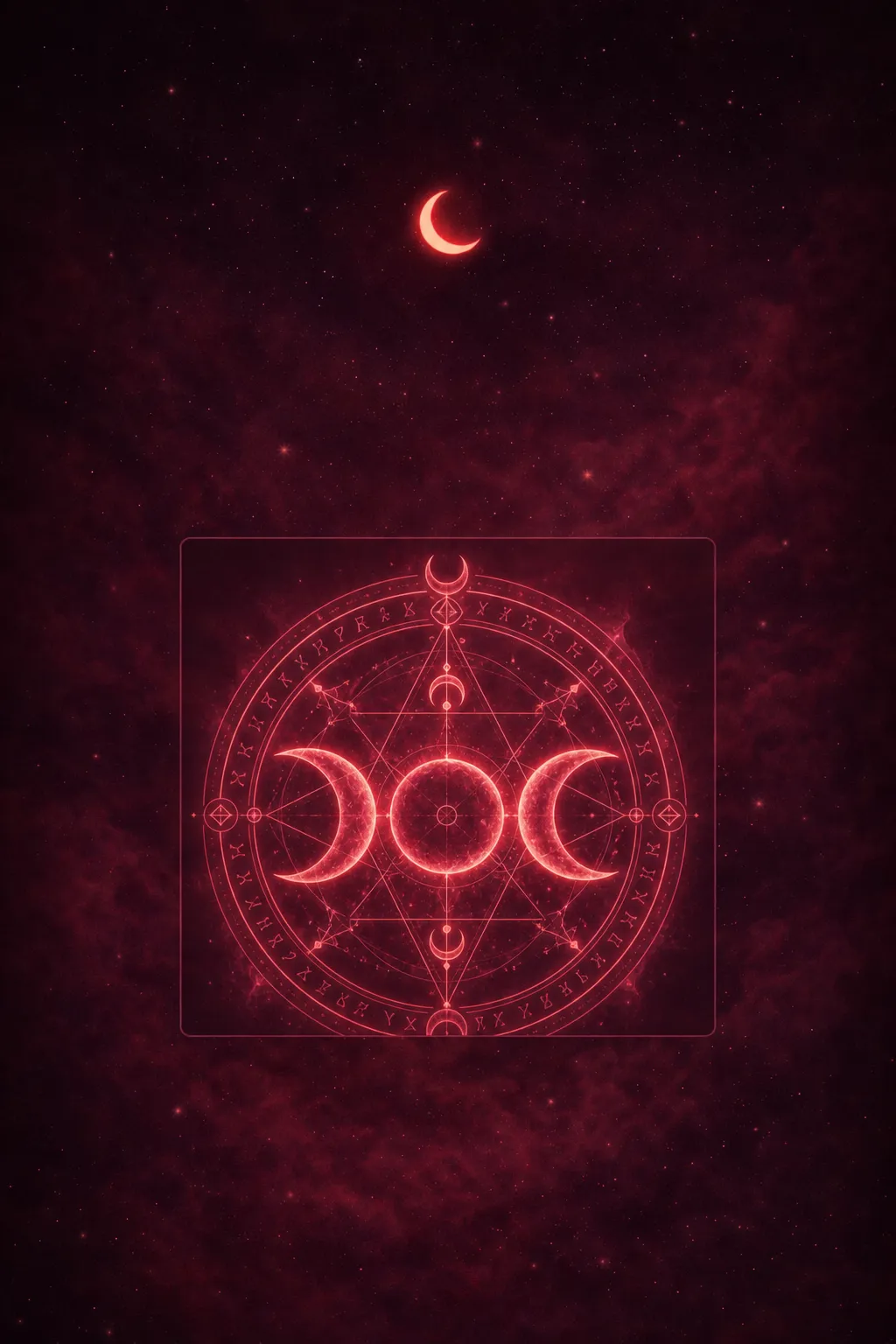

Dreaming of witchcraft often reflects a sense of hidden power — either your own untapped potential or a feeling that someone around you is manipulating a situation. It can also speak to a deep personal transformation you may be resisting or just beginning to embrace. The tone of the dream — fearful or empowering — usually holds the key to what your mind is working through.
In under a minute you could read what your exact dream means for you, and see a picture of it. Free.
Bad dream? See exactly what you dreamed — turned into a picture.
Just describe it and Dream Book paints your dream as a real image, plus a reading of what it means for you. Free, and it takes under a minute.


A dream still on your mind? Get your personal reading.
Describe your dream in a line or two. In seconds you get a reading of your exact dream, a picture drawn from your own words, and every symbol explained.
Free. No sign-up. Takes 10 seconds. Your dream stays private.
0%
Analyzing your dream…
Something went wrong. Please try again in a moment.
Your dreams deserve more than a dictionary
Common Witchcraft Dream Scenarios
Dreaming of Being Cursed or Hexed
You feel it before you see it — a heaviness settling over you, a voice or figure casting something in your direction, and suddenly you can't move, can't speak, can't escape. Being cursed in a dream is one of the most viscerally disturbing experiences your sleeping mind can conjure. It leaves you shaken even after the alarm goes off.
This scenario almost always points to a feeling of powerlessness in your waking life. Someone — a boss, a partner, a family member — holds influence over you that feels unfair, even malevolent. The curse in the dream is your mind's way of externalizing that dynamic, giving it a face and a gesture so you can finally see it clearly.
If the curse comes from a stranger, the threat feels abstract — anxiety without a clear source. If it comes from someone you recognize, pay attention. Your subconscious has already identified who it is. The dream is just waiting for you to catch up.
A bad dream isn't a bad sign.
Dreaming of Practicing Witchcraft Yourself
You're the one holding the candle, speaking the words, drawing the circle. This version of the dream feels different — less like a nightmare, more like a discovery. You wake up feeling powerful, or guilty, or both at once.
Practicing witchcraft in your own dream is a strong signal about personal agency. Your mind is rehearsing what it would feel like to take control — of a situation, a relationship, your own life. The ritual is a metaphor for intention: you are finally doing something instead of waiting for something to be done to you. This dream often surfaces during periods of major transition, the same way dreams about flying appear when you're breaking free from old constraints.
There's a shadow side to this scenario too. If the magic in the dream feels wrong — if you're hurting someone, if the power corrupts — your unconscious may be interrogating your own motives. Are you trying to control something you shouldn't? Are you manipulating a situation and hoping no one notices?
Dreaming of a Witch Chasing You
She's behind you, or he is, or it is — a dark figure with intent, closing the distance no matter how fast you run. The witch-as-pursuer is one of the oldest nightmare archetypes your brain reaches for. It belongs to the same family as dreams of being chased by any threatening force, but the witchcraft element adds a specific texture: this threat has intelligence, purpose, and power you can't match physically.
What you're running from is usually not a person but a feeling — shame, guilt, a truth you've been avoiding. The witch doesn't need to catch you for the dream to do its work. The chase itself is the message: stop running.
Dreaming of a Witch's House or a Dark Ritual
You find yourself inside a dim, strange space — candles, symbols, the smell of something burning. Or you witness a ritual from the edges, unsure whether you're a participant or a prisoner. Dreams set inside occult spaces often pull from your deepest associations with the forbidden and the unknown.
The haunted house energy of a witch's dwelling points inward: the house in dreams almost always represents the self. A dark ritual happening inside it suggests that something is being transformed within you — not necessarily something sinister, but something you haven't consciously agreed to yet. The evil spirit or dark presence you sense in the room is often your own repressed material, demanding acknowledgment.
What this dream could look like
Tap an image to open it full screen
Example images. Only you can see what you write in Dream Book.
Psychological Interpretation
Freud would have recognized the witch immediately. In his framework, she's a figure of the repressed — desire, fear, and forbidden impulse dressed in a costume your culture gave you. The witch embodies what polite consciousness refuses to hold: rage, sexuality, the hunger for power. When she appears in your dream, Freud would say you're not dreaming about magic. You're dreaming about everything you've pushed underground. The nightmare quality of the encounter is proportional to how long you've been pushing.
Jung took the witch further into the archetypal. For him, she belongs to the Shadow — the part of the psyche that carries everything the ego rejects about itself. But Jung also saw the witch as a specific feminine archetype: the Dark Mother, the destructive aspect of the anima. If you dream of a witch and feel terror, you may be encountering your own shadow self for the first time. If you feel fascination, that's individuation beginning — the slow, uncomfortable process of integrating the parts of yourself you've disowned. Dreams of the devil or demons operate in the same archetypal territory.
But what does your version mean?
Calvin Hall spent decades analyzing over 50,000 dream reports and found that threatening figures in dreams — monsters, villains, dark strangers — almost universally represent the dreamer's own internal conflicts rather than external threats. His content analysis showed that we cast our unresolved tensions as characters and then dream about being chased by them. The witch, in Hall's framework, is you — specifically, the part of you that frightens the rest of you.
Ernest Hartmann's emotional processing theory adds another layer. Hartmann argued that nightmares aren't malfunctions — they're the brain doing precisely what it's designed to do: processing emotional material that's too charged to handle while awake. A witchcraft nightmare, especially a recurring one, suggests your mind is working through something significant. The intensity of the imagery — the ritual, the curse, the dark figure — is proportional to the emotional weight of whatever you're processing. Hobson and McCarley's activation-synthesis model would add that the brain's cortex, trying to make narrative sense of random neural firing during REM sleep, reaches for the most emotionally loaded imagery available. Witchcraft, with all its cultural weight, is exactly the kind of symbol a pattern-hungry cortex grabs when it needs to represent something threatening and beyond ordinary control.
General meanings end here. Read your own dream.
Describe your dream in a line or two. In seconds you get a reading of your exact dream, a picture drawn from your own words, and every symbol explained.
Free. No sign-up. Takes 10 seconds. Your dream stays private.
0%
Analyzing your dream…
Something went wrong. Please try again in a moment.
Your dreams deserve more than a dictionary
Every dream you log starts to connect.
Dream Book keeps your dreams in one place and reveals the threads between them over time — your private dream journal. Free to start.
Cultural & Spiritual Meaning
In Western tradition, the witch has been a shape-shifter across centuries. Medieval Christianity cast her as an agent of the devil — a figure who had traded her soul for forbidden power. To dream of witchcraft in this context was a spiritual warning, a sign of temptation or corruption nearby. That cultural sediment still runs through modern witchcraft dreams, even in people who have no religious framework. The symbolism is older than any one tradition. Ibn Sirin, the 8th-century Islamic scholar whose dream interpretations remain among the most cited in the world, was specific: to dream of practicing sorcery or witnessing witchcraft was a warning against deception — either being deceived by someone close to you, or engaging in deception yourself. He interpreted the presence of a sorcerer in a dream as a sign that someone in the dreamer's waking life was working against them through hidden means.
In many Indigenous traditions across the Americas and Africa, dreaming of witchcraft is taken seriously as a communication from the spirit world rather than a projection of the psyche. The dream is not metaphor — it is contact. Elders in these traditions often interpret such dreams as messages requiring ritual response: cleansing, prayer, or consultation with a spiritual guide. The dream is the beginning of a conversation, not the end of one.
In East Asian and South Asian traditions, dark figures with supernatural power in dreams are frequently interpreted as ancestral warnings — the dead reaching through sleep to alert the living to danger or imbalance. Whether you hold any of these frameworks or none of them, the emotional truth is consistent across cultures: witchcraft dreams signal that something hidden is at work, and it's time to look directly at it. Dreams of Satan or Ouija boards carry similar cross-cultural weight — they mark the threshold between the known and the deeply unsettling unknown.
Related Dream Meanings
nightmares
What Does It Mean to Dream About Being Cursed
5 min read
common dreams
Flying Dream Meaning: Freedom, Ambition & Escape
5 min read
nightmares
Being Chased Dream Meaning: Anxiety & Avoidance
5 min read
nightmares
Haunted House Dream Meaning: Fears, Trauma & Healing
5 min read
nightmares
Evil Spirit Dream Meaning: Fear, Inner Conflict & Shadow
6 min read
nightmares
Devil Dream Meaning: Temptation, Conflict & Fear
5 min read
nightmares
Demons Dream Meaning: Fears, Conflicts & Hidden Struggles
5 min read
nightmares
Satan Dream Meaning: Inner Conflict & Temptation
5 min read
What to Do After This Dream
First: don't dismiss it. A witchcraft nightmare that leaves you shaken at 3 a.m. is carrying real emotional information, even if the content feels fantastical. Your brain chose this imagery for a reason.
Was yours a sign? Find out.
Sit with the feeling before you analyze the story. Was it terror, fascination, helplessness, or strange exhilaration? The emotion is the message. The witch, the curse, the ritual — those are just the envelope. What's inside is whatever you've been avoiding thinking about clearly in your waking hours.
Write it down while it's fresh. Not just what happened, but who was there, what you felt in your body, whether the threat came from outside or whether some part of you was complicit in it. Dreams about witchcraft often reveal the difference between feeling victimized by circumstances and quietly participating in your own entrapment — and that distinction matters enormously.
If this dream keeps returning, it's worth going deeper than a dictionary entry can take you. Dream Book lets you describe your dream in detail and ask follow-up questions, so you can understand what your subconscious is actually working through — not just what witchcraft "means" in general, but what it means for your life right now, in this specific season.
Consider what in your waking life feels like a hex — something that limits you in ways you can't fully explain or fight directly. A relationship with invisible strings attached. A pattern that keeps repeating no matter what you do. The dream is pointing there. The witch is not the problem. The witch is the map.
A bad dream isn't a bad sign.
Understanding your witchcraft dream is the first step. The next is asking what it means for your life right now — that's where a personalized interpretation goes deeper than any dictionary.
If it keeps coming back, the app helps you understand the pattern.
Log each recurring dream and the free app shows you what's underneath — calmly, over time. Free to start.
People Also Ask
Witchcraft dreams typically point to feelings of powerlessness, hidden manipulation, or repressed parts of yourself demanding attention. The specific scenario matters — being cursed suggests you feel controlled by an outside force, while practicing magic yourself often signals a desire to reclaim agency in your waking life.
In Islamic dream interpretation, Ibn Sirin associated witchcraft dreams with deception — either being deceived or deceiving others. In a psychological framework, they're not omens but signals: your mind is processing something emotionally significant that you haven't fully confronted while awake. The nightmare quality is a measure of urgency, not prophecy.
Recurring witchcraft nightmares usually indicate an unresolved emotional situation — often involving a relationship or dynamic where you feel powerless or trapped. Ernest Hartmann's research suggests that the more emotionally charged the unresolved material, the more insistently the dreaming mind returns to it. The dream stops recurring when the underlying issue is addressed.
Dreaming that you are the one casting spells or performing rituals is often a positive signal about personal power and agency. It can reflect a desire — or a new ability — to take control of a situation in your waking life. If the magic in the dream feels dark or harmful, your subconscious may be examining your own motives or methods in a real-life situation.
Curious what your dream would look like?