
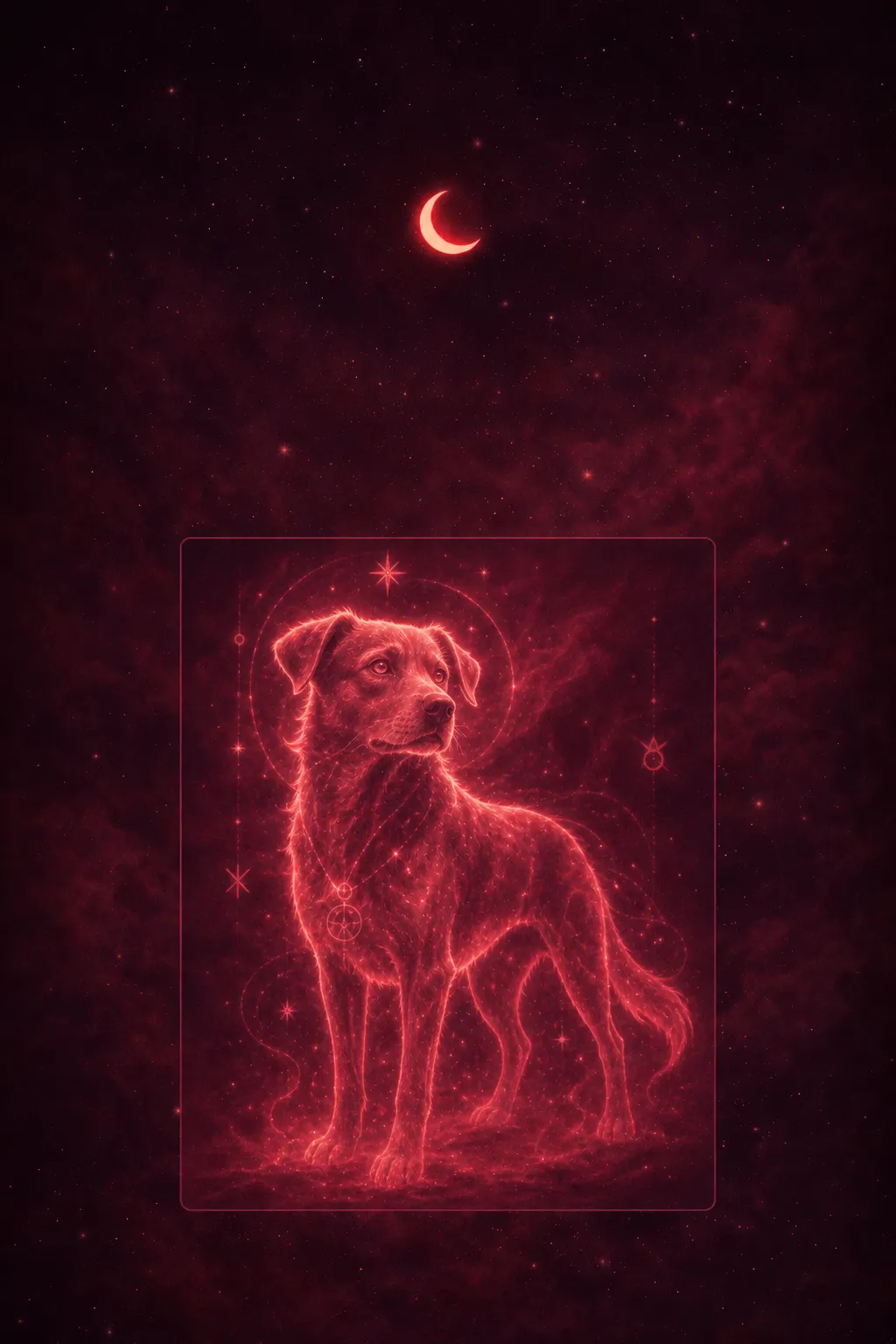

A stray dog in a dream typically signals unmet needs, a fear of abandonment, or a neglected part of yourself crying out for care. The dream sits on the axis of belonging versus isolation, and its emotional tone — warm, threatening, or heartbreaking — reveals whether your psyche is inviting connection or raising a warning about vulnerability.
In under a minute you could read what your exact dream means for you, and see a picture of it. Free.
A dream still on your mind? Get your personal reading.
Describe your dream in a line or two. In seconds you get a reading of your exact dream, a picture drawn from your own words, and every symbol explained.
Free. No sign-up. Takes 10 seconds. Your dream stays private.
0%
Analyzing your dream…
Something went wrong. Please try again in a moment.
Your dreams deserve more than a dictionary
Common Stray Dog Dream Scenarios and What They Mean
The details of your dream matter enormously. Here are the most frequent stray-dog scenarios and the meaning each one tends to carry.
The stray approaches you calmly or warmly
A friendly stray that walks up and nudges your hand is one of the most hopeful images in dog-related dreams. It usually signals that a neglected need — for connection, comfort, or self-care — is finally surfacing in a way you can actually receive. Something vulnerable in you, perhaps long dismissed, is ready to be acknowledged. The dream is less a warning than an invitation.
But what does your version mean?
The stray growls, chases, or bites
When the dog is aggressive, the emotional charge flips entirely. An aggressive stray chasing you in a dream often points to an unaddressed anger, fear, or impulse that has been left to go feral through neglect. Alternatively, it can represent a real person in your life whose behavior feels unpredictable precisely because the relationship has no stable structure or boundaries. If the dog bites, the message sharpens — something ignored has now broken skin.
Feeding, adopting, or rescuing the stray
This is the caretaker scenario, and it appears frequently among people who carry a strong sense of responsibility for others. Rescuing a stray dog in a dream is often a healthy sign: your psyche is actively choosing to nurture a vulnerable part of yourself rather than walk past it. The key question is whether you felt empowered or exhausted by the rescue — that distinction reveals whether the dream is celebrating your compassion or cautioning you about overextension.
The stray follows you home persistently
A dog that simply will not leave your side, no matter how many times you try to redirect it, represents something you cannot shake — an unresolved loyalty, an old dependency, or a relationship dynamic that refuses to be filed away. The persistence is the message: whatever this need represents, it will not be outwalked.
An injured or starving stray
Few dream images carry as much distress as a visibly suffering animal. A sick or injured stray often reflects a wounded part of the self — an instinct, a relationship, or an emotional resource that has been severely depleted. For people experiencing caregiver fatigue or chronic stress, this image can also surface as a projection of helplessness: the fear of encountering a need too broken to fix.
Was yours a sign? Find out.
A pack of strays
Multiple stray dogs amplify the core feeling of being overwhelmed. The dream can mirror a real-life sense of being pulled in too many directions — competing demands, social pressure, or an environment that feels chaotic and ungoverned. You are outnumbered by needs, and the dream is making that fact impossible to ignore.
You walk past the stray without stopping
Ignoring the stray in your dream is psychologically significant. It typically reflects a waking-life strategy of emotional distancing — a deliberate choice not to look too closely at your own unmet needs or at someone else's pain. It is not a condemnation; sometimes it is survival. But the dream raises the question gently: is this distance protecting you or costing you?
What this dream could look like
Tap an image to open it full screen
Example images. Only you can see what you write in Dream Book.
The Psychology Behind the Dream
Across several psychological frameworks, the stray dog holds consistent meaning. From an attachment-theory perspective, the stray is the perfect symbol of an insecure base — loyalty that exists but has no safe home. If you carry early fears of abandonment, these dreams can feel viscerally familiar, because the animal embodies the very experience your nervous system knows too well. Dream Book's interpretive approach treats this symbol as one of the clearest mirrors the unconscious offers for attachment anxiety.
In Jungian terms, dogs represent the instinctual, loyal dimension of the psyche. A stray, then, is that instinct cut off from conscious care — raw, unintegrated, wandering without guidance. The dream asks which part of your inner life has been left without a home.
The modern-anxiety reading is equally compelling. In an era defined by economic precarity, social fragmentation, and constant change, the unanchored animal resonates as a mirror for the dreamer's own fear of being unmoored — of losing the support systems that make daily life feel stable. The stray dog doesn't just evoke personal psychology; it reflects a cultural moment in which many people genuinely feel like they are navigating without a safety net.
It is also worth noting the caretaker dimension. If you dream of someone being abandoned in waking life and consistently dream of rescuing strays, your psyche may be using the animal to rehearse the tension between your impulse to help and your own limits. There is no shame in recognizing when the rescue fantasy is also a way of avoiding your own needs.
Every dream you log starts to connect.
Dream Book keeps your dreams in one place and reveals the threads between them over time — your private dream journal. Free to start.


Cultural Context: Why This Symbol Hits So Hard
In the Anglo cultural imagination, dogs are coded as the gold standard of loyalty, companionship, and unconditional love. A stray dog inverts all of that: here is loyalty without a home, trust without an anchor. The emotional dissonance is immediate and powerful. We are raised to believe that good dogs have good owners — so a stray raises uncomfortable questions about what was lost, abandoned, or failed.
A bad dream isn't a bad sign.
The Anglo context also carries a strong animal-welfare ethic. Most people who grew up in this cultural sphere have been shaped by messaging around rescue, adoption, and the moral weight of leaving an animal to suffer. This means that dreaming of a stray activates not just personal symbolism but a layer of ethical feeling — a sense that something vulnerable deserves better, whether that something is the dog, a person in your life, or yourself.
Spiritual and Intuitive Readings
In American Christian folk interpretation, the stray dog sometimes evokes the parable logic of mercy extended to the overlooked and the unwanted. The image carries a quiet call: to notice what has been dismissed, to extend compassion where it is not convenient. If your faith tradition shapes how you process your dreams, this reading may resonate — the stray as a test of whether you will stop, or keep walking.
Folk intuition runs in two directions on this symbol. One tradition reads a stray coming to your door as a sign that kindness is being called for — in yourself or in your community. Another reads it as a gentle warning: be cautious of someone in your life whose loyalties are unclear, who wanders between camps without a true commitment. Both readings share the same root: the stray dog signals that something about belonging — yours, or someone else's — is unsettled and worth examining.
If you've been dreaming of other stray animals alongside this image, the pattern of displacement and unmet need may be pointing to something systemic in your inner life, not just a single relationship or moment.
Related Dream Meanings
nightmares
Being Chased by Dog Dream: Fear, Guilt & Conflict
5 min read
people
Being Abandoned Dream Meaning: Insecurity & Fear
5 min read
animals
Dogs Dream Meaning: Loyalty, Protection & Friendship
5 min read
animals
Stray Cat Dream Meaning: Freedom, Loneliness & Curiosity
5 min read
animals
Sharks Dream Meaning: Fear, Danger & Hidden Threats
5 min read
animals
Tiger Dream Meaning: Strength, Power & Hidden Fears
5 min read

animals
Bees Dream Meaning: Hard Work, Community & Anxiety
5 min read
animals
Cockroaches in Dreams: Meaning and Interpretation
5 min read
What to Do With This Dream
Once the emotional residue of the dream settles, a few honest questions can help you locate what it's pointing toward:
- Whose need are you avoiding? — If you walked past the stray, consider whether there is a person or a part of yourself you have been deliberately not looking at.
- Are you the stray? — Do you feel unanchored right now? Without a reliable sense of belonging in a relationship, a community, or even your own daily routine? The dog may be you.
- Is your caretaking sustainable? — If you were rescuing in the dream, check in on your real-life energy reserves. Compassion without boundaries depletes the well.
- What does the dog's behavior tell you about trust? — An aggressive stray may be flagging a relationship where you sense unpredictability but haven't named it consciously yet.
But what does your version mean?
You don't need to resolve everything the dream raises in one sitting. The stray dog is one of those symbols that tends to return — in slightly different forms, in slightly different settings — until the underlying need is genuinely tended to. Start by simply sitting with the question: what part of my life is wandering right now, waiting to be brought home?
One dream is never the whole picture.
The free app remembers your dreams, draws them, and connects the threads over time — so the next one means even more. Free to start.
People Also Ask
Dogs in dreams spiritually represent loyalty, instinct, and unconditional companionship. A stray dog specifically can signal a call to mercy — noticing what has been overlooked or abandoned. In folk-intuitive traditions, a dog appearing in a dream often prompts reflection on trust, faithfulness, and where those qualities are missing in your waking life.
The Bible doesn't address stray dog dreams directly, but dogs in Scripture are often associated with the marginalized or overlooked. Christian dream interpretation sometimes reads a stray as evoking the parable ethic — a call to extend compassion toward the vulnerable, whether that represents a neglected person, a relationship, or an unacknowledged need within yourself.
A stray dog arriving at your home in a dream often signals that something — a need, a loyalty, or a relationship — is seeking acknowledgment and belonging. Spiritually, it can represent an invitation to open your door to compassion, or a quiet warning to examine who or what in your life lacks a secure, stable foundation.
Curious what your dream would look like?