
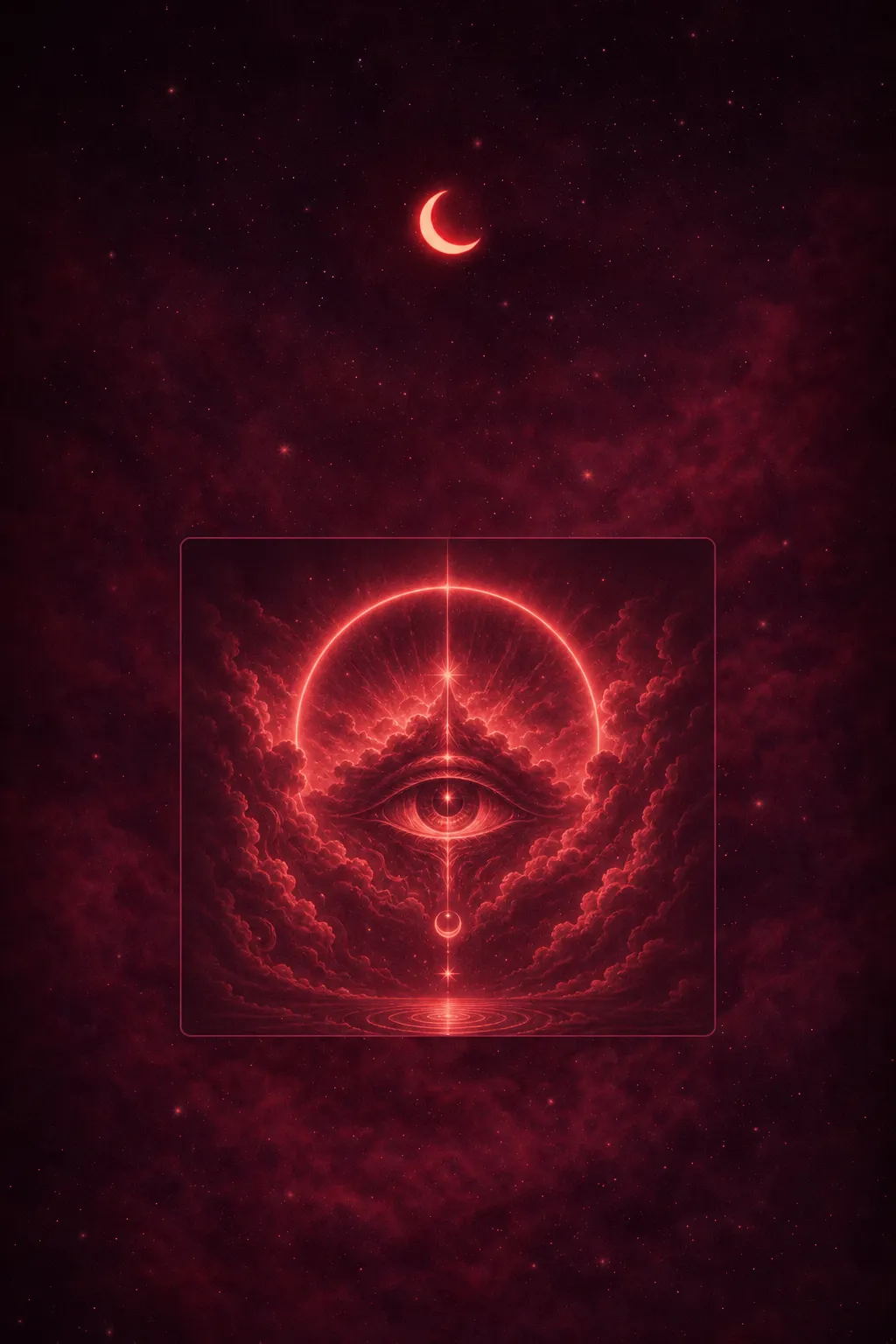

A red sky in a dream meaning typically signals intense emotional energy, looming change, or a warning to pay attention to passion, conflict, or transformation unfolding in your waking life, reflecting the sky's dramatic hue as a mirror of inner urgency or external forces demanding that you prepare, act boldly, or brace for a significant shift ahead.
In under a minute you could read what your exact dream means for you, and see a picture of it. Free.
You read what it can mean. But what did yours mean?
General meanings stop here. In the free app, tell Dream Book your exact dream and get a reading that actually makes sense for you.


A dream still on your mind? Get your personal reading.
Describe your dream in a line or two. In seconds you get a reading of your exact dream, a picture drawn from your own words, and every symbol explained.
Free. No sign-up. Takes 10 seconds. Your dream stays private.
0%
Analyzing your dream…
Something went wrong. Please try again in a moment.
Your dreams deserve more than a dictionary
Common red sky dream scenarios and what they mean
The shape of a red sky dream shifts dramatically depending on timing, intensity, and who else is present — each variation carries its own emotional signature worth paying close attention to.
Dreaming of a red sky at sunset
A crimson dusk suggests you are closing out a significant chapter — a relationship, a role, or a long-held belief. The mood is bittersweet rather than alarming: your mind is processing an ending it knows is real but hasn't fully accepted. Expect some grief alongside genuine relief as the transition settles.
But what does your version mean?
Dreaming of a red sky at sunrise
The old sailor's proverb lands squarely here — red sky in the morning is a warning. Your unconscious is flagging that a demanding period lies just ahead, urging vigilance before the pressure fully arrives. This is your psyche asking you to prepare rather than drift into the coming day unprepared.
Dreaming of an intense blood-red or burning sky
When the sky turns the deep red of blood or glowing embers, suppressed anger or existential dread is breaking the surface. Modern anxiety often manifests here — the feeling that circumstances are accelerating beyond your control. This is one of the more urgent signals your dreaming mind can send, worth taking seriously in waking life.
Dreaming of a red sky that fills you with awe
Not all red skies threaten. When the dominant feeling is wonder rather than dread, the dream points toward emotional release and even spiritual renewal — intensity reframed as beauty. Many dreamers describe a sense of being reminded that large, difficult forces can still carry meaning and even grace.
Dreaming of a red sky with a storm rolling in
Darkening clouds moving beneath that red canopy signal a conflict you sense is coming but haven't confronted yet. The anxiety around control is almost textbook here: the storm is visible but not yet arrived, mirroring the way real-life tension builds before a difficult conversation or a destabilizing change finally breaks.
Was yours a sign? Find out.
Dreaming of a red sky that only you notice
When the sky blazes red above a crowd of people who carry on as normal, the dream is mapping isolation and unvalidated worry. You feel you can see a threat — in a relationship, a workplace, a broader situation — that those around you are unwilling or unable to acknowledge, leaving you carrying that foreknowledge alone.
What this dream could look like
Tap an image to open it full screen
Example images. Only you can see what you write in Dream Book.
What a red sky reveals about your inner emotional state
From a psychological standpoint, the sky in a dream functions as a canvas for your broader emotional outlook — the ceiling of your inner world. When that sky turns red, your subconscious is essentially flooding the scene with urgency, signaling that something in waking life has pushed your nervous system into a heightened state. Psychologists would frame this as emotional projection: feelings too large or too uncomfortable to sit with consciously get externalized onto the environment. The red sky, then, is less a prediction and more a mirror — reflecting anxiety, passion, or unresolved tension back at you in vivid, atmospheric form.
Modern life feeds this kind of imagery readily. When you are carrying prolonged stress — overextended at work, navigating relational conflict, or facing a decision that feels beyond your control — the dreaming mind reaches for dramatic visual metaphors. A red sky captures that specific blend of dread and awe that comes with standing at a threshold you didn't choose. The ambivalence is the point: part of you registers danger, while another part recognizes that intensity is not always destruction — sometimes it is transformation.
- Dawn-red imagery often reflects anticipatory anxiety — something is coming and you feel underprepared.
- Dusk-red imagery tends to surface when grief, closure, or a reluctant letting-go is still being processed.
- A sense of being frozen beneath the red sky may point to a felt loss of agency — a signal worth taking seriously as an invitation toward self-reflection and deliberate action.
General meanings end here. Read your own dream.
Describe your dream in a line or two. In seconds you get a reading of your exact dream, a picture drawn from your own words, and every symbol explained.
Free. No sign-up. Takes 10 seconds. Your dream stays private.
0%
Analyzing your dream…
Something went wrong. Please try again in a moment.
Your dreams deserve more than a dictionary
Every dream you log starts to connect.
Dream Book keeps your dreams in one place and reveals the threads between them over time — your private dream journal. Free to start.
What culture and tradition say about a red sky dream
Few dream images arrive with as much cultural baggage as a red sky. The old mariner's proverb — red sky at night, sailor's delight; red sky in morning, sailor's take warning — has shaped Western intuition for centuries, and it bleeds naturally into dream interpretation. A red dawn in a dream carries that folk-inherited sense of imminent trouble, a signal to brace yourself, while a red sky at dusk lands closer to the proverb's gentler half: the chapter is closing, but the danger has passed. These aren't arbitrary associations — they are culturally encoded expectations your sleeping mind draws on automatically.
Christian tradition adds another layer. Biblical imagery repeatedly uses a blood-colored sky to mark divine warning or the weight of prophetic moments — a connection Matthew 16 makes explicit when Jesus notes that a red sky signals coming weather — and even dreamers with only a loose connection to that tradition often carry some inherited unease when the heavens turn red. The color itself — shared with fire, blood, and alarm signals — has been reinforced by decades of apocalyptic film aesthetics and breaking-news imagery, so modern culture effectively primes the red sky as a catastrophe cue before any personal symbolism even enters the picture.
A bad dream isn't a bad sign.
- Folk weather proverb: dawn-red warns of approaching hardship; dusk-red signals a storm already spent.
- Biblical resonance: red or darkened skies as markers of judgment, transition, or divine attention.
- Media conditioning: cinematic disaster imagery makes a red sky feel instinctively like a countdown, amplifying modern anxiety around control and the unknown.
What a red sky dream means spiritually
In the biblical tradition, a red sky carries unmistakable weight as a sign calling for discernment rather than panic. Jesus referenced the image in Matthew 16:2–3, pointing out that people could read a reddened sky for tomorrow's weather yet missed the larger signs unfolding around them — an invitation to pay closer attention to what God may be signaling in your own season of life. Joel 2:31 and Revelation 6:12 extend that imagery into apocalyptic territory, linking a blood-red moon and darkened heavens to moments of profound transition. The tone across these passages is watchfulness, not fatalism — the sky turns red not to terrify but to prompt honest self-examination about where you are spiritually and where you are headed.
For those who hold a more intuitive or folk-spiritual framework, the old proverb — red sky at night, shepherd's delight; red sky in morning, shepherd's warning — functions as a kind of inherited omen-reading that many people absorb without ever consciously adopting it. In dreams, that embedded cultural wisdom surfaces as a gut-level signal: something significant is either arriving or departing, and your spirit is urging you to take notice before the moment passes.
- Dawn red: A spiritual prompt to prepare — examine choices, realign intentions, and resist the urge to ignore what feels urgent.
- Dusk red: An invitation to release — spiritually, a closing chapter can be a mercy rather than a loss.
- Awe without fear: If the red sky felt majestic rather than threatening, many faith traditions would read that as reassurance that even charged transitions unfold within a larger, purposeful order.
Related Dream Meanings
body health
Blood Dream Meaning: Loss, Vitality & Transformation
5 min read
nightmares
Blood Moon Dream Meaning: What It Symbolizes in Your Dreams
5 min read
common dreams
Sunset: Meaning and Symbolism
5 min read
common dreams
Storm Dream Meaning: Turmoil, Anxiety & Change
5 min read

common dreams
Beach: Meaning and Interpretation
6 min read
common dreams
Pool Dream Meaning: Emotions, Relaxation & Reflection
5 min read
common dreams
Bathroom: Meaning and Interpretation
6 min read
common dreams
What Does It Mean to Dream About Lightning
6 min read
How to use a red sky dream as a practical signal
Rather than dwelling on the dread or wonder the image stirs up, treat a red sky dream as useful information your mind is handing you. The urgency coded into that vivid color is your nervous system flagging something it considers unresolved — and the most grounding thing you can do is get specific about what that something is. The moment you wake, jot down whether the sky felt like a warning or a spectacle, and whether it was brightening or fading. That single detail — dawn versus dusk — points you toward whether you are bracing for something ahead or resisting letting go of something behind you.
- Name the pressure point. Ask yourself what area of life currently feels both urgent and out of your control — a deadline, a relationship shift, a health concern. The dream is rarely cryptic; it mirrors the tension you are already carrying.
- Separate what you can act on from what you cannot. Red sky dreams tend to spike when anxiety is running high precisely because control feels thin. Write two short lists: things you can actually change this week, and things you need to accept are outside your hands.
- Revisit the dream after a decision. If you are sitting with a significant choice — something that carries the emotional weight of a gathering storm — note whether the red sky returns. Recurring imagery usually means the underlying tension has not yet been addressed.
But what does your version mean?
Treated this way, the red sky stops being an omen and becomes a checkpoint — a vivid, honest read on where your attention and energy most need to go.
One dream is never the whole picture.
The free app remembers your dreams, draws them, and connects the threads over time — so the next one means even more. Free to start.
People Also Ask
Spiritually, a red sky signals transformation, divine warning, or powerful emotional energy. It often represents a turning point — urging you to pay attention to your path. Some traditions see it as a sign of spiritual warfare, urgent change, or God's presence, depending on whether the atmosphere feels threatening or awe-inspiring.
Jesus referenced a red sky as a sign of coming weather, noting that a red sky at night signals fair weather ahead, while a red sky in the morning warns of storms. Dreaming of this imagery may reflect your inner wisdom reading life's signals — sensing that something significant is approaching and urging you to prepare or pay closer attention.
A red sky warning in a dream typically signals danger, urgency, or an emotional storm ahead. Your subconscious may be alerting you to unresolved tension, a looming confrontation, or a situation requiring immediate action. It acts like an internal alarm, encouraging you to face challenges rather than ignore brewing problems.
Fully lucid, controllable dreams are considered among the rarest experiences. Dreaming of a red sky is uncommon too, often appearing during periods of intense stress or spiritual awakening. Its vividness tends to make it highly memorable, suggesting your mind is processing something emotionally significant that deserves careful waking reflection.
Curious what your dream would look like?