
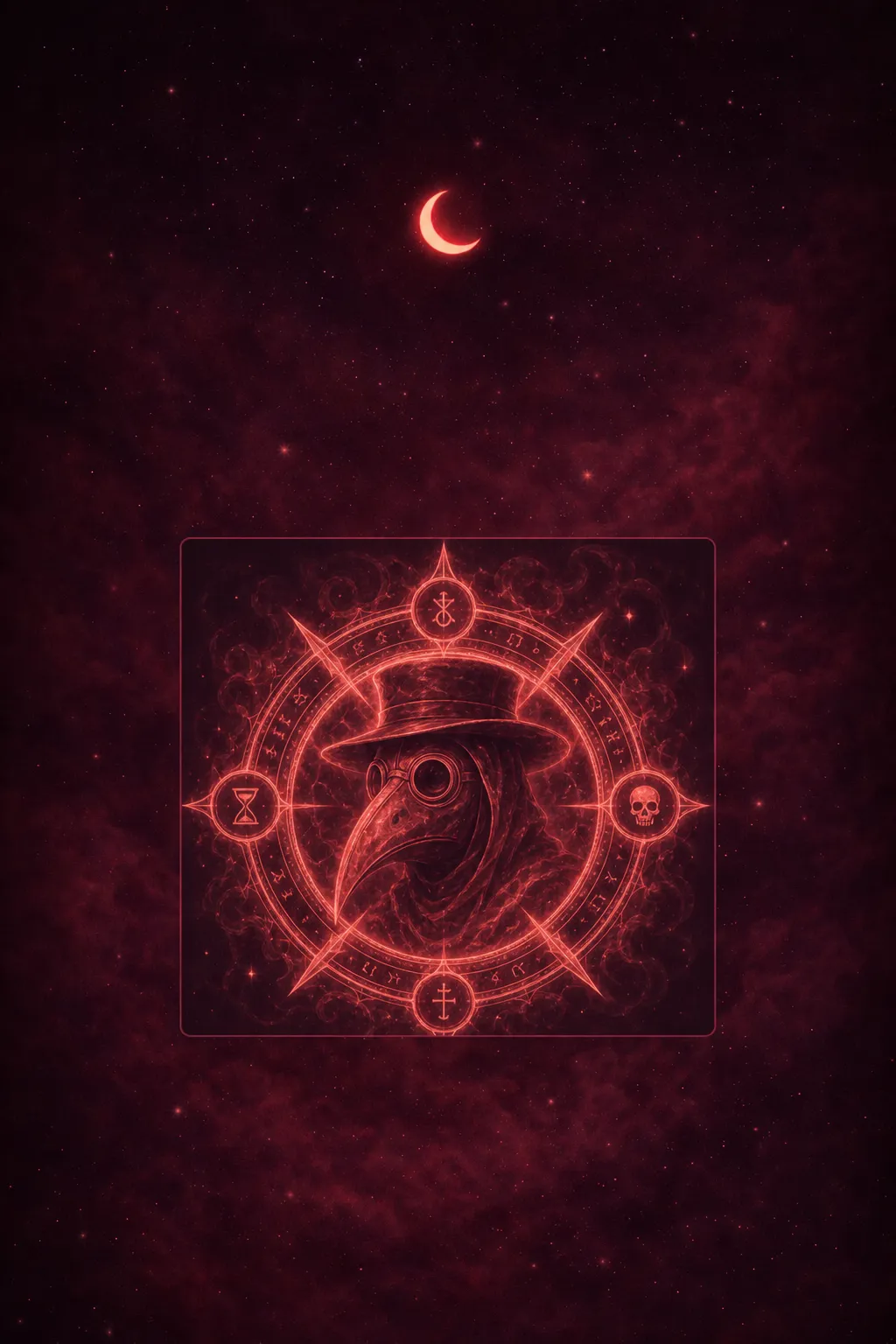

Dreaming about plague meaning points to deep-seated fears of losing control, spreading negativity, or being overwhelmed by a situation in your waking life, as plague dreams often symbolize anxiety, emotional contagion, toxic relationships, or a collective crisis — much like dreams of death, being chased, or flood — that feels unstoppable and threatens your sense of safety and well-being.
In under a minute you could read what your exact dream means for you, and see a picture of it. Free.
Bad dream? See exactly what you dreamed — turned into a picture.
Just describe it and Dream Book paints your dream as a real image, plus a reading of what it means for you. Free, and it takes under a minute.


A dream still on your mind? Get your personal reading.
Describe your dream in a line or two. In seconds you get a reading of your exact dream, a picture drawn from your own words, and every symbol explained.
Free. No sign-up. Takes 10 seconds. Your dream stays private.
0%
Analyzing your dream…
Something went wrong. Please try again in a moment.
Your dreams deserve more than a dictionary
Common Plague Dream Scenarios and What They Mean
The specific shape a plague takes in your dream matters as much as its presence.
Dreaming of watching a plague spread through a city or crowd
Feeling unable to stop it typically mirrors waking life anxiety about a problem already spreading beyond your reach — a workplace conflict, a family tension, or a wave of bad news that keeps compounding. The core fear is powerlessness: something is escalating and your efforts to contain it feel futile.
A bad dream isn't a bad sign.
Dreaming that you catch or already have the plague
The focus turns inward. Guilt, shame, or fear of a bad influence "getting into you" is a classic trigger, and health anxiety often sharpens this image after periods of prolonged stress, much like dreams of death that surface when fear of loss feels inescapable.
Dreaming of trying to shield loved ones from infection
This points to caregiver hypervigilance and a deep fear of failing the people who depend on you. It is common during periods of family upheaval or illness, when the sense of responsibility feels heavier than any one person can realistically carry.
Dreaming of fleeing, isolating, or quarantining yourself from the plague
This reflects a healthy impulse toward boundary-setting, though it may also signal that withdrawal has become your default response to an overwhelming threat you feel you cannot face head-on.
Dreaming of being immune or the last survivor
This carries a dual edge — resilience and alienation at once — suggesting you feel set apart from a collective pressure others around you are succumbing to. The imagery can overlap with apocalyptic dream landscapes where society itself seems to be collapsing.
But what does your version mean?
Dreaming of the plague ending or a cure arriving
Generally hopeful, this signals that your mind is beginning to process the end of a stressful chapter and reclaiming a sense of control. Across all these variants, the central question is the same: where in your waking life do you feel powerless to contain something that keeps spreading?
What this dream could look like
Tap an image to open it full screen
Example images. Only you can see what you write in Dream Book.
Psychological Meaning of Dreaming About Plague
From a psychological standpoint, plague dreams are the subconscious mind's most visceral shorthand for loss of control. When waking life presents a problem that feels contagious — a toxic workplace dynamic, a family conflict quietly pulling in more people, a personal habit quietly eroding your health — the dreaming mind reaches for the most dramatic image it can find to communicate the stakes. The plague is not a prediction; it is a pressure gauge. Psychologists often link this imagery to heightened anxiety states in which the individual feels that, no matter what corrective action they take, the damage continues to spread. That same sense of helplessness before an unstoppable force also appears in flood dreams, where rising water overwhelms every attempt at containment.
Post-pandemic life has sharpened this symbol considerably. Many people now carry a low-level somatic vigilance — a background hum of health anxiety — that needs very little provocation to surface in sleep. Dreaming of plague can also encode guilt: the sense that you yourself are the source of contamination, that your anger, negativity, or poor decisions are "infecting" those around you. In that reading, the dream is less about an external threat and more about an internal reckoning — a call to examine what you fear you are spreading to others. This guilt-as-infection pattern has a clear resonance within Christian moral frameworks too, where sin is sometimes figured as a spreading sickness requiring confession and cleansing rather than mere willpower. At its most collective, the imagery can bleed into broader apocalyptic dread about world events that feel entirely beyond personal agency.
- Loss of control: A core signal that something in waking life feels unstoppable or beyond your personal agency.
- Contagion metaphor: Fear that a toxic environment, relationship, or habit is influencing others — or you.
- Health anxiety: Somatic worry dressed in symbolic clothing, especially salient for those carrying post-pandemic stress.
- Guilt and self-blame: An inner sense of being the problem, the dreaming mind urging honest self-examination.
- Avoidance impulse: The urge to flee or isolate — much like the instinct to run in chase dreams — points to a threat the waking self has not yet faced directly.
General meanings end here. Read your own dream.
Describe your dream in a line or two. In seconds you get a reading of your exact dream, a picture drawn from your own words, and every symbol explained.
Free. No sign-up. Takes 10 seconds. Your dream stays private.
0%
Analyzing your dream…
Something went wrong. Please try again in a moment.
Your dreams deserve more than a dictionary
Every dream you log starts to connect.
Dream Book keeps your dreams in one place and reveals the threads between them over time — your private dream journal. Free to start.
Cultural and Traditional Meanings of Plague Dreams
No symbol in the Western cultural imagination carries heavier collective weight than plague. The Black Death of the fourteenth century killed roughly a third of Europe's population and left an imprint so deep that it became the archetypal image of unstoppable catastrophe — an evil no individual will or virtue could hold back. That archetype still shapes how English speakers instinctively reach for the word: we call an infestation a plague, a flood of spam a plague, a run of bad luck a plague. When that word enters your dreams, it arrives loaded with centuries of cultural dread about forces that outpace any single person's ability to respond — much like dreams of being chased by something you cannot outrun.
More recently, the COVID-19 pandemic refreshed this symbol for an entire generation. Lockdowns, uncertainty, and the eerie sense of watching something invisible spread across communities gave millions of people a lived, embodied experience of contagion as social collapse — not merely as metaphor. Dreams of plague surged during that period, and researchers noted they often reflected anxieties about helplessness and lost routine rather than fear of illness itself. That modern memory now sits alongside older apocalyptic imagery drawn from fiction and scripture, where plague typically signals civilization teetering on the edge. The sense of death hovering just beyond reach — communal rather than personal — intensifies the feeling that nothing can be contained.
- Folk belief: In many Anglo-American folk traditions, dreaming of widespread sickness was historically read as a warning to examine one's community relationships or moral standing.
- Biblical resonance: The plagues of Exodus lend a sense of divine reckoning to the symbol — punishment for ignored warnings, or a call to change course before things escalate further.
- Modern framing: Today the cultural shorthand maps plague onto systemic stress — burnout spreading through a team, misinformation going viral, or a personal crisis rippling outward and affecting everyone around you.
Spiritual Meaning of Dreaming About Plague
For dreamers with a Christian frame of reference, plague imagery carries an almost unavoidable biblical resonance. The ten plagues of Exodus are among Scripture's most dramatic examples of consequences arriving on a scale no human effort could reverse — and that story has shaped Western intuition about what plague means at a symbolic level. Dreaming of plague through this lens need not feel like literal prophecy; it is better read as a conscience check, a quiet interior nudge asking whether something in your life has quietly gotten out of alignment and is now demanding honest attention.
Was yours a sign? Find out.
In this reading, the dream functions less as punishment and more as invitation — an apocalyptic-style wake-up call urging reflection and course correction before a smaller problem grows into something harder to contain. That sense of being pursued by something unstoppable shares spiritual territory with dreams of being chased, where avoidance only prolongs the reckoning, and with death imagery, which spiritual traditions widely read as a call to transformation rather than literal ending. Key spiritual questions the dream may be raising include:
- What do I need to repent of or release? A habit, attitude, or relationship dynamic that has been quietly spreading its damage.
- Where have I surrendered my integrity under pressure? Plague dreams often surface when moral compromises have accumulated unexamined.
- Am I trying to control what only surrender can resolve? The spiritual tradition across many denominations names the willingness to let go as its own form of cleansing.
Approached this way, a plague dream is not a verdict but a prompt — an uncomfortable but ultimately generous signal from your inner life that something spiritual, relational, or ethical deserves honest reckoning before it spreads further.
Related Dream Meanings
nightmares
Death Dream Meaning: Transformation, Loss & Change
5 min read

nightmares
Being Chased Dream Meaning: Anxiety & Avoidance
5 min read
nightmares
Apocalypse Dream Meaning: Fear, Change & Inner Turmoil
5 min read

common dreams
Flood Dream Meaning: Emotions, Loss & Need for Change
5 min read
nightmares
End of World Dream Meaning: Anxiety, Change & Fear
5 min read
nightmares
House on Fire Dream Meaning: Chaos, Change & Loss
5 min read
nightmares
What Does It Mean to Dream About Home Invasion
5 min read
nightmares
What Does It Mean When Someone Is Following You in a Dream
6 min read
What to Do After a Plague Dream
The most useful first step is to identify the specific "contagion" in your waking life — the thing that feels like it is spreading beyond your ability to contain it. Write it down in plain language: a draining relationship dynamic, a financial worry creeping into every corner of your day, a habit you keep meaning to address. Naming it concretely reduces the vague dread the dream is amplifying and hands you something you can actually work with.
Once you have named the stressor, separate what you can control from what you cannot. Plague imagery thrives on the feeling that everything is out of your hands — but that feeling is rarely accurate. A practical audit often reveals one or two pressure points where targeted action is genuinely possible, even when the bigger situation feels overwhelming. This mirrors the same instinct behind being-chased dreams: the anxiety is real, but turning to face it is always more useful than running. If the dream carried a sense of total societal collapse, you may also find it useful to read about apocalypse dreams, which share this theme of forces too large for any one person to stop. On a more personal scale, the creeping, unstoppable quality of plague imagery often echoes death dreams — both point to something the dreaming mind perceives as inevitable and beyond negotiation.
A bad dream isn't a bad sign.
- Journal the spread: Map out where the stressor started and how far it has actually reached — often it is smaller than your anxious mind insists.
- Set a containment boundary: Choose one concrete limit — a conversation you will have, a behavior you will stop, a commitment you will drop — to interrupt the feeling of endless escalation.
- Limit consumption loops: If news or social media is feeding the anxiety, build a scheduled break into your day rather than relying on willpower alone.
- Talk to someone outside the situation: Contagious stress loses power when it is aired to a trusted, unaffected person who can offer perspective.
If it keeps coming back, the app helps you understand the pattern.
Log each recurring dream and the free app shows you what's underneath — calmly, over time. Free to start.
People Also Ask
Warning dreams from God often feel unusually vivid, urgent, and emotionally heavy. They may repeat or linger in your memory long after waking. Symbolic imagery like plague can signal divine caution about a path you are taking, urging reflection, prayer, or a meaningful change in behavior or attitude.
Plague typically symbolizes widespread fear, loss of control, or a toxic situation spreading through your life. It can represent emotional contamination, overwhelming stress, or a destructive habit affecting those around you. Spiritually, it may point to purification, collective suffering, or a warning to address something before it grows worse. Dreams of fire or death can carry similarly urgent energy.
Many psychologists and spiritual traditions believe disturbing dreams serve a protective function. Your subconscious processes fears and risks you may be ignoring while awake. A plague dream might warn you about declining health, troubled relationships, or a toxic environment, encouraging you to take action before a difficult situation worsens significantly. Recurring being-chased dreams can signal similar unresolved anxieties.
Verified mutual dreams, where two people independently share nearly identical dream experiences on the same night, are considered exceptionally rare. Precognitive dreams that accurately foreshadow specific future events are also unusual. Most sleep researchers note these reports are fascinating but difficult to study scientifically, making them among the most intriguing dream phenomena discussed.
Curious what your dream would look like?