
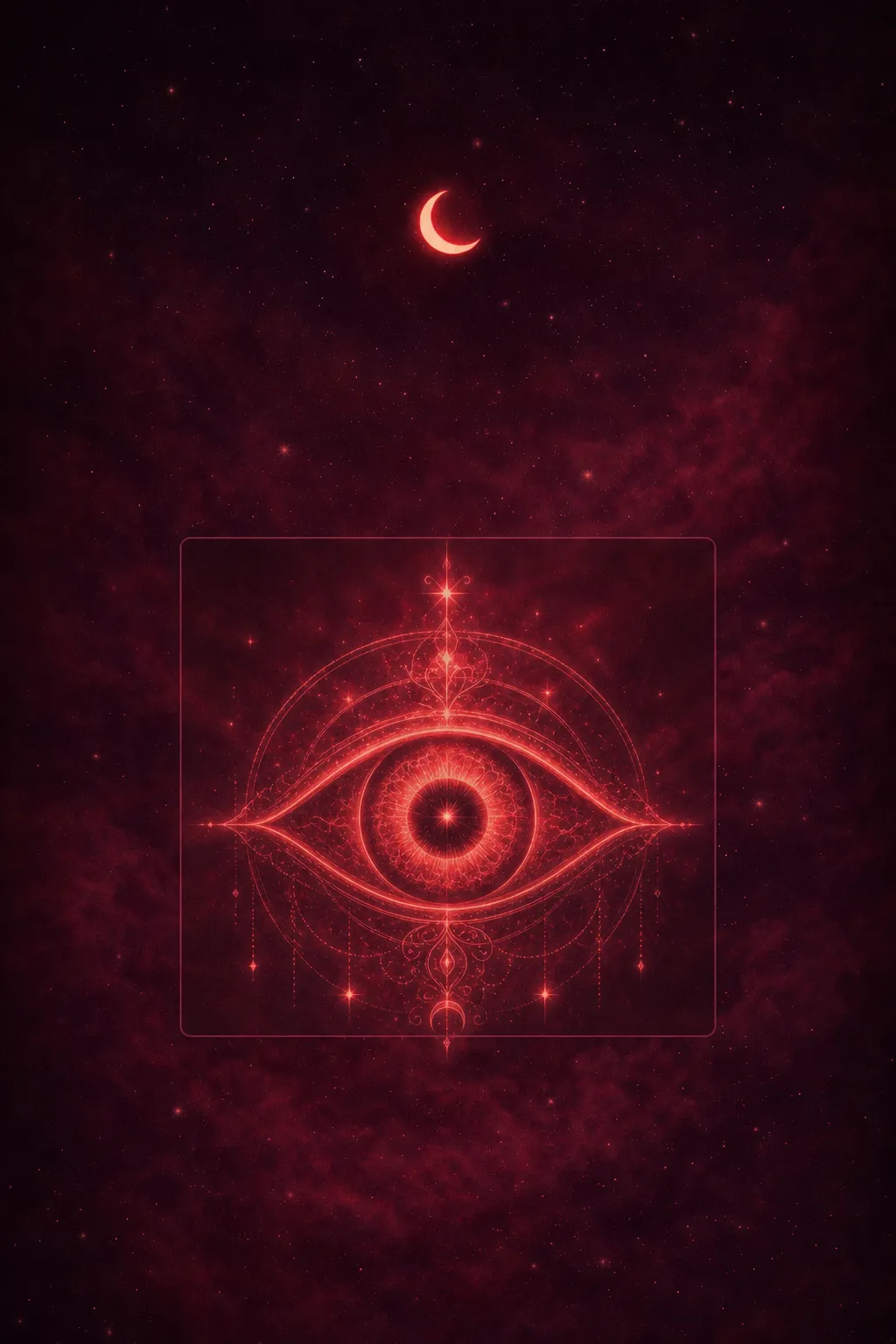

The evil eye in a dream meaning centers on feelings of envy, psychic threat, or a subconscious warning that someone in your waking life harbors jealousy or ill will toward you, urging you to protect your energy, set firm boundaries, and trust your instincts about people whose intentions may not be as sincere as they appear.
In under a minute you could read what your exact dream means for you, and see a picture of it. Free.
A dream still on your mind? Get your personal reading.
Describe your dream in a line or two. In seconds you get a reading of your exact dream, a picture drawn from your own words, and every symbol explained.
Free. No sign-up. Takes 10 seconds. Your dream stays private.
0%
Analyzing your dream…
Something went wrong. Please try again in a moment.
Your dreams deserve more than a dictionary
Common Evil Eye Dream Scenarios and What They Mean
The specific shape a dream takes matters as much as the symbol itself. Whether you are the target, the source, or simply surrounded by watching eyes shifts the meaning considerably — and often points directly to where your waking anxieties are concentrated. At Dream Book we explore this symbol in depth.
- Being stared at or cursed by the evil eye: This is the most common variant and typically signals that you feel singled out — by envy, hostility, or harsh judgment in your social world. Psychologically, it can reflect genuine interpersonal friction or a projection of your own self-doubt onto the people around you. If you have recently gained something visible — a promotion, a relationship, public praise — this dream may be your mind stress-testing whether it is safe to be seen.
- Wearing or holding a nazar charm: Dreaming of clutching a protective amulet points to a strong desire for control and reassurance. You sense a threat but feel you lack the power to confront it directly, so the dream offers a symbolic shield. This is a healthy coping image, though it is worth asking what boundary you feel needs defending in your waking life.
- Casting the evil eye at someone else: Uncomfortable as it is, this scenario asks you to look inward. It often surfaces suppressed envy, resentment, or a wish to undermine a rival — feelings that are easy to disown. Rather than a condemnation, the dream is an invitation toward honest self-knowledge.
- A charm cracking or breaking: A shattered nazar suggests that a safeguard — emotional, relational, or psychological — feels compromised. This is a common image during periods of transition or accumulated stress, as if the dream is signaling that your usual defenses are stretched thin.
- Eyes everywhere, surrounding you: Amplified surveillance imagery — eyes multiplying in every direction — reflects acute social-exposure anxiety, sometimes tied to guilt or a secret you fear being discovered. It is the visual language of feeling permanently evaluated.
- Receiving a charm as a gift: This warmer variant carries a message of relational support. Someone in your life, or an internalized sense of care, is offering protection — a reminder that you are not navigating perceived threats entirely alone.
A bad dream isn't a bad sign.
Taken together, these scenarios map a spectrum from vulnerability to agency. Noticing where you land on that spectrum — targeted, guarded, or even doing the targeting — is often more revealing than the symbol itself.
What this dream could look like
Tap an image to open it full screen
Example images. Only you can see what you write in Dream Book.
Psychological Meaning of the Evil Eye in Dreams
From a psychological standpoint, dreaming of the evil eye is one of the cleaner signals your subconscious can send about social anxiety and hypervigilance. The image externalizes a felt threat — the sense that someone's envy or ill-will is powerful enough to cause real harm — and that externalization is telling. In many cases, the "malevolent gaze" belongs not to a genuine enemy but to a disowned part of the dreamer's own inner world: resentment, competitive feeling, or self-criticism that has been projected outward rather than acknowledged directly. Jung would call this a shadow encounter; modern cognitive therapists would simply note that the dream is making a hidden assumption visible.
The evil eye also maps neatly onto contemporary stress patterns. In a culture of constant social visibility — performance reviews, social media metrics, public comparison — the unconscious mind reaches for an ancient symbol to encode a very modern dread: that being seen too clearly leaves you exposed and vulnerable to attack. Dreaming of this symbol may therefore signal that waking life has pushed your sense of control to its limit, prompting questions worth sitting with:
- Whose judgment am I most afraid of right now, and why does it carry so much weight?
- Am I harboring envy I haven't honestly examined?
- Where do I genuinely need firmer personal boundaries?
But what does your version mean?
From a faith-informed angle, the dream can also invite reflection on whether worry about others' opinions has quietly displaced a more grounded sense of self-worth. Psychologically, the protective amulet variant — dreaming of wearing or holding the eye — suggests the psyche is actively mobilizing defenses, a healthy sign that the unconscious is not simply registering threat but also reaching toward self-protection and resilience.
Every dream you log starts to connect.
Dream Book keeps your dreams in one place and reveals the threads between them over time — your private dream journal. Free to start.


Cultural and Folk Traditions Behind the Evil Eye Dream
Few symbols carry as much cross-cultural weight as the evil eye, and that shared history shapes how many dreamers instinctively interpret it. Across Mediterranean, Middle Eastern, and Latin American traditions, the evil eye — known variously as mal de ojo, nazar, or malocchio — represents the belief that envy, whether conscious or not, can transmit genuine harm through a glance. Dreaming of it therefore taps into one of humanity's oldest folk anxieties: that success, beauty, or good fortune makes you a target. In a modern context, this maps neatly onto social-media culture, where visibility and exposure feel simultaneously desirable and dangerous.
Within US Christian folk belief, the evil eye has a quieter but real presence. Proverbs and pastoral traditions acknowledge envy as spiritually corrosive, and some congregations still treat protective prayer or anointing as a hedge against ill-wishing. The dream may surface when a person feels that someone in their community harbors hidden resentment — a concern that blends biblical awareness of envy's destructive power with everyday workplace or family tension.
- Protective amulets in dreams: Seeing a blue glass nazar or a hamsa hand often signals a desire for a boundary or shield rather than pure threat — the folk tradition's answer to feeling exposed.
- Warding rituals: Many cultures use salt, red thread, or prayer to neutralize the evil eye; dreaming of performing such a ritual can reflect a waking urge to reclaim control over your social environment.
- The envy you send: Folk belief holds that even an admiring glance can carry harm if it conceals jealousy — a reminder that the dream may be prompting honest self-examination about resentments you have not fully acknowledged.
Spiritual Meaning of the Evil Eye in Dreams
From a spiritual standpoint, dreaming of the evil eye touches something older than psychology — the conviction that envy carries a real, transmissible force. In the biblical tradition, the "evil eye" is not merely metaphor. Proverbs 23:6 warns against the person with a miserly, ill-wishing gaze, and Jesus in Matthew 6:22–23 frames the eye as a lamp of the soul: a darkened eye signals inner corruption and spiritual blindness. If this imagery surfaces in your dream, a faith-rooted reading would ask whether you are carrying unacknowledged envy — toward others or suspected in those around you — and whether that spiritual darkness is obscuring your own clarity and purpose.
For dreamers who hold a more folk-spiritual worldview, the evil eye dream can feel like a warning that protective boundaries have slipped. Across many traditions the instinctive response is to reach for a protective object — a nazar amulet, a prayer, a ritual of cleansing — and the dream itself may be prompting that same impulse: a call to reinforce your spiritual defenses rather than simply worry. Seen this way, the symbol carries a quietly empowering message beneath its threat.
Was yours a sign? Find out.
- Spiritual self-audit: the dream may be inviting you to examine whether envy — given or received — is distorting your inner life.
- Call to protection: prayer, intention-setting, or meaningful ritual can restore the sense of spiritual safety the dream has shaken.
- Light vs. darkness: the biblical frame encourages replacing a vigilance-driven, fear-based outlook with one rooted in clarity and trust.
Related Dream Meanings
nightmares
Mirror Dream Meaning: Self-Reflection & Hidden Truths
5 min read

nightmares
What Does It Mean to Dream About Being Cursed
5 min read
nightmares
Being Watched: Meaning & Interpretation
5 min read
nightmares
Dreaming of a Sword Meaning: What Your Dream Reveals
6 min read
nightmares
Dream of Being Attacked with a Knife: Meaning and Interpretation
6 min read
nightmares
Explosion Dream Meaning: Emotions, Change & Turmoil
5 min read
nightmares
Shooting Someone Dream Meaning: Anger & Guilt
5 min read
nightmares
Being Shot At Dream Meaning: Vulnerability & Fear
5 min read
What to Do After an Evil Eye Dream: Practical Steps
Rather than dismissing the dream as superstition or spiraling into worry, treat it as useful feedback. The evil eye in a dream almost always signals that something in your waking social life feels unsafe — whether that is a colleague whose praise rings hollow, a friendship that leaves you drained, or a general sense that you are being watched and judged. Start by naming the source: write down one or two real relationships or situations that left you feeling exposed or envied recently. Getting that out of your head and onto paper shifts you from vague dread to something you can actually work with.
From there, consider what control you realistically have. Modern anxiety tends to inflate threats and shrink our sense of agency — so a grounded check-in matters. Ask yourself honestly whether your guard is proportionate to actual evidence of ill-will, or whether you may be projecting your own competitive feelings outward. Both possibilities are worth sitting with.
- Audit your boundaries. Identify one relationship where you consistently feel judged or drained, and decide on one small, concrete limit you can set this week.
- Reality-test the threat. Write down what specific behavior — not just a feeling — is making you uneasy, then assess whether it warrants action or a deliberate shift in focus.
- Reduce social-exposure stress. If performance anxiety is the real driver, break the next high-stakes situation into smaller, manageable steps rather than facing it as one overwhelming event.
- Consider a grounding ritual. Whether that is prayer, a brief mindfulness check-in, or simply carrying a reminder of your own values, intentional grounding counters the helpless, watched feeling the dream surfaces.
A bad dream isn't a bad sign.
If it keeps coming back, the app helps you understand the pattern.
Log each recurring dream and the free app shows you what's underneath — calmly, over time. Free to start.
People Also Ask
Dreaming of the evil eye often signals that you feel envied, watched, or threatened by negative energy from those around you. It can reflect deep anxieties about jealousy or ill intent directed your way. Alternatively, it may urge you to protect your energy, set boundaries, and be mindful of who you trust in waking life.
Divine warning dreams often feel unusually vivid, urgent, and emotionally intense, leaving a lasting impression upon waking. Recurring themes, clear symbolic imagery, or a strong inner conviction that the message matters are common signs. Reflecting in prayer or meditation and noting whether the dream aligns with your real-life circumstances can help you discern its spiritual significance.
Absolutely. Evil eye amulets are not restricted by zodiac sign — any person, including Sagittarius, can wear one for protection against envy and negative energy. Many people across cultures use these symbols regardless of astrology. If wearing one brings you comfort and a sense of spiritual protection, it is perfectly appropriate for any sign.
The Bible references the evil eye in passages like Matthew 6:22-23, where Jesus contrasts a generous eye with an evil eye, linking it to greed, envy, and spiritual darkness. Proverbs also warns against stinginess described as an evil eye. Biblically, the concept relates more to moral character and covetousness than supernatural curses.
Curious what your dream would look like?