
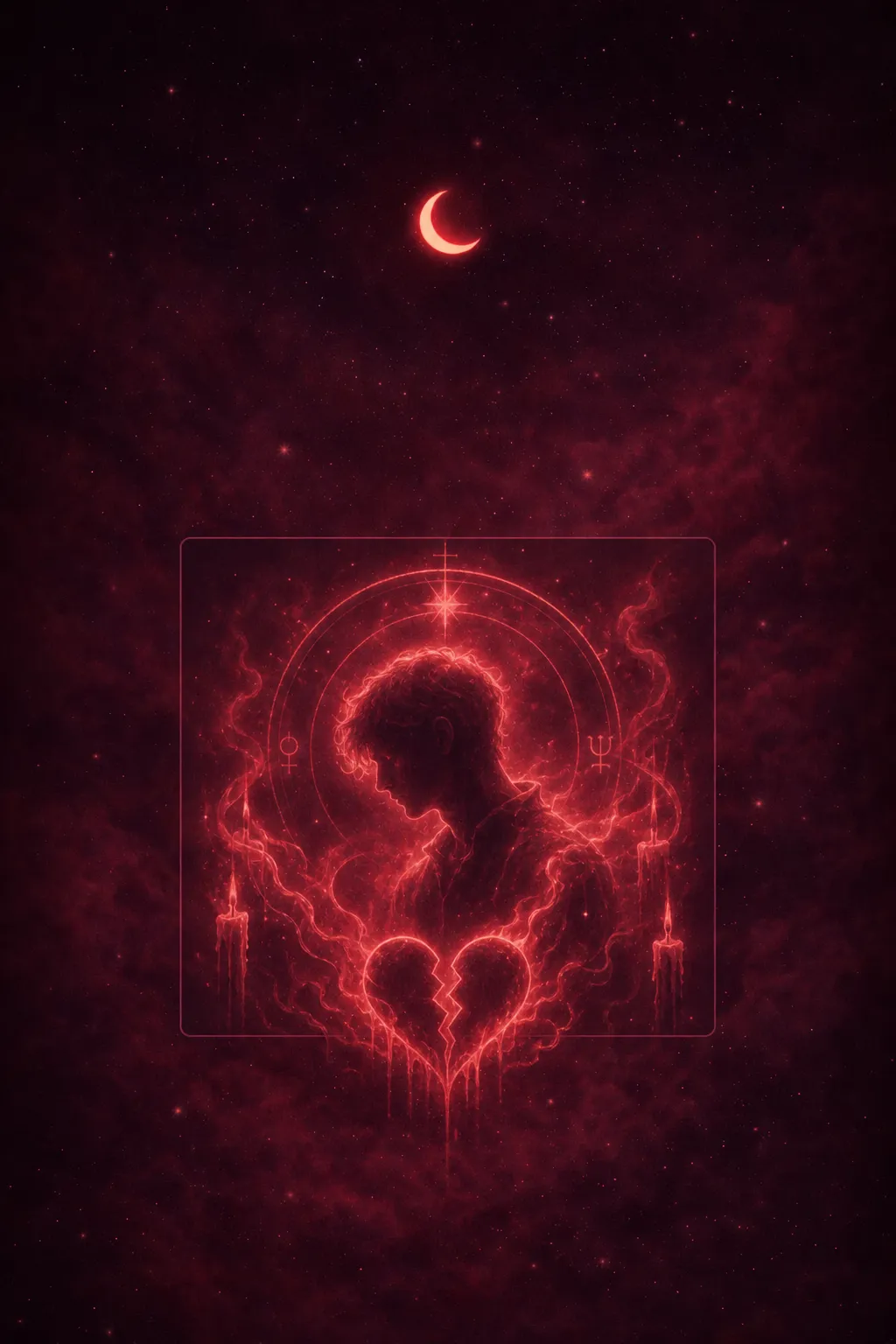

Dreaming about a dead ex means unresolved emotions or unfinished psychological business, as this symbol typically reflects grief, lingering attachment, or a subconscious need for closure rather than a literal message about your former partner.
In under a minute you could read what your exact dream means for you, and see a picture of it. Free.
A dream still on your mind? Get your personal reading.
Describe your dream in a line or two. In seconds you get a reading of your exact dream, a picture drawn from your own words, and every symbol explained.
Free. No sign-up. Takes 10 seconds. Your dream stays private.
0%
Analyzing your dream…
Something went wrong. Please try again in a moment.
Your dreams deserve more than a dictionary
Common Dream Scenarios and What They Mean
The specific details of a dead-ex dream shift its meaning considerably. A few patterns appear most often.
Dreaming that your living ex appears dead
This is rarely a bad omen about them personally. Instead, it signals that the relationship is psychologically finished — your mind is completing the internal detachment, often triggered by a current life change such as a new relationship or a major transition at work.
Was yours a sign? Find out.
Dreaming of a genuinely deceased ex returning to visit or speak
Grief rarely follows a straight line. This scenario reflects continuing-bonds processing — the mind staging the conversation or closure that reality never allowed. Waking with tenderness or sadness is entirely normal here.
Dreaming of attending your ex's funeral or seeing their body
The psyche borrows ritual imagery to mark a formal goodbye, giving emotional weight to an ending that may never have had a proper send-off in waking life.
Dreaming of reconciling with or forgiving an ex who is dying or already dead
This points toward movement away from lingering resentment. The dream is nudging you toward peace rather than replaying old grievances.
Dreaming that your dead ex is calm and communicative
Integration is close to complete. The charged memory is softening into something more neutral — a healthy sign.
Dreaming that you feel responsible for your ex's death
Misplaced guilt about how things ended surfaces here. Modern anxiety about the harm we may have caused others can drive this scenario; it rarely reflects actual wrongdoing.
But what does your version mean?
Dreaming of feeling relief or freedom at your ex's death
This does not signal ill-will. It simply reflects an honest recognition that release from the relationship's hold is welcome and overdue. Across all these variants, the controlling thread is self-knowledge: the dream is less about the other person and more about where you currently stand with your own unfinished emotional business.
What this dream could look like
Tap an image to open it full screen
Example images. Only you can see what you write in Dream Book.
Psychological Meaning of Dreaming About a Dead Ex
From a psychological standpoint, this dream is the subconscious doing active repair work. Dreaming about a dead ex means unresolved emotions are still seeking integration — the mind doesn't simply file a formative relationship away when it ends. Instead, it continues processing through dream states, replaying those feelings until some degree of resolution is reached. Psychologists sometimes call this a continuing-bonds mechanism: the inner world keeps the connection alive just long enough to grieve it properly, particularly when the ex has literally died and no real-world closure was ever possible.
A subtler layer involves identity loss rather than the loss of a person. Inside any significant relationship, you inhabit a version of yourself — a role, a set of habits, a self-image — and when that chapter closes, part of your former self effectively dies alongside it. The dream may be mourning that inner figure as much as the actual person. Through a shadow lens, the ex can also represent disowned traits you projected onto them: qualities you admired, resented, or suppressed that are now asking to be reclaimed.
- Stress reactivation: During high-anxiety periods — a new relationship, a career shift, major life change — old attachment patterns resurface, and the ex becomes a stand-in for unresolved feelings about control and security.
- Ambivalence made visible: Affection, resentment, and relief can coexist in a single dream image, reflecting the emotional complexity the waking mind often refuses to hold all at once.
- Closure signal: Recurring versions of this dream that gradually become calmer often indicate that the psyche is nearing genuine integration — the grief work is progressing.
Every dream you log starts to connect.
Dream Book keeps your dreams in one place and reveals the threads between them over time — your private dream journal. Free to start.


Cultural and Folk Traditions Around Dead-Ex Dreams
In Western folk belief, dreaming of the dead has long carried a sense of visitation — the idea that a deceased person reaches across the threshold to offer comfort, a warning, or unfinished communication. When the figure is a former partner, this tradition can feel especially charged. Many people wake unsettled, half-convinced the dream carried a literal message. Modern culture quietly inherits this superstition even when it rejects it intellectually, which is why a dead-ex dream so often triggers a quick, anxious check of an old social media profile "just to be sure."
Pop psychology has largely reframed that folk instinct: the dream is understood to reflect the dreamer's inner world rather than any prophecy about the ex themselves. Culturally, this shift matters because it hands control back to the dreamer — the image of a dead ex becomes a mirror of where you are emotionally, not a signal about someone else's fate. From a broadly Christian-influenced perspective, the death imagery is more readily read as a closing chapter than as a dark omen, carrying a quiet biblical resonance around letting go and moving forward.
A bad dream isn't a bad sign.
A persistent cultural discomfort also surrounds the dream: waking up to an image of an ex as dead can trigger guilt, as though the mind committed a small moral transgression. Folk tradition and modern anxiety culture both address this, though differently.
- Folk reframe: dreaming of death is seen as symbolic passage, not ill will — an old intuition that softens the guilt.
- Modern reframe: the death image marks closure your waking self hasn't yet acknowledged, a stress response to unfinished emotional business rather than any hidden wish.
- Self-knowledge angle: both readings ultimately encourage the dreamer to ask what part of themselves was tied to that relationship — and what is ready to be released.
Spiritual Meaning of Dreaming About a Dead Ex
Within a broadly Christian framework — still the dominant spiritual lens for many in the United States — a dream featuring a deceased or symbolically dead ex-partner is less an omen than an invitation. Scripture repeatedly calls believers to release what lies behind (Philippians 3:13) and to extend forgiveness as a spiritual discipline rather than an emotional luxury. Seen through that light, the dream may be nudging you toward a peace you have been deferring: not a literal message from the other person, but an inner prompt to surrender lingering bitterness or guilt to God and trust that the chapter is genuinely closed.
Some Christian dreamers do interpret an appearance by a deceased loved one as a form of divine comfort — a reassurance that grief can be released rather than carried indefinitely. Most pastoral guidance, however, cautions against reading such dreams as direct communication from the dead, encouraging instead a posture of prayerful reflection: what unfinished forgiveness work does this image reveal in me?
- Forgiveness prompt: the dream may surface a specific hurt or regret still waiting to be released.
- Grief surrender: recurring imagery often signals that grief is being held tightly rather than handed over.
- Boundary and closure: spiritually, the death symbol can affirm that God-given seasons end — and that accepting an ending is itself an act of faith.
Related Dream Meanings

people
Ex Partner Dream Meaning: What Your Dreams About Former Lovers Reveal
6 min read

nightmares
Death Dream Meaning: Transformation, Loss & Change
5 min read

nightmares
Deceased Loved One Dream: Closure, Messages & Grief
5 min read
people
Dreaming About Children Meaning - Dream Book Interpretation
5 min read

people
What Does It Mean to Dream About a Wedding Ring
5 min read

people
Kissing Dream Meaning: Intimacy, Desire & Connection
5 min read

people
Ex-Girlfriend Dream Meaning: Unresolved Feelings & Desires
5 min read

people
Seeing Jesus Dream Meaning: Hope, Guidance & Faith
5 min read
Practical Takeaways: What You Can Do After This Dream
Waking up shaken by a dead-ex dream is a signal worth acting on, not just analyzing. Rather than letting the unease linger through your morning, treat the dream as useful feedback from your own mind about where emotional loose ends still exist. A few grounded steps can help you move that process forward deliberately instead of waiting for the next dream to do it for you.
- Journal immediately. Write down the mood, not just the plot. Ask yourself: what feeling did I wake up carrying — guilt, sadness, relief, anger? Naming the emotion pinpoints exactly what still needs attention.
- Audit your current stress load. Dead-ex dreams often spike during periods of high anxiety or major change. If one is coinciding with a job shift, a new relationship, or a big decision, the dream may be less about your ex and more about your need for a sense of control and stability right now.
- Consider a closure ritual. Write an unsent letter, delete old message threads you keep re-reading, or simply speak aloud what you never got to say. Symbolic acts give the mind a concrete "done" signal that rumination alone cannot provide.
- Talk to someone. If the dream recurs or leaves you emotionally depleted, a single session with a therapist — or even an honest conversation with a trusted friend — can surface patterns you cannot easily see on your own.
Was yours a sign? Find out.
The core insight is practical: dreaming about a dead ex means unresolved emotions are still asking for your attention. Treating the dream as data rather than disturbance puts you back in the driver's seat of your own emotional life.
Keep the ones that matter close.
The free app saves your most meaningful dreams and reads the signs across them — so a visit or a sign is never lost. Free to start.
People Also Ask
Many spiritual traditions believe the deceased can visit us in dreams as a form of communication. These visitation dreams often feel vivid and peaceful, carrying a sense of closure or guidance. While science attributes them to memory and grief, many people find genuine comfort and meaning in such profound nighttime encounters.
The Bible acknowledges that God can speak through dreams, as seen in Job 33:14-15. While it warns against seeking the dead through occult means, many believers interpret dreams of deceased loved ones as divine messages offering comfort or guidance. Discernment and prayer are encouraged when reflecting on such spiritually charged experiences.
Spiritually, dreaming of a deceased ex often signals unfinished emotional business, unresolved grief, or a need for inner healing. It may represent a part of yourself tied to that relationship. Many traditions view it as the soul seeking closure, forgiveness, or an opportunity to release old emotional wounds and finally move forward.
This popular belief lacks scientific support. Dreams about an ex typically reflect your own unresolved feelings, lingering memories, or emotional patterns rather than a telepathic signal. Your subconscious mind naturally revisits significant relationships during sleep, especially during periods of stress, loneliness, or major life transitions that echo your past experiences.
Curious what your dream would look like?