
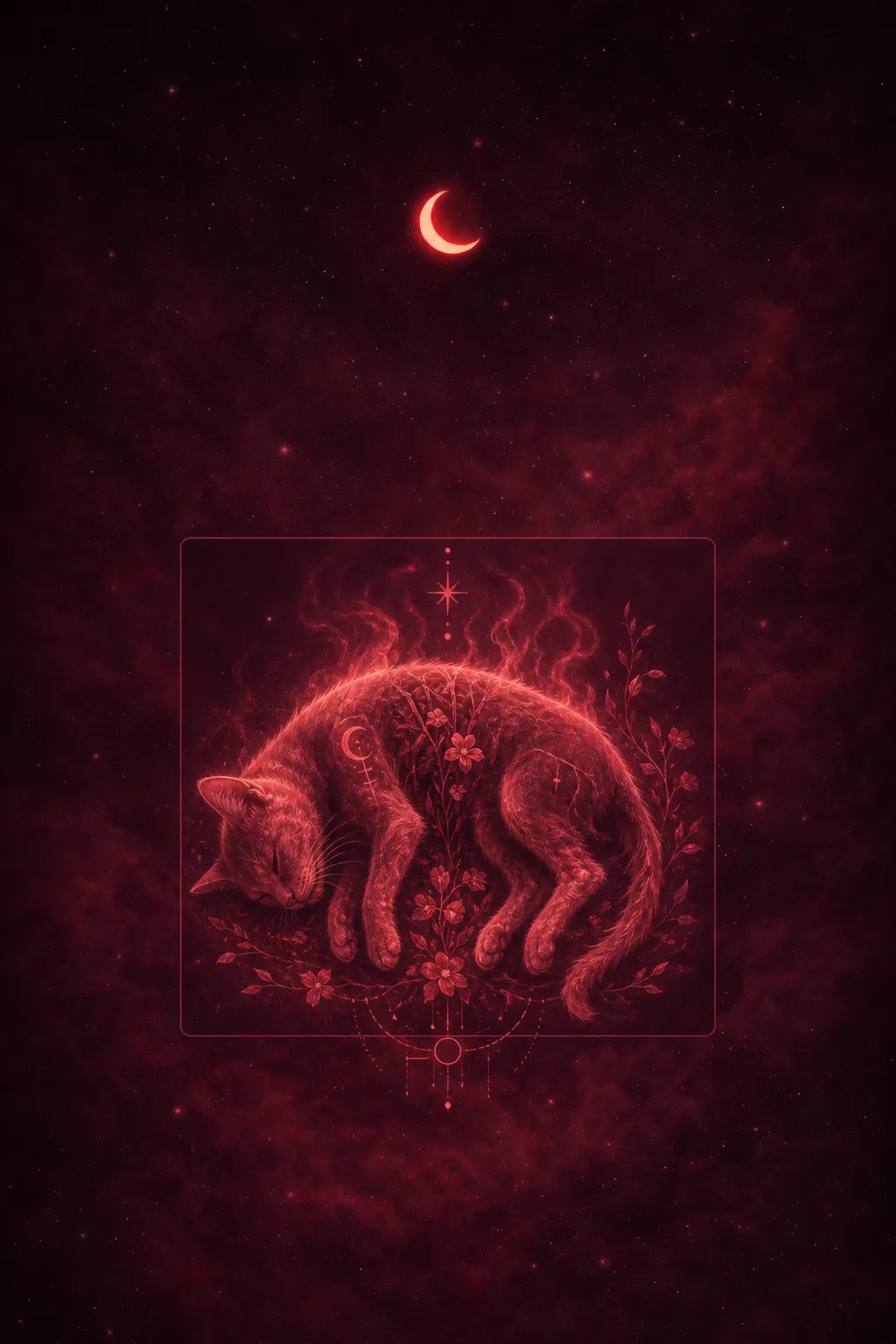

Dreaming about a dead cat typically signals the end of independence, a loss of feminine intuition, or the closing of a chapter in your life, suggesting that something once wild and free within you has faded, urging you to reflect on neglected instincts, severed connections, or personal boundaries that may need to be rebuilt or released.
In under a minute you could read what your exact dream means for you, and see a picture of it. Free.
A dream still on your mind? Get your personal reading.
Describe your dream in a line or two. In seconds you get a reading of your exact dream, a picture drawn from your own words, and every symbol explained.
Free. No sign-up. Takes 10 seconds. Your dream stays private.
0%
Analyzing your dream…
Something went wrong. Please try again in a moment.
Your dreams deserve more than a dictionary
Common Dream Scenarios and What They Mean
The context surrounding a dead cat in your dream shifts the meaning considerably. A single scenario can point toward buried grief, control anxiety, or an unexpected turning point — so the details matter.
Dreaming of finding a dead cat unexpectedly
You are likely confronting an ending that has already happened, one you have not yet fully processed. An instinct or a self-reliant habit may have quietly faded out of your life while you were busy elsewhere.
Was yours a sign? Find out.
Dreaming of your own or a familiar cat found dead
This often reflects anticipatory anxiety about a real pet's mortality, or displaced fear of losing someone close. Caretaking guilt tends to surface here — a nagging sense that you should have done more.
Dreaming of a dead cat that revives or comes back to life
A genuinely hopeful sign. A part of yourself you believed lost — your independence, your gut instinct, your confidence — is reasserting itself after a difficult low period.
Dreaming that you kill or cause the cat's death
The dream is turning your attention inward. You may be suppressing your own autonomy to meet external demands, and a layer of self-directed guilt is building as a result.
Dreaming of multiple dead cats
An image of emotional burnout. Small, neglected losses have accumulated to the point of overwhelm, and the dream is pressing you to acknowledge them rather than keep pushing forward.
But what does your version mean?
Dreaming of a decayed or rotting cat
Something old and unresolved has been avoided far too long. The imagery signals shame alongside grief — a reluctance to look at an ending you have been circling around for months or even years.
Dreaming of burying or disposing of the dead cat
This is the most constructive scenario. You are actively doing closure work, showing a readiness to integrate the loss and move forward rather than remain stuck in it.
Across all of these, the modern-anxiety thread is consistent: dead cat dreams tend to spike during periods of transition, overcommitment, or when life feels outside your control. Recognizing which specific scenario appeared is a useful first step toward understanding what part of yourself — or what unfinished ending — is asking for your attention.
What a dream about a dead cat could look like
Tap an image to open it full screen
Example images. Only you can see what you write in Dream Book.
Psychological Reading: Instinct, Grief, and the Loss of Self-Trust
In mainstream psychological terms, a cat in dreams typically represents autonomy, intuition, and the part of the self that operates independently — the inner voice that knows without being told. When that cat appears dead, the subconscious may be signaling that this self-reliant dimension has gone quiet: instincts overridden, personal boundaries eroded, or inner confidence quietly abandoned under the weight of daily pressure. Modern life asks people to be endlessly rational and productive, which can slowly suffocate the more instinctive, emotionally intelligent side of the psyche — and a dead cat is one way the dreaming mind announces that cost.
The emotional undertow frequently involves guilt. The neglect motif — a cat that needed care and did not receive it — maps onto relationships, creative ambitions, or personal values that were sidelined and eventually died without ceremony. From a broadly Jungian perspective, this is the shadow asserting itself: what you dismissed is now impossible to ignore. A Christian-influenced reading might frame this as a conviction moment, a quiet prompting to examine where you have been a poor steward of your own gifts or responsibilities.
- Loss of self-trust: Suppressed intuition that has stopped speaking clearly.
- Displaced mourning: Grief for a relationship, identity, or life phase wearing the symbol of a dead animal.
- Control anxiety: Confronting an outcome that is already irreversible — the powerlessness feels unbearable.
- Transformative upside: An ending fully acknowledged can free energy that was locked in denial or avoidance.
Every dream you log starts to connect.
Dream Book keeps your dreams in one place and reveals the threads between them over time — your private dream journal. Free to start.


Cultural and Traditional Readings of the Dead Cat Dream
Across Western folk tradition, cats have long occupied an uneasy symbolic space — simultaneously revered as guardians and treated with suspicion. In medieval European belief, a dead cat was sometimes read as a broken protective charm: the household's spiritual watchdog had failed, leaving the family exposed to misfortune. That unease carried forward into American folk culture, where cats — especially black ones — remain potent omens. Dreaming of one found dead does not simply echo superstition; it taps into a deep cultural shorthand for lost protection and a world slightly out of control.
Within US Christian folk interpretation, the image can carry a quieter moral weight. Rather than pure supernatural dread, it prompts a question of stewardship: what was entrusted to your care that you allowed to wither? This framing sidesteps the purely supernatural and lands closer to personal accountability — a theme that resonates across denominational lines without requiring a strictly biblical reading.
A bad dream isn't a bad sign.
- Celtic tradition viewed cats as liminal creatures guarding boundaries between the living and the dead; a dead cat in a dream could signal that a boundary — emotional, relational, or spiritual — has dissolved.
- American folk belief links the motif broadly to broken luck or a protective force that has run its course.
- Modern anxiety culture reframes these older symbols: the dead cat becomes a vivid image of irreversible change — something you cannot fix, rewind, or manage your way out of, forcing an uncomfortable reckoning with powerlessness.
Spiritual Meaning: Release, Trust, and the Call to Let Go
From a spiritual standpoint, a dead cat in a dream is less an omen than an invitation. Within a broadly Christian framework, death imagery in dreams is often read as a prompt toward surrender — a reminder that clinging to something already gone works against faith. Ecclesiastes 3:1–2 frames every ending as part of a larger, purposeful rhythm: "a time to be born and a time to die." In that light, the dream may be nudging you to release a form of self-reliance, a habit, or an identity that has quietly run its course, and to trust that the ending is not abandonment but transition.
Anglo folk tradition does carry a loose superstition that a dead cat signals bad luck ahead, but it is worth holding that idea lightly — as folklore rather than prophecy. Spiritually, the more useful question is what the cat represented in your inner life: your independence, your instincts, your sense of quiet confidence. Its death in the dream may mark a season where those qualities feel dormant rather than truly gone, calling you toward honest self-examination rather than dread.
- A call to release: Something you have been holding onto past its natural end may need to be consciously laid down.
- A test of trust: Modern anxiety around control can manifest here — the spiritual challenge is accepting outcomes that are no longer in your hands.
- Dormancy, not permanent loss: Many spiritual traditions distinguish between an ending and destruction; this image may mark a necessary rest before renewal.
Related Dream Meanings
nightmares
Dying Dream Meaning: Transformation, Fear & Change
5 min read
nightmares
Someone Dying Dream Meaning: Change & Fear of Loss
5 min read
nightmares
Dead Person Dream Meaning: Closure & Unresolved Loss
5 min read
nightmares
Dead Relative: Meaning and Interpretation
5 min read
nightmares
Dead Mother: Meaning and Interpretation
5 min read
nightmares
Being Shot Dream Meaning: Vulnerability, Fear & Conflict
5 min read
nightmares
Fighting Dream Meaning: Conflict, Power & Stress
5 min read
nightmares
Ghosts Dream Meaning: Unresolved Emotions & the Past
5 min read
Practical Takeaways: What You Can Actually Do With This Dream
Rather than letting the image linger as free-floating unease, treat it as a prompt for honest self-audit. Ask yourself what area of life you have been running on autopilot — ignoring a gut feeling, postponing a hard conversation, or quietly accepting a situation that no longer fits. The dead cat is your mind flagging something that has already ended or is draining away; the practical work is naming it clearly before anxiety fills the gap with worse stories.
- Journal the neglect angle. Write down one thing you know you have been avoiding — a relationship dynamic, a career decision, a boundary you stopped enforcing. Naming it breaks the loop the dream is stuck in.
- Check your control triggers. If stress has been high lately, ask whether you are expending energy trying to reverse something genuinely irreversible. Redirecting that effort toward what you can influence is the practical release the dream is pointing toward.
- Allow a small act of closure. Whether that is a letter you do not send, a conversation you do have, or simply acknowledging out loud that something is over, concrete closure tends to stop the image from recurring.
- Monitor the dream over a week. If the imagery shifts — the cat moves, changes, or disappears — your subconscious is likely processing the ending. If it repeats without change, the underlying issue probably still needs direct attention while you are awake.
Was yours a sign? Find out.
The dream is uncomfortable precisely because it is useful: it is pressing you toward self-honesty you may have been deferring.
Keep the ones that matter close.
The free app saves your most meaningful dreams and reads the signs across them — so a visit or a sign is never lost. Free to start.
People Also Ask
Dreaming of a deceased cat often reflects your grief and longing for a beloved companion. Many people interpret these visits as a comforting sign that their pet's spirit is at peace. It may also signal unresolved emotions around loss, encouraging you to process your feelings and find closure.
Spiritually, a dead cat in a dream can represent the end of a cycle, transformation, or the need to release something no longer serving you. Cats are linked to intuition and independence, so their death in a dream may suggest a loss of personal freedom or a call to trust your inner guidance more deeply.
Cats in dreams generally symbolize intuition, mystery, feminine energy, and independence. Seeing one spiritually points to heightened awareness or a need to trust your instincts. Some traditions view cats as guardians between the physical and spiritual worlds, suggesting your subconscious is urging you to pay attention to hidden truths around you.
Many people believe deceased pets genuinely visit them through dreams as a form of spiritual connection or farewell. Whether viewed literally or symbolically, these dreams often bring comfort and a sense of continued bond. Psychologists suggest they reflect deep emotional ties, while spiritual traditions consider them real soul-to-soul communications from beyond.
Curious what your dream would look like?