
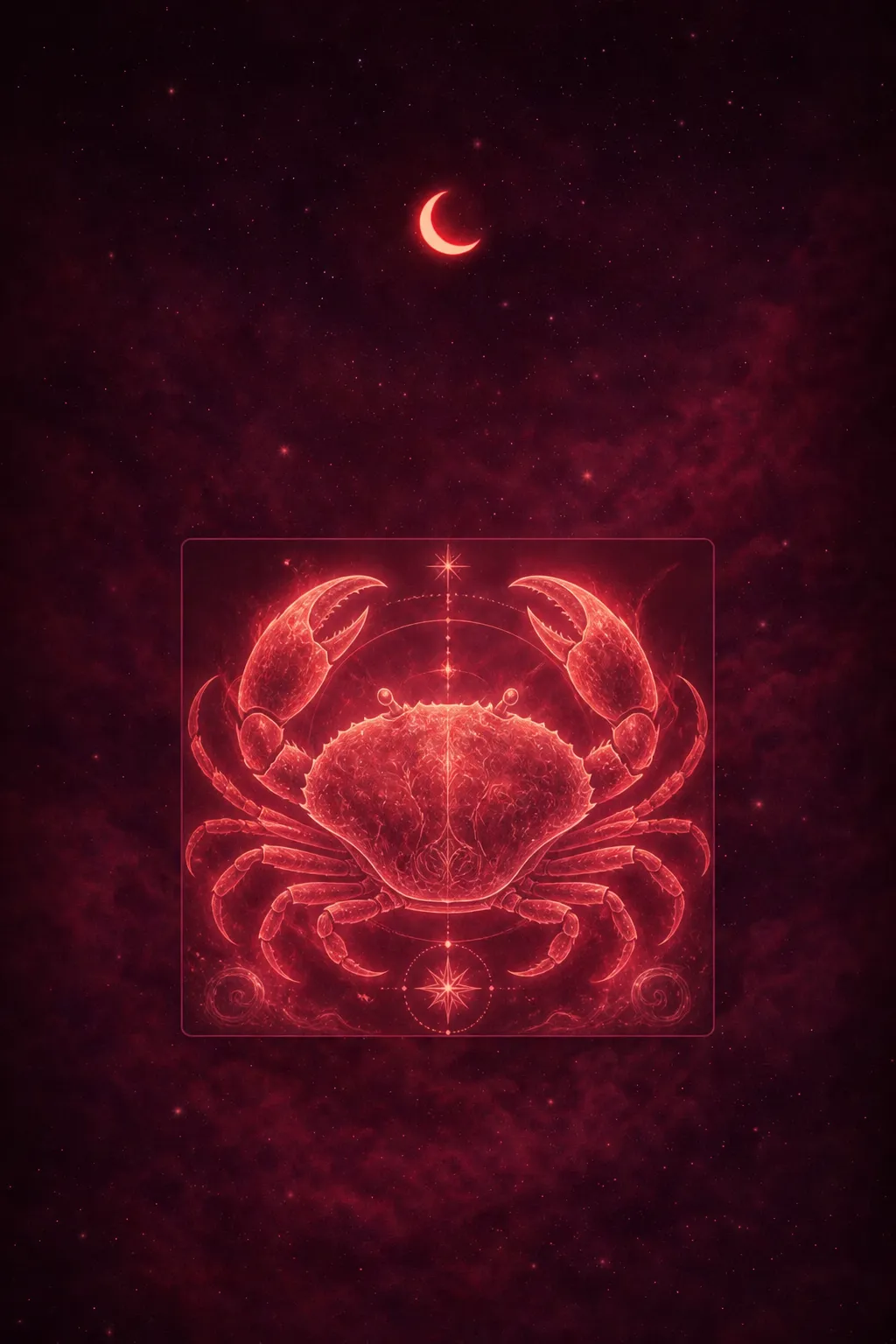

Dreaming about crabs typically symbolizes tenacity, emotional self-protection, and a tendency to approach problems indirectly, reflecting situations in your waking life where you may be holding on too tightly, retreating into your shell when feeling vulnerable, or navigating challenges with a sideways, cautious strategy rather than confronting them head-on.
In under a minute you could read what your exact dream means for you, and see a picture of it. Free.
You read what it can mean. But what did yours mean?
General meanings stop here. In the free app, tell Dream Book your exact dream and get a reading that actually makes sense for you.


Common Crab Dream Scenarios and What They Mean
The scenario that worries dreamers most is being pinched or gripped by a crab. That sharp, clamping sensation usually points to a small but stinging hurt — a cutting remark from someone close, a boundary that's been crossed, or an anxiety you simply can't shake loose. Notice what the claw won't release: that detail often names the worry holding you. A swarm or bucket of crabs carries a related but heavier charge — accumulating demands, petty conflicts, or the classic "crabs in a bucket" dynamic where the people around you pull against your progress. Modern life serves this scenario often, and the dream is essentially a stress meter showing that minor pressures have reached critical mass. At Dream Book we explore this symbol in depth.
- Crabs on the beach or shoreline: Something guarded or emotionally murky is moving from the unconscious into awareness — emotions linked to water are surfacing whether you're ready or not.
- Eating or cooking crab: Reward after effort; cracking a tough shell to reach something nourishing. Some dreamers with a faith background also sense an undercurrent of ambivalence around this image.
- Watching a crab scuttle sideways: A mirror for indirect behavior — in yourself or someone else. Are you approaching a problem head-on, or circling it diplomatically?
- A giant or monstrous crab: An outsized fear wearing heavy armor — a person or situation that feels cold, defended, and impossible to reach.
- A crab shedding its shell: Temporary exposure in service of real growth; the dream asks whether you can tolerate vulnerability long enough to change.
What this dream could look like
Tap an image to open it full screen
Example images. Only you can see what you write in Dream Book.
What Your Psyche Is Saying About Crabs
From a psychological standpoint, dreaming of crabs is a vivid portrait of the defenses we build around our most vulnerable feelings. The hard shell maps neatly onto what mainstream psychology calls ego armor — a protective layer erected when life feels threatening or unpredictable. If modern stress is already running high, the unconscious may summon a crab precisely because you have been guarding your emotional core so tightly that genuine connection has become difficult. The creature's notorious sideways walk reinforces this reading: rather than confronting a difficult conversation or decision head-on, part of you is circling it obliquely, hoping to arrive at resolution without full exposure.
But what does your version mean?
The clinging quality of a crab's pincers speaks to the control axis. Psychologically, gripping imagery in dreams often surfaces when a dreamer struggles to release resentment, a relationship dynamic, or a rigid self-image. There is also a straightforward affective signal worth noting — the colloquial word "crabby" exists for a reason. Chronic irritability, snapping at people you care about, and a short emotional fuse can all manifest as crab imagery, the mind externalizing a mood state you may not have consciously acknowledged. Dreams involving water alongside crabs deepen this layer, suggesting that buried emotions are pressing toward the surface.
- Shell as defense mechanism: Ask what vulnerability you are working hard not to show in waking life.
- Sideways movement: Consider whether you are avoiding a direct conversation out of fear of rejection or conflict.
- Clinging pincers: Reflect on what — a grudge, a habit, a relationship — you are unwilling to release even when holding on is causing harm.
- Irritability signal: Notice whether suppressed frustration or stress is finding no healthy outlet in your daily routine.
General meanings end here. Read your own dream.
Describe your dream in a line or two. In seconds you get a reading of your exact dream, a picture drawn from your own words, and every symbol explained.
Free. No sign-up. Takes 10 seconds. Your dream stays private.
0%
Analyzing your dream…
Something went wrong. Please try again in a moment.
Your dreams deserve more than a dictionary
Cultural Traditions and Folk Beliefs About Crabs in Dreams
The most immediate cultural lens many English-speaking dreamers bring to a crab dream is astrological. In Western tradition, the crab is the symbol of Cancer — the zodiac sign associated with home, family loyalty, shifting moods, and fierce protectiveness. Dreaming of crabs can therefore carry a folk intuition that you — or someone close to you — is retreating into that classic Cancerian shell: emotionally sensitive beneath a guarded surface, clinging to familiar comfort rather than risking exposure. This reading dovetails neatly with modern-anxiety concerns about control: when daily life feels unpredictable, the dream-crab may be signaling an urge to pull inward and fortress up.
Was yours a sign? Find out.
English idiom deepens the picture considerably. To call someone "crabby" is to flag irritability and prickliness — a social shell as much as a physical one. More pointed is the phrase crabs in a bucket, a widely recognized folk metaphor for mutual sabotage: the idea that those around you may drag you back down the moment you try to rise. If your dream featured multiple crabs, that collective image may be tapping into an anxiety about your social environment — whether the people nearest to you genuinely support your growth or unconsciously obstruct it. Paired with the crab's famous sideways movement, this cultural layer suggests that reaching your goals may require navigating emotionally turbulent waters indirectly rather than head-on.
On a minor but worth-noting edge, the colloquial slang use of "crabs" for pubic lice occasionally gives a dream its tinge of embarrassment or shame — particularly if the dream carries a distinctly uncomfortable or humiliating atmosphere. This reading is rare, but it is worth sitting with honestly, since self-knowledge depends on acknowledging even the less flattering signals our minds send us.
The Spiritual Meaning of Crabs in Dreams
From a spiritual standpoint, the crab's most telling moment is not when it is armored and claws-out, but when it molts — shedding its shell entirely and standing exposed before growing a new, stronger one. Many contemplative traditions read this cycle as a picture of genuine spiritual growth: renewal is impossible without a season of raw vulnerability. If anxiety about being exposed or controlled is already weighing on you in waking life, a crab dream may be a quiet prompt to ask whether the defenses you have built are still serving your soul or quietly imprisoning it.
For dreamers who approach life through a Christian framework, there is a faint but worth-noting thread in Levitical law, where shellfish — including crabs — are listed among creatures considered unclean (Leviticus 11:9–12, which restricts sea creatures lacking fins and scales). Held lightly, this can color a crab dream as a nudge toward discernment: is something in your current situation — a relationship, a habit, a hidden fear — an influence you would do well to examine more honestly? The image is suggestive, not prescriptive, and should not be over-read.
A bad dream isn't a bad sign.
Across broader spiritual reflection, the crab's sideways movement echoes the way many people approach emotionally deep waters — circling a truth rather than facing it directly. Spiritually, the invitation the dream extends is toward greater self-knowledge: to notice where you grip tightly out of fear rather than genuine care, and to trust that releasing control, even briefly, can be the first step toward real inner growth.
Related Dream Meanings

common dreams
Water Dream Meaning: Emotions, Intuition & Growth
5 min read

animals
Whales Dream Meaning: Emotion, Strength & Intuition
5 min read
animals
Crow Dream Meaning: Transformation & the Unknown
5 min read

animals
Owl Dream Meaning: Wisdom, Intuition & Change
5 min read

animals
White Cat Dream Meaning: Purity, Intuition & Independence
5 min read
animals
Turtles Dream Meaning: Patience, Wisdom & Healing
5 min read

animals
Eagle Dream Meaning: What It Means When You Dream of Eagles
6 min read
animals
Dolphins Dream Meaning: Joy, Freedom & Healing
5 min read
Practical Takeaways: Working With Your Crab Dream
Because crab dreams center on guarded vulnerability and indirect movement, the most useful first step is honest self-audit. Ask yourself where, right now, you are approaching a goal sideways — circling it rather than moving forward — and whether that caution is genuinely protective or quietly holding you back. Modern life rewards busyness and deflection, which makes this kind of sideways drift easy to overlook until a dream flags it.
- Map your armor. Identify one relationship or situation where you are keeping your shell firmly on. Is that boundary necessary, or has it outlived its purpose? Even naming it privately can loosen its grip.
- Check what's gripping you. If the dream carried a sense of being clamped or stuck, write down the specific worry or resentment that feels hardest to release. Journaling it externalizes the pressure and makes it easier to address in waking life.
- Practice one direct move. Choose a conversation or decision you have been approaching indirectly and commit to one straightforward action this week — a clear question asked, a boundary stated plainly, a decision made.
- Notice water in the dream. Crabs rarely appear far from water in dreams, which often signals emotional undercurrents worth paying attention to alongside the crab's defensive message.
But what does your version mean?
Small, consistent steps matter more here than dramatic overhauls. The crab's lesson is not that protection is wrong, but that clinging too long to any one shell — whether emotional guardedness or a stalled plan — eventually limits growth rather than ensuring it.
One dream is never the whole picture.
The free app remembers your dreams, draws them, and connects the threads over time — so the next one means even more. Free to start.
People Also Ask
Spiritually, crabs symbolize protection, resilience, and emotional self-defense. Their hard shell represents guarding your inner feelings, while their sideways movement suggests indirect approaches to life's challenges. Many traditions also associate crabs with cycles, intuition, and the ability to navigate difficult emotional waters with patience and tenacity.
In the Bible, crabs are considered unclean creatures under Mosaic Law. Leviticus 11:10 states that sea creatures lacking fins and scales are detestable. While this is a dietary law rather than a symbolic judgment, dreaming of crabs through a biblical lens may prompt reflection on purity, boundaries, or things spiritually off-limits in your life.
In many cultures, seeing a crab is considered fortunate, symbolizing perseverance, abundance, and protection. Asian traditions often view crabs as omens of prosperity and success. However, context matters — a threatening or biting crab in a dream may signal caution, while a calm crab generally carries positive, lucky connotations tied to resilience and reward.
Biblically, dreaming of crabs may represent spiritual uncleanliness, hidden dangers, or situations requiring discernment. Since crabs were labeled unclean in scripture, such a dream could warn against engaging with corrupt influences. Alternatively, the crab's protective shell might symbolize God's shelter, urging you to seek divine protection during emotionally vulnerable seasons of life.
Curious what your dream would look like?