
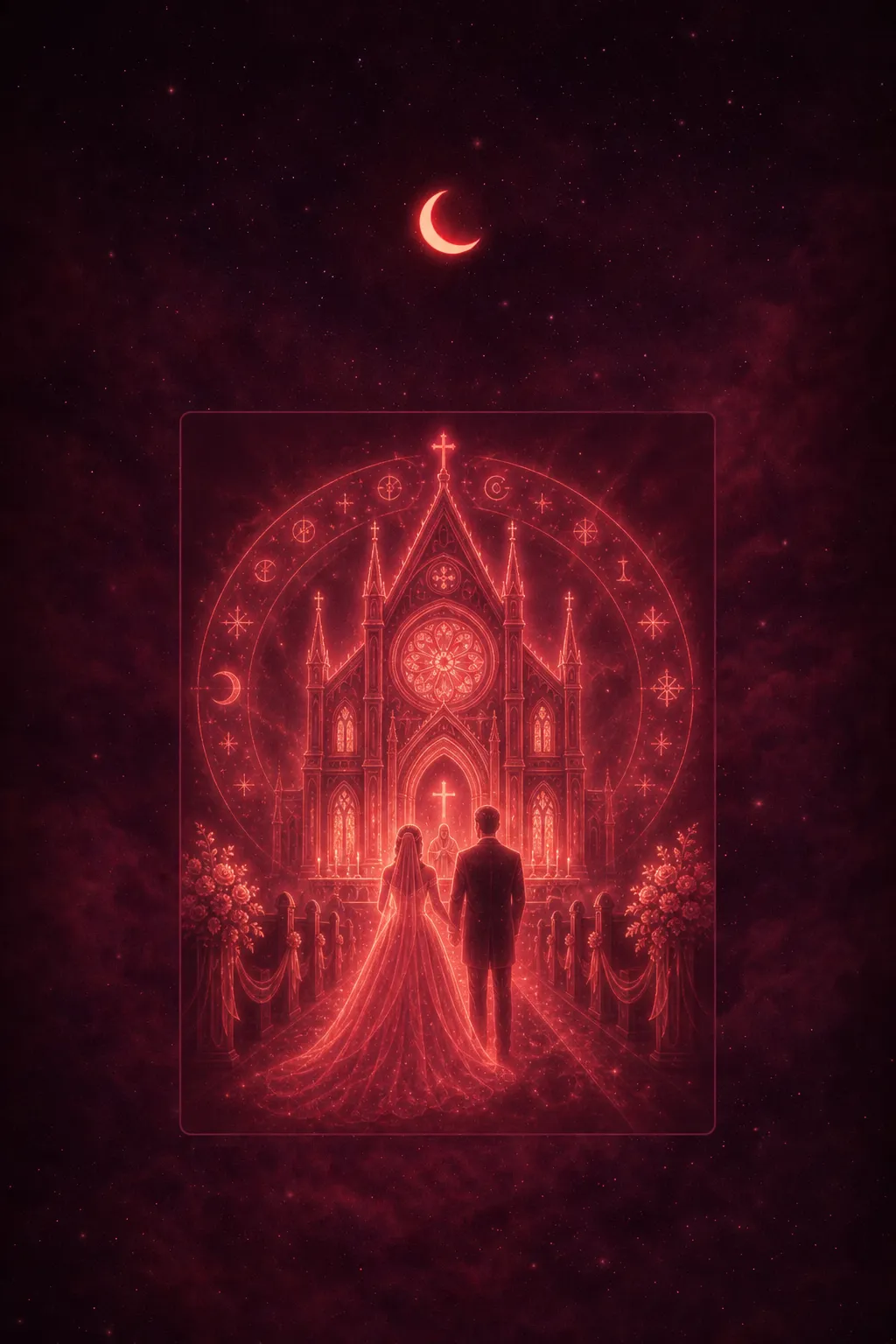

Dreaming about a church wedding typically symbolizes a deep longing for commitment, spiritual union, or a significant life transition, reflecting your subconscious desire for lasting bonds, personal growth, or a sacred promise—whether romantic or otherwise—that aligns your values with your sense of purpose and belonging.
In under a minute you could read what your exact dream means for you, and see a picture of it. Free.
A dream still on your mind? Get your personal reading.
Describe your dream in a line or two. In seconds you get a reading of your exact dream, a picture drawn from your own words, and every symbol explained.
Free. No sign-up. Takes 10 seconds. Your dream stays private.
0%
Analyzing your dream…
Something went wrong. Please try again in a moment.
Your dreams deserve more than a dictionary
Common church wedding dream scenarios and what they mean
The setting and role you occupy in the dream shift its meaning considerably — whether you are the one taking vows or simply watching from a pew makes all the difference.
Dreaming of your own church wedding going smoothly
A joyful, seamless ceremony points to genuine internal alignment — competing desires or values are settling into a workable whole. Psychologically, this reflects readiness to commit to a path, person, or version of yourself. The sacred setting adds a sense of sanction: some part of you feels this choice is not only right but blessed.
But what does your version mean?
Dreaming about getting married in church but something goes wrong
Missed cues, the wrong partner at the altar, or a ceremony that simply cannot proceed are classic anxiety dreams surfacing around control and change. They rarely predict disaster; instead they spotlight real-world doubt about a binding decision — a contract, a relationship, a career pivot — and the fear of public judgment if things unravel.
Dreaming of attending a church wedding as a guest
Watching someone else exchange vows can stir quiet self-appraisal. You may be measuring your own relationship or life stage against theirs, processing mild longing, or simply acknowledging a significant transition happening in your social circle. Pay attention to how you feel in the pew — warmth signals support; envy signals unmet desire.
Dreaming of marrying a stranger in a church
An unfamiliar partner dressed for the altar often represents an undeveloped side of yourself — a talent, belief, or way of living you have not yet claimed. The church framing gives the encounter weight: this is no casual meeting but a commitment to something new forming just outside your conscious plan.
Dreaming of being left at the altar or running away yourself
Both sides of this scenario speak to ambivalence. Being jilted maps onto fear of abandonment; fleeing maps onto your own avoidance of obligation. Either way, the church as a site of solemn promise amplifies the stakes, making the escape or rejection feel deeply public and hard to shake on waking.
Was yours a sign? Find out.
Dreaming of a wedding in an empty or ruined church
When the pews are bare or the walls are crumbling, the dream is pointing at isolation within a significant commitment — a sense that a decision lacks support, witness, or solid foundation. It can also reflect eroded trust in an institution, a relationship, or even your own faith that a particular path will hold.
What this dream could look like
Tap an image to open it full screen
Example images. Only you can see what you write in Dream Book.
What Your Subconscious Is Really Saying
From a psychological standpoint, dreaming of a church wedding taps into the psyche's drive toward integration — the ongoing, often uncomfortable work of reconciling opposing forces within yourself. The sacred setting amplifies the stakes: your subconscious is not just staging a romantic scene but staging a binding commitment, signaling that some inner negotiation has reached a decisive point. Jung would frame this as the union of opposing aspects of the self, yet you don't need to speak the language of archetypes to feel what the dream is doing — it's asking whether you are truly ready to become the next version of yourself.
Modern anxiety plays a significant role here. In an era defined by pressure to have everything figured out — career, relationships, identity — a church wedding dream can surface when real-life decisions feel irreversible or overwhelming. The church setting specifically adds the weight of public accountability: it isn't just a private choice, it's one witnessed, recorded, and blessed. Dreaming of a wedding dress or ceremony gown alongside the church can deepen this sense of performance anxiety, where the fear of being seen making the wrong choice crowds out genuine desire.
- Commitment threshold: a signal that a major decision — not necessarily romantic — is pressing for resolution.
- Control anxiety: the formal, structured ritual mirrors a desire to manage life's unpredictability through ceremony and social sanction.
- Identity transition: the dream marks a psychological crossing from one phase of selfhood to another, asking whether you're willing to leave an older identity at the altar.
Every dream you log starts to connect.
Dream Book keeps your dreams in one place and reveals the threads between them over time — your private dream journal. Free to start.


Cultural Traditions and Folk Beliefs Around Church Wedding Dreams
Across Western folk tradition, dreaming of a church wedding has long been treated as a significant omen — not merely romantic, but civic and spiritual. In older Anglo-American belief, such a dream signaled that a major covenant was approaching in waking life, whether a marriage, a formal agreement, or a solemn promise that would reshape the dreamer's social identity. The church building itself carried the weight of community witness: vows made before a congregation were understood as binding in a way that private intentions simply were not. Folk wisdom therefore read this dream as the psyche rehearsing — or bracing for — a moment of public accountability.
Within US Christian culture specifically, a church wedding dream can carry a scriptural undertone: the marriage covenant echoes the biblical imagery of covenant relationship, fidelity, and mutual obligation. Yet this reading sits alongside a very modern anxiety — the fear of locking yourself into a path before you feel ready. Contemporary dream lore, shaped by self-help culture and pop psychology, tends to frame the sacred church setting as a symbol of higher standards being applied to your choices: the dream is asking whether you have genuinely examined a commitment or simply stumbled into it under social pressure.
A bad dream isn't a bad sign.
- Victorian folk belief: dreaming of attending another's church wedding was considered a lucky sign of forthcoming good news in your own household.
- Modern anxiety angle: recurring church wedding dreams often surface during periods of major life decisions — career pivots, relocations, or relationship milestones — reflecting the psyche's need to feel a sense of control before committing.
- Self-knowledge tradition: folk interpreters consistently advised that the emotional tone of the ceremony mattered most; dread during the vows pointed to unresolved doubts, while calm joy signaled inner readiness.
The Spiritual Significance of a Church Wedding Dream
Within a Christian spiritual frame, the church setting in a dream is rarely accidental — it signals that your subconscious is weighing something as sacred and binding, not merely practical. Scripture grounds this imagery deeply: Genesis 2:24 speaks of two becoming one flesh, while Ephesians 5:31–32 frames marriage as a profound mystery pointing beyond itself. When that imagery surfaces in a dream, many believers intuitively sense they are being asked to examine not just a relationship, but a covenant — a promise made before something greater than themselves. Revelation 19:7's vision of the marriage of the Lamb adds an eschatological layer, suggesting that union and wholeness carry spiritual weight that transcends any single human bond.
For modern dreamers navigating anxiety about commitment or major life transitions, this spiritual dimension can feel either reassuring or intensifying. Dreaming of standing inside a church at an altar may surface when you sense a decision demands more than logic — when you are searching for a sense of divine sanction before you fully surrender control. That longing for a higher witness to your choices is itself spiritually significant, pointing to a desire for your commitments to be rooted in something lasting rather than circumstantial.
- Covenant anxiety: The dream may reflect inner tension about whether you are truly ready to honor a binding promise — to another person or to yourself.
- Spiritual integration: The sacred setting can signal a call to align your outer choices with your deeper, sincerely held values.
- Divine witness: The presence of the church as a space may represent a need for your commitments to feel morally grounded, not just emotionally driven.
Related Dream Meanings
people
Church Dream Meaning: Spirituality, Guidance & Belief
5 min read
people
What Does Dreaming About a Wedding Dress Mean? Dream Interpretation
5 min read
people
Dreaming About Dead Ex Meaning: What It Reveals About You
5 min read
people
Why Do People Ghost: Meaning and Interpretation
5 min read

people
What Does It Mean When You See Your Guardian Angel in a Dream
5 min read

people
Dreaming of Wearing a Crown: Meaning and Interpretation
6 min read
people
Cross Dream Meaning: Faith, Sacrifice & Crossroads
5 min read
people
Bible Dream Meaning: Spiritual Guidance & Inner Truth
5 min read
Practical Takeaways: What to Do After This Dream
A church wedding dream is rarely just romantic noise — it tends to surface when a real decision is pressing on you, even one you haven't fully acknowledged yet. Before the imagery fades, take a few minutes to write down the emotional tone: were you relieved, trapped, eager, or numb at the altar? That gut feeling is often more honest than your waking rationalizations, and it can point directly to how you actually feel about a commitment you're weighing — a relationship milestone, a career contract, or any binding agreement demanding your signature.
If anxiety dominated the dream, treat it as a signal to slow down rather than a verdict to abandon ship. Modern life tends to rush people through major thresholds, and the subconscious pushes back. Consider where you feel pressured to perform readiness you don't genuinely feel. Reclaiming some control might be as simple as naming one concrete step you can take — or one conversation you've been avoiding — before locking anything in. If you dream of a wedding dress alongside the church setting, pay attention to whether it fits: that detail often mirrors how comfortably a role or identity is sitting with you right now.
But what does your version mean?
- Journal the emotional tone immediately — relief or dread tells you more than the plot does.
- Identify the real-world commitment the dream may be rehearsing or questioning.
- Check for external pressure — are you rushing a decision because others expect it?
- Have the deferred conversation — with a partner, a mentor, or yourself in writing.
- Revisit your core values before finalizing any binding choice that's been weighing on you.
One dream is never the whole picture.
The free app remembers your dreams, draws them, and connects the threads over time — so the next one means even more. Free to start.
People Also Ask
Dreaming of a church wedding often symbolizes commitment, new beginnings, and a desire for spiritual or emotional union. It can reflect your hopes for lasting love, a major life transition, or a need to honor sacred promises. The religious setting adds themes of divine blessing and deep personal values.
Not necessarily. Dreams rarely predict literal events. A church wedding in a dream more often represents an inner commitment — to a person, a goal, or a new phase of life. It may reflect readiness for change rather than an imminent proposal or ceremony in waking life.
Watching someone else marry in a church suggests you may be witnessing or supporting a major change in your social circle. It can also mirror feelings of longing, joy, or even envy around commitment and love. Consider your emotions during the dream for the clearest personal meaning.
If you are already married, dreaming of a church wedding often signals a desire to renew your bond or revisit the early promises of your relationship. It may highlight gratitude, a wish to deepen intimacy, or a subconscious reflection on whether your current commitments still align with your values.
Curious what your dream would look like?