
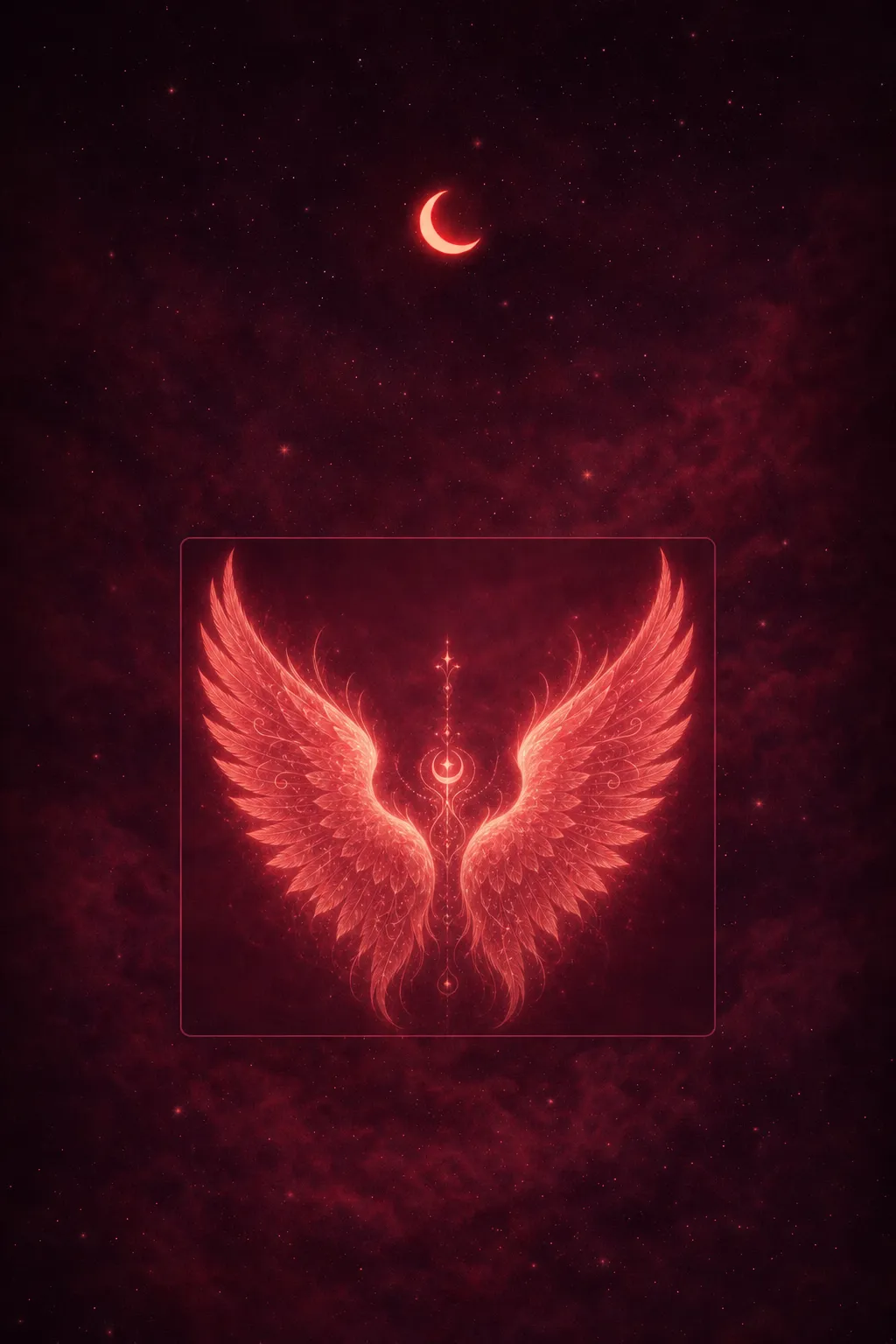

Dreaming about growing wings symbolizes a powerful desire for freedom, personal transformation, and the courage to rise above limitations, suggesting your subconscious is urging you to embrace newfound confidence, pursue ambitious goals, and liberate yourself from fears or circumstances—much like dreams of falling or being chased—that have long kept you grounded in waking life.
In under a minute you could read what your exact dream means for you, and see a picture of it. Free.
You read what it can mean. But what did yours mean?
General meanings stop here. In the free app, tell Dream Book your exact dream and get a reading that actually makes sense for you.


A dream still on your mind? Get your personal reading.
Describe your dream in a line or two. In seconds you get a reading of your exact dream, a picture drawn from your own words, and every symbol explained.
Free. No sign-up. Takes 10 seconds. Your dream stays private.
0%
Analyzing your dream…
Something went wrong. Please try again in a moment.
Your dreams deserve more than a dictionary
Common Dream Scenarios Involving Wings Growing
The most frequently reported version — wings sprouting smoothly and painlessly while the dreamer feels light and elated — typically signals that a new phase of life is being embraced with genuine readiness. The growth feels organic because, psychologically, the change has already been quietly building; the dream simply surfaces what waking awareness has not yet named. When those wings then carry the dreamer into the air, the scenario shifts toward confident transcendence: pressure and constraint are not just acknowledged but actively left behind, much like the classic dream of flying that follows a breakthrough in self-belief.
Not every scenario is so encouraging, and the contrast is revealing:
But what does your version mean?
- Wings tearing through skin painfully: Transformation is underway, but at real cost. This variant tends to surface during periods of exhausting change — a demanding career shift, the end of a relationship — where growth and sacrifice feel inseparable. It echoes the unsettling bodily shock found in dreams of teeth falling out, where physical sensation signals psychological upheaval.
- Wings too small to lift you: Ambition is outpacing current capacity, or a fear of premature leaping is holding you back. Modern anxiety about whether you are "ready enough" often crystallizes here.
- Hiding your wings from others: Emergent potential being kept private, often from fear of judgment or of standing apart from those around you. This scenario frequently appears when someone is privately reconsidering a major identity shift.
- Wings broken or clipped shortly after growing: External pressure — or an inner critic — is suppressing newly found freedom. Thwarted ambition and self-doubt are the dominant readings.
- Distinctly feathered, angelic wings: A spiritual or moral dimension is in play. For many dreamers, this variant carries a sense of higher calling or protective guidance rather than purely personal ambition.
What this dream could look like
Tap an image to open it full screen
Example images. Only you can see what you write in Dream Book.
The Psychological Reading: Growth, Control, and the Anxiety of Becoming
From a psychological standpoint, dreaming of wings growing from your own body is a vivid signal from the subconscious that a significant shift in self-perception is underway. The imagery points to what psychologists broadly call an emergence of latent capacity — abilities, confidence, or a new identity that has been developing beneath conscious awareness and is finally breaking through. Much like dreams of flying, this symbol sits on the emotional axis between empowerment and fear of change: the wings promise freedom, but their sudden appearance can feel disorienting, even alarming, precisely because growth always involves leaving something familiar behind.
Modern anxiety plays a measurable role here. When waking life feels tightly controlled — by a demanding job, a constraining relationship, or relentless external pressure — the mind generates compensatory imagery. Wings are the psyche's way of metabolizing stress into a symbol of ascent rather than collapse. The dream does not deny the pressure; it reframes it as fuel for transformation. From a loosely Jungian perspective, this is an individuation marker: the aspirational self is being integrated, and the dreamer is being invited to identify with a larger, more capable version of who they are. This dynamic shares psychological ground with dreams of teeth falling out, where the body itself becomes the stage for anxieties about loss of control and identity in transition.
- Exhilaration mixed with vulnerability — the body is changing; the outcome is not yet certain.
- Rising self-efficacy — a readiness to abandon an old, grounded identity for something less predictable but more authentic.
- Control anxiety — for those who prize certainty, the uncontrollable nature of the growth itself may be the dream's sharpest psychological edge.
General meanings end here. Read your own dream.
Describe your dream in a line or two. In seconds you get a reading of your exact dream, a picture drawn from your own words, and every symbol explained.
Free. No sign-up. Takes 10 seconds. Your dream stays private.
0%
Analyzing your dream…
Something went wrong. Please try again in a moment.
Your dreams deserve more than a dictionary
Every dream you log starts to connect.
Dream Book keeps your dreams in one place and reveals the threads between them over time — your private dream journal. Free to start.
Cultural and Traditional Meanings of Wings Growing in Dreams
Across Western folk tradition, wings appearing on a human body have long carried the weight of divine favor or spiritual elevation. In Christian iconography, wings belong to angels — messengers granted passage between the earthly and the sacred — so dreaming of your own wings emerging can carry a quiet biblical resonance: a sense of being called upward, set apart, or prepared for a purpose larger than your current circumstances. This reading sits comfortably alongside the modern anxiety framing, where the same image surfaces when everyday pressures — career stress, relationship strain, the feeling of being hemmed in — demand an outlet the waking mind cannot easily find.
Was yours a sign? Find out.
Classical mythology adds another layer. The Greek myth of Daedalus and Icarus frames wings as both a gift and a test of self-knowledge: fly too recklessly and they betray you; use them with measured intention and they deliver genuine freedom. Folk interpreters across European traditions often read dreams of flying or lifting off as omens of favorable change — a journey beginning, a burden lifting, a period of constriction coming to an end. Growing the wings yourself, rather than simply having them, sharpens that meaning: agency and readiness are yours, not granted from outside. That active quality also echoes the unsettling dreams — like teeth falling out — that cultures worldwide have long linked to moments when the self is being reshaped against its will, underscoring just how unusual and affirming it feels when transformation arrives as gain rather than loss.
- Anglo-Christian tradition: wings as a sign of spiritual readiness or divine purpose entering ordinary life.
- Classical / mythological: earned flight as a symbol of self-mastery and the courage to leave familiar ground.
- Modern folk belief: widely interpreted as a positive omen during periods of career change, relocation, or personal reinvention.
- Anxiety-transformation reading: cultural storytelling consistently recasts constraint — the chrysalis, the fallen fledgling — as the necessary precondition for wings, normalizing the discomfort that precedes growth.
Spiritual Meaning of Wings Growing in Dreams
Within a Christian frame, wings growing in a dream resonate most clearly with Isaiah 40:31 — the promise that those who hope in God "will soar on wings like eagles," renewed in strength when their reserves feel depleted. If waking life has been grinding you down with pressure, overwork, or a sense of lost direction, the dream may arrive as a kind of spiritual reassurance: the exhaustion is not the final word. Psalm 91:4 layers in a second image — sheltering wings as divine protection — suggesting that the growth you feel in the dream is not something you're generating alone but something being granted to you in a season of vulnerability.
A bad dream isn't a bad sign.
Beyond denominational lines, many spiritual traditions read wings as a marker of soul development — a sign that inner work is producing genuine elevation rather than mere surface change. Dreaming of feathers or wings forming on your own body amplifies that reading: this is not an external messenger arriving, but the awakening capacity rising from within you. This imagery pairs naturally with dreams of flying, where spiritual traditions similarly interpret lifted, airborne movement as the soul reaching toward a higher or freer state of being. The modern-anxiety dimension is worth naming here too. When control feels absent in daily life — careers in flux, relationships uncertain — the spiritual reading invites a reframe: transformation that feels frightening on the surface may be, at a deeper level, an unfolding you are being prepared for rather than one you must engineer alone.
- Isaiah 40:31: wings as renewed strength and hope after a season of depletion
- Psalm 91:4: sheltering wings suggesting divine protection during vulnerability
- General spiritual: wings emerging from within as a sign of soul ascension and awakening readiness
Related Dream Meanings
common dreams
Flying Dream Meaning: Freedom, Ambition & Escape
5 min read

body health
Teeth Falling Out Dream: Anxiety, Loss & Vulnerability
5 min read
animals
What Does It Mean to Dream About Feathers
5 min read
common dreams
Falling Dream Meaning: Insecurity, Fear & Loss of Control
5 min read

common dreams
What Does It Mean to Dream About Lightning
6 min read
common dreams
What Does It Mean to Dream About the Moon
5 min read
common dreams
Flowers Dream Meaning: Growth, Beauty & New Beginnings
5 min read
common dreams
Trees Dream Meaning: Growth, Stability & Life Cycles
5 min read
What to Do After Dreaming of Wings Growing
The most useful first step is to treat the dream as a prompt for honest self-inventory. Ask yourself where in waking life you feel held back — a job, a relationship, a habit — and whether that constraint is truly external or partly self-imposed. Modern anxiety has a way of disguising avoidance as caution; this dream often surfaces precisely when you already have more capacity than you are using.
- Name the threshold. Write down one area where you have been hesitating to move forward. The wings imagery is your mind signaling readiness; use that signal as evidence, not pressure.
- Take one grounded action. Transformation feels abstract until it is attached to a specific next step — sending the application, having the conversation, setting the boundary. Small moves close the gap between the dream's sense of possibility and daily life.
- Notice the emotional tone. If the wings felt exhilarating, lean into the momentum. If they felt uncomfortable or frightening — much like the vulnerability that can accompany dreams about flying — explore what specifically feels risky about expanding your role or identity right now. Similarly, if the growth felt destabilizing rather than freeing, it may echo the loss-of-control anxiety seen in falling dreams, suggesting the pace of change feels faster than you can manage.
- Watch for recurring versions. A single dream is a nudge; a recurring one is a pattern. Journal the details across multiple nights to track whether the feeling of control increases, which can indicate that integration is genuinely progressing.
But what does your version mean?
Above all, resist the urge to dismiss the dream as wishful thinking. It reflects real psychological work happening beneath the surface — work worth paying attention to and, where possible, acting on deliberately.
One dream is never the whole picture.
The free app remembers your dreams, draws them, and connects the threads over time — so the next one means even more. Free to start.
People Also Ask
Wings in dreams typically represent freedom, ambition, and the desire to rise above life's limitations. They can symbolize personal growth, spiritual elevation, or a longing to escape difficult circumstances — much like dreams about falling reflect a loss of control. Dreaming of wings often reflects your inner drive to transcend boundaries and reach goals that once felt completely out of reach.
Dreaming of growing angel wings often signals a spiritual awakening or a calling toward a higher purpose. It may reflect feelings of being protected, guided, or chosen for something meaningful. This dream can also represent a desire for purity, compassion, and the strength to protect or inspire the people around you.
Spiritually, wings symbolize the soul's journey toward enlightenment and divine connection. Many traditions associate wings with messengers between the earthly and spiritual realms. Dreaming of growing wings may suggest you are entering a transformative phase, shedding old beliefs, and ascending toward greater wisdom, purpose, and a deeper understanding of your true self.
Fully lucid dreams — where you know you are dreaming and consciously control the experience — are considered among the rarest. Dreams involving all five senses simultaneously are also exceptionally uncommon. Some researchers suggest that shared or mutual dreams, where two people report identical dream experiences, may be the rarest phenomenon of all.
Curious what your dream would look like?