
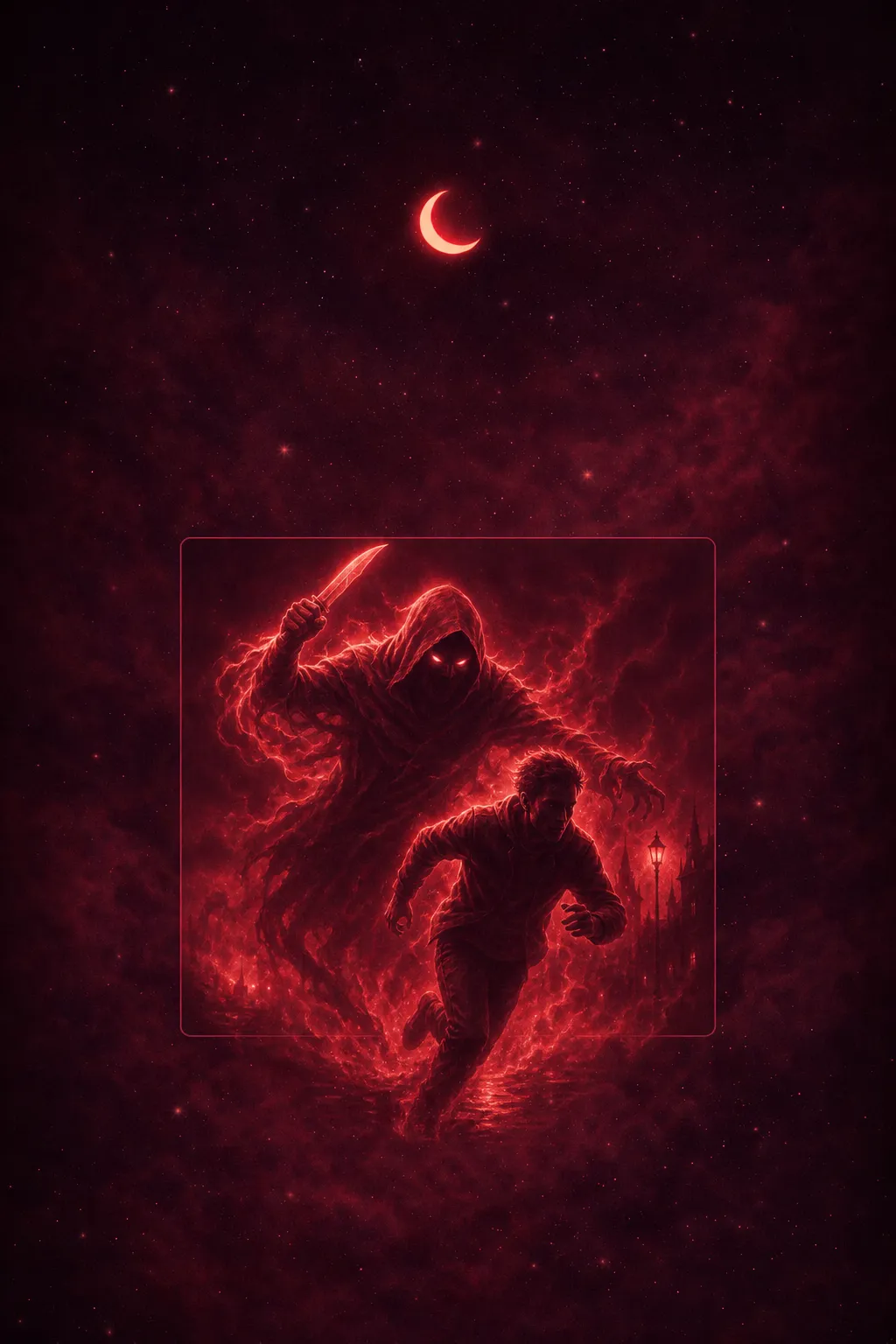

Being chased by a killer in a dream typically means you are avoiding a deeply threatening fear, conflict, or overwhelming pressure in waking life, and your subconscious is urging you to confront whatever force—whether an emotion, a person, or a situation—feels powerful enough to destroy your sense of safety or identity.
In under a minute you could read what your exact dream means for you, and see a picture of it. Free.
A dream still on your mind? Get your personal reading.
Describe your dream in a line or two. In seconds you get a reading of your exact dream, a picture drawn from your own words, and every symbol explained.
Free. No sign-up. Takes 10 seconds. Your dream stays private.
0%
Analyzing your dream…
Something went wrong. Please try again in a moment.
Your dreams deserve more than a dictionary
Common Killer-Chase Dream Scenarios and What They Mean
The details of a chase dream shift its meaning considerably. The most frequently reported version — being pursued by a faceless or unknown killer with no way out — points to generalized anxiety: a pressure you feel but haven't yet named. Modern life is full of such unnamed stressors, and the dream gives that pressure a body so your mind can at least locate it. A closely related variant is the heavy-legs scenario, where you cannot run fast enough or scream for help; this reflects a felt sense of powerlessness in waking life and may be amplified by sleep-paralysis physiology, where the body's natural movement-suppression bleeds into the dream.
- Recognizable person as the killer: Unresolved conflict with that individual, or a quality of theirs you fear in yourself — worth examining honestly after you wake.
- Hiding rather than running: You are concealing something — an emotion, a truth, a responsibility — and hoping it quietly disappears on its own.
- Turning to face the killer: A positive shift; the dream suggests you are building readiness to confront whatever you have been avoiding.
- Being caught or killed: Less grim than it sounds — symbolically it marks the end of a life phase or old identity, not literal harm.
- Running to protect family or children: Responsibility overload; fear of failing the people who depend on you is driving the pursuit.
A bad dream isn't a bad sign.
Across all these variants, the central self-knowledge question is the same: what are you refusing to face? Identifying the waking-life stressor the killer represents is usually the first step toward the chase losing its grip on your sleep.
What this dream could look like
Tap an image to open it full screen
Example images. Only you can see what you write in Dream Book.
The Psychological Reading: What Your Mind Is Really Running From
At its core, a killer-chase dream is your brain's threat-simulation system working overtime. Psychologists who study the continuity hypothesis — the idea that waking life bleeds directly into dream content — find that the intensity of a chase closely mirrors how cornered or overwhelmed you feel during the day. Deadlines, unresolved conflict, a difficult relationship, or a responsibility you keep pushing aside can all materialize as a relentless pursuer the moment your defenses drop in sleep. The dream is not a prophecy; it is avoidance made visible.
From a Jungian-influenced perspective, the killer rarely represents an outside threat. More often it embodies a disowned part of yourself — suppressed anger, buried ambition, or deep shame — that your waking mind refuses to acknowledge. Jung called this the shadow, and chase dreams are one of its loudest signals. Turning to face the pursuer in a dream (or in waking reflection) is the first move toward genuine self-knowledge. Many therapists working within mainstream cognitive frameworks make the same practical point: whatever you are running from in a chase dream deserves honest attention, not continued avoidance.
But what does your version mean?
When the dreams are recurrent and vivid, psychology flags a further layer: hypervigilance, sometimes rooted in past trauma, replaying through sleep. In those cases the pursuer is less metaphor and more a trauma-echo — the nervous system rehearsing old threat responses. Whether the source is chronic modern stress or something deeper, the consistent psychological message is the same: the only way to slow the killer down is to stop running and start looking at what it represents.
Every dream you log starts to connect.
Dream Book keeps your dreams in one place and reveals the threads between them over time — your private dream journal. Free to start.


Cultural and Traditional Readings of the Killer-Chase Dream
Across Western folklore, being hunted in a dream has long been treated as a warning sign — not of literal danger, but of something unresolved pressing on the conscience. Early American folk belief, drawing on Puritan ideas about moral accountability, held that a pursuer in dreams represented guilt or a neglected duty catching up with the sleeper. That framing hasn't entirely disappeared: in broadly Christian households today, a killer-chase dream is sometimes felt as a nudge toward self-examination — a call to confront what you've been spiritually or emotionally avoiding rather than any prophecy of harm.
Popular culture has reinforced and reshaped these older ideas. Horror films and crime fiction have made the faceless killer a universal symbol of dread, which means the image arrives in your dream pre-loaded with cultural weight. Many people instinctively link the feeling to dreams of being chased more broadly — a recognized folk category in everyday conversation long before psychology gave it clinical language. That shared cultural shorthand actually helps sleepers recognize the pattern: the chase isn't about the killer, it's about whatever you're unwilling to turn around and face.
- Avoidance as the real theme: traditional readings consistently focus on what the dreamer is fleeing, not who is pursuing them.
- Moral accountability: folk and religious traditions frame the pursuer as a personified consequence of unaddressed choices.
- Modern-anxiety overlay: contemporary culture maps the same archetype onto workplace pressure, social overwhelm, and loss of control — updating old beliefs without replacing them.
The Spiritual Reading: What Faith Traditions Say About Being Hunted in Dreams
Within a Christian framework, a killer-chase dream is sometimes understood through the lens of spiritual warfare — the sense that something is actively robbing you of peace. Psalms 23 and 91 have long been go-to passages for believers who wake from such dreams shaken, offering reassurance that protection is available even in the valley of the shadow. Held loosely, this reading can be genuinely comforting: the pursuer is not destiny, but a force that can be named, prayed over, and resisted. Most pastors and Christian counselors would caution, however, that the dream is far more likely to reflect inner turmoil than any external spiritual attack — making self-examination just as important as prayer.
Was yours a sign? Find out.
Beyond organized religion, many people intuitively experience vivid chase dreams as a wake-up call — a signal that life has drifted out of alignment and a change of direction is overdue. This "course-correction" instinct echoes across contemplative traditions: the thing chasing you in the dream is the unlived truth you keep postponing. In that sense, the experience of being chased carries its own quiet spiritual urgency, pressing the dreamer toward honesty rather than continued avoidance. Whether your frame is faith-based or broadly reflective, the spiritual takeaway is the same — the pursuer loses power the moment you stop running and turn to face what it represents.
Related Dream Meanings

nightmares
Being Chased Dream Meaning: Anxiety & Avoidance
5 min read

nightmares
Dream of No Reflection in Mirror - Meaning and Interpretation
6 min read

nightmares
What Does It Mean to Dream About Rotten Food? Interpretation and Meaning
6 min read

nightmares
Eating Glass Meaning - Symbolism & Interpretation
6 min read

nightmares
What Does It Mean to Dream About a Dark Forest
5 min read

nightmares
Walking Through Dark Hallway: Meaning and Interpretation
5 min read

nightmares
Room With No Exit Dream: Trapped, Stuck & Powerless
6 min read
nightmares
Jail Cell Dream Meaning: Trapped, Guilty & Controlled
6 min read
What You Can Actually Do After a Killer-Chase Dream
Because the pursuer almost always represents something you're avoiding rather than a literal threat, the most useful first step is simple but uncomfortable: name it. Grab a notebook the moment you wake up and write down what felt most pressing in the dream — the setting, who or what was chasing you, and how trapped you felt. Then ask yourself honestly what real-life pressure that maps onto. Deadlines, a difficult relationship, a decision you keep postponing — the dream tends to track the intensity of whatever you're sidestepping.
- Run toward, not away. Avoidance is what keeps the dream returning. Pick one thing you've been putting off and take a single concrete action on it this week.
- Audit your stress load. If chase dreams are recurring, treat that as a signal your nervous system is overwhelmed — look at sleep habits, workload, and caffeine before bed.
- Try a brief grounding routine before sleep. Five minutes of slow breathing or journaling can lower baseline anxiety enough to reduce threat-simulation dreams over time.
- Talk it out. Whether with a therapist, a trusted friend, or a pastor, verbalizing the unnamed fear shrinks its power — both in waking life and in the dreams that follow.
A bad dream isn't a bad sign.
None of these steps require you to interpret the dream perfectly. The goal is simply to close the loop the dream is pointing to — because once the waking pressure eases, the nightly chase usually does too.
If it keeps coming back, the app helps you understand the pattern.
Log each recurring dream and the free app shows you what's underneath — calmly, over time. Free to start.
People Also Ask
Not at all. Being chased in a dream is one of the most common dream experiences and rarely signals real danger. It typically reflects everyday stress, unresolved anxiety, or emotions you are avoiding. Consider it a helpful signal from your subconscious urging you to confront something you have been putting off.
Running from a killer usually symbolizes avoidance. The killer represents a threatening situation, toxic relationship, or overwhelming pressure in your waking life. Your mind is processing fear and the instinct to escape. Rather than literal danger, it points to something you feel is emotionally or psychologically threatening that deserves your attention.
Dreaming of being caught and killed can actually signal positive transformation. In dream symbolism, death often represents endings and new beginnings. Being killed by a pursuer may mean an old version of yourself or a difficult chapter in your life is finally closing, making room for meaningful personal growth and change.
Spiritually, a man chasing you often represents a shadow aspect of yourself, a suppressed trait, or unresolved masculine energy. Many traditions interpret this as your soul calling attention to inner conflict or unfinished karmic lessons. Facing the pursuer in your dream, rather than fleeing, is considered a spiritually empowering and healing response.
Curious what your dream would look like?