
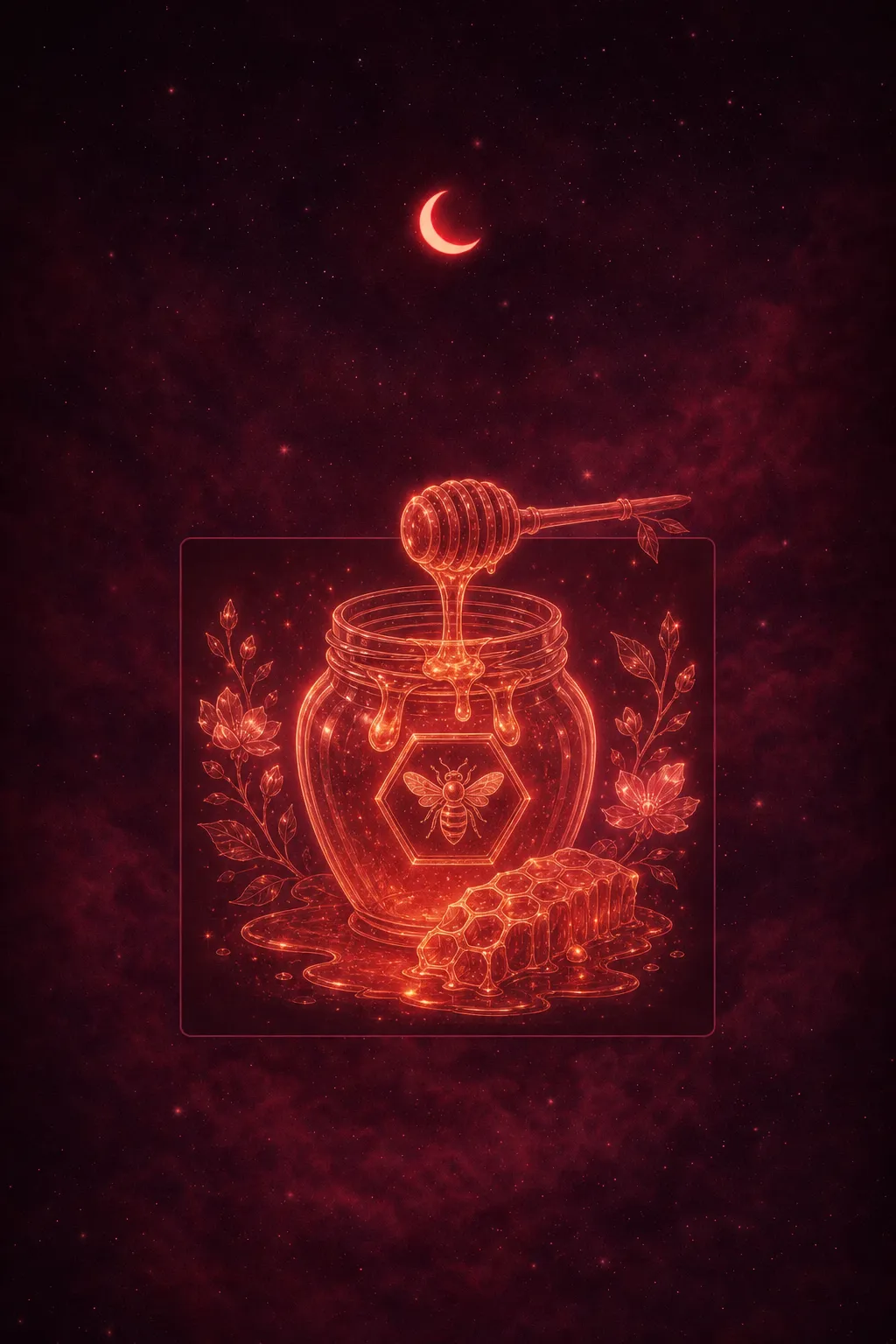

Dreaming about honey meaning centers on abundance, sweetness, and reward, as honey in dreams typically signals that your efforts are paying off, emotional nourishment is available to you, or a period of joy and prosperity is approaching in your waking life.
In under a minute you could read what your exact dream means for you, and see a picture of it. Free.
You read what it can mean. But what did yours mean?
General meanings stop here. In the free app, tell Dream Book your exact dream and get a reading that actually makes sense for you.


A dream still on your mind? Get your personal reading.
Describe your dream in a line or two. In seconds you get a reading of your exact dream, a picture drawn from your own words, and every symbol explained.
Free. No sign-up. Takes 10 seconds. Your dream stays private.
0%
Analyzing your dream…
Something went wrong. Please try again in a moment.
Your dreams deserve more than a dictionary
Common Honey Dream Scenarios and What They Mean
The scenario in which honey appears shapes its meaning considerably. Eating or tasting honey is the most frequent variant and generally signals that a reward is either arriving or already yours — your mind is giving itself permission to enjoy something earned. If you savor it slowly in the dream, that detail nudges toward mindfulness; if you gulp it anxiously, modern-anxiety framing applies: you may fear the good moment will vanish before you fully absorb it. Seeing or holding a jar of honey shifts the focus to stored potential — resources, security, or effort banked for later — and often surfaces when waking life feels financially or emotionally uncertain, much like dreams of precious gold that sits just out of reach.
- Sticky hands or spilled honey: a classic entanglement image — you are involved in something that once felt sweet but is now hard to step back from, whether a relationship, commitment, or habit.
- Honey alongside a hive or bees: collective effort and earned reward; the presence of stings in the scene warns that the payoff carries real risk.
- Giving or receiving honey: affection or flattery exchanged with someone — worth asking whether those sweet words are genuine or sugar-coating a harder truth.
- Spoiled or bitter honey: disillusionment; an anticipated pleasure has not delivered, prompting honest reassessment.
- Sinking or drowning in honey: being overwhelmed by comfort itself — excess indulgence, an inability to move forward, or a situation so appealing it has quietly become a trap.
But what does your version mean?
Across all variants, the key self-knowledge question is one of control: are you choosing the sweetness, or is it choosing you?
What this dream could look like
Tap an image to open it full screen
Example images. Only you can see what you write in Dream Book.
The Psychological Reading: Reward, Entanglement, and the Inner Life
From a psychological standpoint, honey in a dream often surfaces when the unconscious mind is working through questions of worthiness and delayed gratification. Honey doesn't appear instantly — it is the product of sustained, collective effort — and the psyche tends to reach for this image precisely when you are wrestling with whether your own efforts have been enough, or whether you deserve to enjoy what you've worked for. In an era defined by burnout and the pressure to be constantly productive, dreaming of honey can be the subconscious offering a quiet but firm message: the labor was real, and the sweetness is legitimate.
The stickiness of honey carries its own psychological weight. Where tasting it signals pleasure and reward, finding yourself coated in it or unable to pull free often reflects anxiety about overcommitment — a relationship, habit, or situation that felt good at first but now feels hard to leave. Psychologists would frame this as the mind mapping a real-life entanglement onto a sensory symbol that captures both the appeal and the trap simultaneously. For those with a faith background, this tension echoes the biblical caution that even good things — described in Proverbs as sweet as honey — can lose their virtue when taken to excess. Dreams of being stuck or overwhelmed by a substance share this same psychological grammar with dreams of being submerged in water, where something life-giving tips into suffocation.
- Gratification and control: How you interact with honey in the dream (savoring vs. gorging vs. refusing) mirrors your current relationship with self-discipline and permission to rest.
- Nourishment and recovery: Honey as a healing image, connected symbolically to milk and comfort, can signal a need for genuine self-care rather than performative productivity.
- Relational warmth: Because "honey" is a term of endearment in everyday speech, the dream may encode feelings about intimacy — either its presence, its idealization, or a fear of losing it.
General meanings end here. Read your own dream.
Describe your dream in a line or two. In seconds you get a reading of your exact dream, a picture drawn from your own words, and every symbol explained.
Free. No sign-up. Takes 10 seconds. Your dream stays private.
0%
Analyzing your dream…
Something went wrong. Please try again in a moment.
Your dreams deserve more than a dictionary
Every dream you log starts to connect.
Dream Book keeps your dreams in one place and reveals the threads between them over time — your private dream journal. Free to start.
Honey in Cultural Tradition and Folk Belief
Across centuries of Western tradition, honey carried the weight of divine favor and earthly blessing. In biblical imagery, the Promised Land flowing with milk and honey was shorthand for abundance restored after long hardship — a vision so persistent that many American Christian households still associate a honey dream with a season of breakthrough after a period of waiting. Folk traditions across Britain and early colonial America treated honey as an omen of good speech and trustworthy relationships; a dream drenched in its sweetness was thought to signal that genuine, loyal people surrounded you. These older frameworks map neatly onto the bees whose collective labor produces it — the community effort behind a personal reward.
Was yours a sign? Find out.
More cautionary strands of folk belief kept ambivalence alive. Honey that clings, overflows, or traps the dreamer in older European rural tradition hinted at temptation that could sour into dependency — a warning against letting pleasure become a snare. Interestingly, some folklore placed honey alongside gold as a symbol of wealth that demands stewardship: acquiring it was blessed, but hoarding or wasting it invited misfortune. In modern life, that stickiness takes on a recognizable anxiety: the fear of commitments that feel sweet at first but become hard to exit, whether a relationship, a role, or a lifestyle that no longer fits. The cultural inheritance essentially tells you that honey is a gift you still need to handle with intention.
- Biblical resonance: abundance and divine promise arriving after patience and trial.
- Folk omen of honest speech: honey dreams linked to trustworthy words and sincere relationships.
- Cautionary thread: excess or stickiness as a cultural symbol of entanglement and loss of control.
- Modern anxiety echo: sweet situations that gradually feel impossible to leave on your own terms.
Honey as Spiritual Sign: Blessing, Wisdom, and Sweet Accountability
Within a Christian framework, honey carries unmistakable scriptural weight. Psalm 119:103 describes God's word as sweeter than honey to the tongue, framing the image not merely as pleasure but as nourishment for the soul — a gift that demands attention and response. Dreaming of honey through this lens may feel like a gentle prompt: something of genuine value is being offered to you, and the question is whether you are present enough to receive it. The Exodus promise of a land flowing with milk and honey reminds the spiritually inclined dreamer that abundance often follows a season of waiting and trust, echoing the psychological theme of delayed reward without reducing it to mere self-help. In this sense the honey dream sits close to the imagery explored in dreams about the bees that produce it — both pointing toward effort, community, and sacred purpose.
A bad dream isn't a bad sign.
More broadly, honey appears across spiritual traditions as a symbol of purified wisdom — insight that has been filtered, concentrated, and made ready to sustain. If modern life leaves you feeling scattered or out of control, a honey dream may function as a spiritual recalibration: a sign that something sweet and true is available beneath the noise, if you slow down enough to access it. The stickiness that signals entrapment in other readings carries its own spiritual caution here — an invitation to examine whether the pleasures or commitments you are clinging to are genuinely life-giving or simply hard to release.
- Sweetness of truth: the dream may signal that honest self-examination, however slow, will yield something worth having.
- Received blessing: a spiritually framed prompt to acknowledge and accept grace already present in your life.
- Discernment around excess: spiritual traditions consistently pair honey with moderation — abundance that becomes overindulgence loses its sacred quality.
Related Dream Meanings

common dreams
Gold Dream Meaning: Wealth, Success & Self-Worth
5 min read

animals
Bees Dream Meaning: Hard Work, Community & Anxiety
5 min read

common dreams
Water Dream Meaning: Emotions, Intuition & Growth
5 min read
common dreams
Milk Dream Meaning: Comfort, Nourishment & Hidden Needs
5 min read
common dreams
Coins Meaning - What Coins Symbolize in Dreams
6 min read
common dreams
Finding Treasure Dream Meaning: Potential & Self-Worth
6 min read
common dreams
Treasure Chest Dream Meaning: Hidden Potential & Worth
6 min read
common dreams
What Does Dreaming About Watermelon Mean? Dream Interpretation Guide
5 min read
Practical Takeaways: Acting on Your Honey Dream
Before moving on from the dream, take a moment to identify which emotional register it left you in. Did the honey feel like a well-earned pleasure, or did it feel overwhelming — sticky, excessive, hard to pull away from? That distinction is your clearest action signal. If the feeling was warm and satisfying, your mind may simply be prompting you to acknowledge progress you've been downplaying: name what you've worked toward, and let yourself receive it without guilt or deflection.
If the dream carried any undercurrent of entrapment or over-indulgence, treat that as a low-pressure inventory prompt rather than an alarm. Ask yourself honestly whether a relationship, habit, or commitment that once felt sweet has started to feel like it's holding you in place. Dreams featuring bees alongside honey often sharpen this question, since bees point directly to the labor side of the equation — who is doing the work, and is the effort still balanced? Similarly, if the honey in your dream felt corrupted or lost — spilled, soured, or suddenly out of reach — dreams about flowing or disappearing liquids can offer a useful parallel lens on themes of abundance slipping through your hands.
But what does your version mean?
- Journal one specific "delayed reward" in your life — something you've been working toward but haven't allowed yourself to celebrate or even acknowledge yet.
- Check where sweetness has curdled into obligation — a relationship or routine that started as a genuine pleasure but now feels more like a trap worth examining.
- Set one small, concrete boundary around overindulgence — whether that's a time commitment, a digital habit, or a people-pleasing pattern the dream may be gently flagging.
One dream is never the whole picture.
The free app remembers your dreams, draws them, and connects the threads over time — so the next one means even more. Free to start.
People Also Ask
Spiritually, honey represents divine sweetness, wisdom, and abundance. Dreaming of it often signals that your soul is entering a rewarding phase, attracting positive energy and healing. Many traditions view honey as a sacred gift, suggesting you are being blessed or guided toward greater fulfillment and inner nourishment.
Biblically, honey symbolizes the Promised Land, God's provision, and spiritual richness. Dreaming of honey in this context suggests you are moving toward a season of blessing and answered prayer. It echoes Scriptures describing a land flowing with milk and honey, pointing to hope, covenant promises, and divine favor in your waking life.
A honey bee in a dream typically signals diligence, community, and coming rewards. It encourages you to stay focused and work steadily toward your goals, much like dreaming of water points to emotional flow and renewal. The bee may also warn against ignoring responsibilities. Overall, it is a positive omen suggesting productive effort will soon yield sweet results.
Yes, honey is widely considered one of the luckiest dream symbols. It is associated with prosperity, love, and success across many cultures. Seeing or tasting honey in a dream suggests fortunate circumstances are approaching, whether in finances, relationships, or health. It reassures the dreamer that their efforts are about to be richly rewarded.
Curious what your dream would look like?