
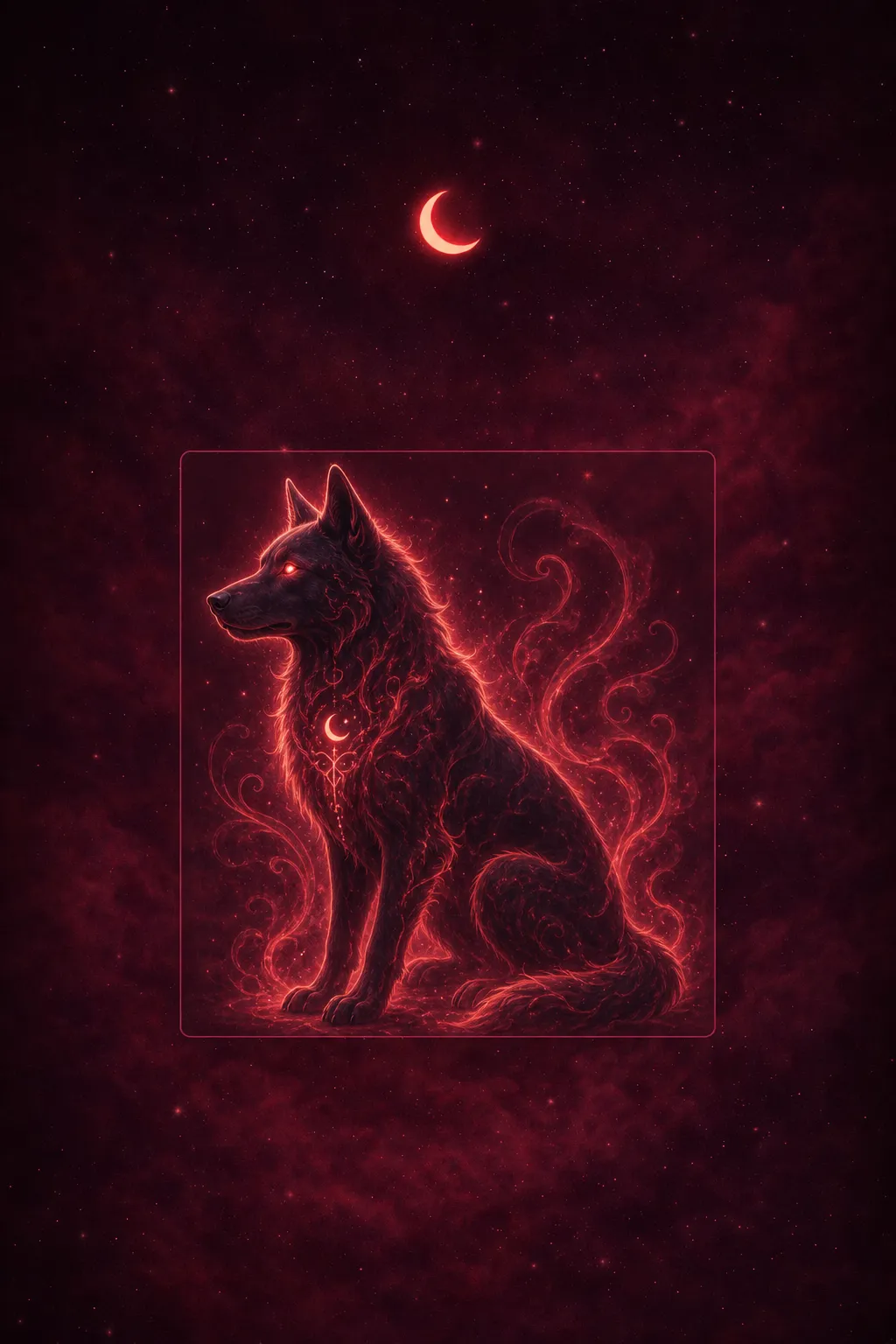

A black dog in dreams often symbolizes depression, hidden fears, or a loyal but shadowy aspect of yourself, reflecting the unconscious mind's way of confronting suppressed emotions, personal loss, or a powerful protective instinct — much like dreaming of dogs generally — that urges you to acknowledge what you have been avoiding in waking life.
In under a minute you could read what your exact dream means for you, and see a picture of it. Free.
You read what it can mean. But what did yours mean?
General meanings stop here. In the free app, tell Dream Book your exact dream and get a reading that actually makes sense for you.


A dream still on your mind? Get your personal reading.
Describe your dream in a line or two. In seconds you get a reading of your exact dream, a picture drawn from your own words, and every symbol explained.
Free. No sign-up. Takes 10 seconds. Your dream stays private.
0%
Analyzing your dream…
Something went wrong. Please try again in a moment.
Your dreams deserve more than a dictionary
Common Black Dog Dream Scenarios
The details of a black dog dream shift its meaning considerably. A calm or friendly black dog walking toward you is generally an encouraging sign — it suggests you are beginning to accept a difficult part of yourself rather than running from it, or that a period of low mood is becoming something you can manage rather than something that manages you. By contrast, a black dog silently following you reflects the classic modern experience of depression or low-grade dread trailing just behind daily life — the kind of stress or burnout you sense without yet confronting directly. If the scenario feels like being chased, the anxiety is likely more acute, pointing to avoidance of a fear or conflict that is gaining ground. At Dream Book we explore this symbol in depth.
- Growling, chasing, or attacking black dog: suppressed anger or overwhelming stress has reached a breaking point; a perceived threat — inner or outer — demands direct attention rather than further avoidance.
- Black dog guarding your home or standing between you and danger: a loyal inner resource is active; you may be protecting yourself or loved ones well, though over-guardedness is worth examining.
- Sick, injured, or dead black dog: a draining mood or exhausting bond may be fading; there is also a note of grief, and possibly a neglected part of yourself calling for care — much like death imagery in dreams, this scenario signals an ending that carries both loss and potential release.
- Unnaturally large or ghostly black dog: dread has been amplified, often by prolonged stress or a fear of fate and the unknown that feels bigger than everyday anxiety can explain.
- Black puppy: a worry or responsibility is still small and shapeable — early action, or early compassion toward yourself, can determine how it grows.
But what does your version mean?
Across all these variants, the key question is whether you moved toward the dog, held your ground, or fled — because your response in the dream mirrors the degree of self-knowledge and control you currently feel over whatever mood, relationship, or pressure the dog represents.
What a dream about a black dog could look like
Tap an image to open it full screen
Example images. Only you can see what you write in Dream Book.
The Black Dog as a Psychological Mirror
In psychological terms, the black dog in a dream frequently represents what Carl Jung called the shadow — the unacknowledged, often feared parts of the self that the conscious mind has pushed out of sight. Its dark coat signals the unconscious: instincts, suppressed emotions, or truths about your inner life that you haven't yet faced. Because the dog is an inherently relational animal, this shadow often takes a social or emotional shape — unresolved grief, buried anger, or a loyalty to old patterns of thinking that you haven't been willing to examine.
The cultural idiom of "the black dog" as a label for depression gives this dream a particularly pointed modern resonance. If the animal in your dream feels like something trailing you — patient, persistent, impossible to outrun — it may be your mind externalizing a mood state or chronic stress you've been trying to ignore. This is classic anxiety projection: a dream of being chased rarely signals a real threat; it signals an inner pressure the dreamer hasn't yet turned around to face. Burnout, a looming life change, or a quiet sense of losing control can all take the form of a dark, following figure — much as spiders in dreams often embody feelings of being trapped or entangled by something just out of conscious reach.
Crucially, how you interact with the dog reveals your current sense of agency:
Was yours a sign? Find out.
- You command or calm it — a sign you feel capable of managing difficult emotions or reclaiming self-control.
- You flee from it — suggests avoidance; the stressor or mood state is growing in power precisely because it isn't being acknowledged.
- It overpowers you — may reflect a genuine sense of overwhelm, worth taking seriously as a prompt for real-world support; dreamers who regularly experience this dynamic sometimes also report falling dreams, another hallmark of lost agency.
- It becomes a companion — points toward shadow integration: you are learning to live alongside a difficult part of yourself rather than being ruled by it.
General meanings end here. Read your own dream.
Describe your dream in a line or two. In seconds you get a reading of your exact dream, a picture drawn from your own words, and every symbol explained.
Free. No sign-up. Takes 10 seconds. Your dream stays private.
0%
Analyzing your dream…
Something went wrong. Please try again in a moment.
Your dreams deserve more than a dictionary
Every dream you log starts to connect.
Dream Book keeps your dreams in one place and reveals the threads between them over time — your private dream journal. Free to start.
Cultural Roots and Folk Tradition
In British and Irish folklore, the black dog has long been a figure of dread rather than comfort. Spectral hounds such as Black Shuck in East Anglia and the barghest of northern England were said to roam country roads as omens of death or misfortune — glimpsing one was a warning, not a welcome. This tradition feeds directly into the modern English idiom "the black dog," widely associated with depression and chronic low mood. Though the phrase predates Winston Churchill, his biographers' use of it to describe his melancholy cemented it in popular consciousness, so that today a black dog dream carries an almost unavoidable cultural weight: many dreamers wake with an instinctive sense that the animal stood for something heavy they have been carrying.
Yet mainstream Western culture also holds an equally powerful counter-image — the dog as faithful companion. That warmth tempers the ominous folklore reading and explains why black dog dreams so rarely feel one-dimensional. From a modern-anxiety standpoint, the symbol tends to surface when a person feels trailed by something they cannot name: unrelenting stress, burnout, or a change they sense looming but cannot yet face. Culturally, the black dog sits at the crossroads between warning and witness — much like dreams of being chased, it often signals something the dreamer is avoiding rather than something that is genuinely threatening.
- Spectral folklore: Black Shuck, barghest, and similar figures across the British Isles framed the black dog as a supernatural omen tied to darkness, death, or grave warning.
- Idiomatic resonance: The phrase "the black dog" for depression gives the dream image an immediate cultural shorthand around mood, control, and endurance.
- Companion tradition: Everyday dog symbolism — loyalty, protection, familiarity — softens the darker folklore and suggests the figure may be as much ally as threat.
The Black Dog in Spiritual and Religious Perspective
For dreamers who hold a Christian faith, a menacing black dog can feel like more than a psychological metaphor — it can read as an image of spiritual oppression, the kind of creeping dread that the Psalms describe as walking through "the valley of the shadow." In that frame, the dream is less a diagnosis than an invitation: fear acknowledged before God loses some of its power, and the act of naming what pursues you is itself a step toward resistance and renewal. That said, this reading sits best as one lens among several, not a definitive verdict on the dream's meaning.
A gentler counter-reading is equally valid within the same tradition. Dogs in scripture often appear as lowly or dangerous creatures, yet loyalty and steadfast companionship are qualities the Bible consistently honors. A black dog that guards rather than threatens may, in spiritual terms, signal that protection is closer than anxiety makes it feel — that something faithful accompanies you even through a season of darkness or burnout.
A bad dream isn't a bad sign.
- Spiritual oppression frame: the pursuing black dog as a symbol of fear or despair to be met with faith and self-possession rather than flight — much like the anxiety behind being-chased dreams.
- Steadfast-companion frame: the dog's loyalty reframed as a reminder that even difficult inner seasons carry an element of protection and continuity.
- Control and surrender: both readings converge on the same practical question — can you face what follows you, or does avoidance keep it in power?
Related Dream Meanings
nightmares
Being Chased Dream Meaning: Anxiety & Avoidance
5 min read
nightmares
Death Dream Meaning: Transformation, Loss & Change
5 min read
animals
Spiders Dream Meaning: Fear, Creativity & Entrapment
5 min read
common dreams
Falling Dream Meaning: Insecurity, Fear & Loss of Control
5 min read

nightmares
Darkness Dream Meaning: Fear, Uncertainty & Hidden Self
5 min read
animals
Owls Dream Meaning: Wisdom, Intuition & Hidden Knowledge
5 min read
animals
Dragons Dream Meaning: Power, Fear & Transformation
5 min read

animals
Whales Dream Meaning: Emotion, Strength & Intuition
5 min read
Turning the Dream Into Action
Whatever emotional tone your black dog dream carried, the most useful first step is to name what has been trailing you in waking life. Depression, burnout, and chronic stress rarely announce themselves clearly — they tend to shadow you quietly, much like the figure in the dream. If the dog felt threatening or inescapable, treat that as a prompt rather than a verdict: write down one specific stressor or low-mood pattern you have been avoiding and give it a concrete label. Naming it reduces the hold it has, which is exactly what the dream is nudging you toward.
From there, consider a few grounded responses:
- Track your mood for one week. Simple daily check-ins (a number out of ten, a single word) can reveal patterns you have been too busy or too reluctant to notice — a practical first step if the dream left you with a sense of lingering dread you cannot quite explain.
- Identify what feels out of your control. Black dog dreams often spike during transitions or high-pressure periods. List what you can influence versus what you cannot — even a rough division restores a sense of agency. If the dog was actively chasing you, the dream of being chased carries further insight into that loss-of-control feeling.
- Talk to someone. Whether that means a trusted friend, a pastor, or a therapist, externalizing the "shadow" breaks the cycle of private dread that keeps it large.
- Revisit the dream with curiosity. Ask yourself honestly: was the dog attacking or just following you? Your gut answer often maps to how serious the underlying pressure actually feels — much the way unsettling symbols like spiders in dreams prompt you to examine what quietly unnerves you in waking life.
But what does your version mean?
The goal is not to banish the black dog but to stop letting it operate unseen. Once acknowledged and examined, what felt like a threat in sleep frequently turns out to be a call for self-care or a long-overdue conversation with yourself.
One dream is never the whole picture.
The free app remembers your dreams, draws them, and connects the threads over time — so the next one means even more. Free to start.
People Also Ask
Dreaming of a black dog often reflects hidden emotions, loyalty, or inner shadow aspects of yourself. It can signal depression, fear, or a protective instinct emerging from your subconscious. Context matters greatly — a calm black dog suggests faithful guidance, while an aggressive one may warn of unresolved conflict or emotional suppression.
Spiritually, a black dog symbolizes a guardian at life's thresholds, guiding souls through transformation or darkness. Across folklore, it represents both ominous warning and loyal protection. Many traditions see it as a psychic companion, urging you to confront shadow aspects of your soul and emerge with greater self-awareness and strength.
Being attacked by a black dog in a dream suggests you are feeling overwhelmed by repressed anger, anxiety, or self-destructive thoughts. Much like other vivid dog dreams, it may reflect an external threat or internal conflict demanding attention. The attack is your psyche's urgent signal to face whatever fear or negative pattern you have been actively avoiding.
Spiritually, a dog in a dream represents loyalty, instinct, unconditional love, and protection. Dogs are often seen as guides between the conscious and subconscious worlds. Their appearance encourages you to trust your instincts, nurture your relationships, and remain faithful to your personal values, even during emotionally challenging or uncertain life transitions.
Curious what your dream would look like?